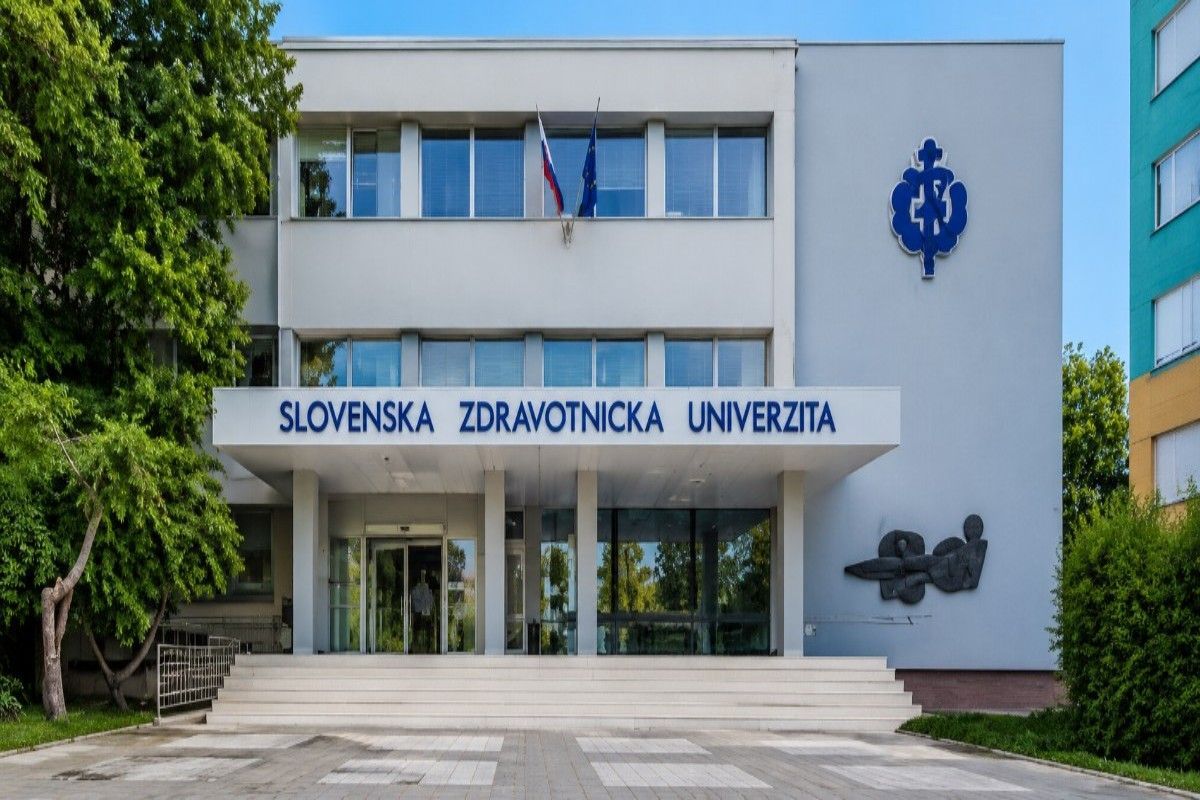
Every year, lakhs of NEET-qualified students miss out on an MBBS seat in India, not because they lack merit, but because there aren’t enough seats to go around. MBBS in Slovakia has quietly become one of the more sensible answers to that problem: a European Union country with English-taught medical degrees, teaching hospitals that actually put you in front of patients early, and a total cost that, while not “cheap,” still comes in well below what a private medical college in India charges.
This guide walks through everything you actually need before you commit to MBBS in Slovakia, real fee ranges (not fixed, misleading numbers), which university fits which kind of student, what NEET and NMC rules mean for you specifically, and the parts of the decision that most agents won’t bring up unless you ask.
Overview / Quick Facts Table
Detail | Information |
Country | Slovak Republic (EU, Schengen member) |
Capital | Bratislava |
Course Name | General Medicine (marketed in India as “MBBS”) |
Degree Awarded | MUDr. (Doctor of General Medicine) |
Duration | 6 years (12 semesters) |
Medium of Instruction | English (with basic Slovak language classes for clinical years) |
Intake | September (main); some universities run March/summer exam windows |
Eligibility | 10+2 with Physics, Chemistry, Biology, English; 50% aggregate (45% for reserved categories, as per NMC norms) |
NEET-UG | Mandatory for Indian students |
Entrance Exam | University-specific, Biology + Chemistry (format varies) |
Tuition Fee (2026-27) | Approx. €10,900–€13,000/year (approximate, exchange-rate dependent) |
Living Cost | Approx. €400–€700/month (approximate, exchange-rate dependent) |
Hostel/Dormitory | Approx. €80–€180/month |
Currency | Euro (EUR) |
Recognition | EU-wide automatic recognition (Directive 2005/36/EC); WHO/WDOMS-listed |
Internship | Clinical rotations from Year 3 onward at university teaching hospitals |
Climate | Continental, cold winters (down to -5°C to -10°C), mild summers |
MBBS in Slovakia for Indian Students
Why Indian Students Choose MBBS in Slovakia
Indian students choosing MBBS in Slovakia are usually looking for three things at once: an EU-recognised degree, a fee structure that doesn’t require a second mortgage, and an admission process that doesn’t depend on donation or capitation money. MBBS in Slovakia checks all three boxes, but it’s not the cheapest option on the market; Georgia and some Central Asian destinations are lower cost, and Slovakia’s entrance exams are a genuine filter, not a formality.
NEET Requirement
NEET-UG is mandatory. Per current NMC rules, any Indian student pursuing a medical degree abroad, regardless of the country or its own admission requirements, must have a valid NEET-UG qualifying score. Note that NEET qualification is about eligibility to go abroad; it is not the same as a Slovak university’s own entrance exam, which you must separately clear on merit.
12th Grade Eligibility
You need 10+2 with Physics, Chemistry, Biology, and English as core subjects, with a minimum of 50% aggregate in PCB (45% for SC/ST/OBC and other NMC-recognised reserved categories). Individual Slovak universities may also set their own minimum percentage or subject requirements, so check the specific faculty’s admission page before applying.
Age
Most Slovak medical faculties require a minimum age of 17 at the time of enrolment; there’s no strict upper age cap for the General Medicine program, though NMC rules for returning to India factor into practical planning.
Documents
10th and 12th mark sheets, passport, NEET scorecard, birth certificate, medical fitness certificate, passport-size photographs, and (for visa stage) proof of funds and health insurance, all with notarized/apostilled translations where required.
NMC Rules Snapshot
Under the NMC’s Foreign Medical Graduate Licentiate (FMGL) Regulations, 2021, and the National Medical Commission (Recognition of Medical Qualification) Regulations, 2023, any Indian student who completes a medical degree abroad must clear a licensing screening exam before registering to practice in India. As of now, the exam is the FMGE (Foreign Medical Graduate Examination). NExT (National Exit Test), which was meant to replace FMGE for this purpose eventually, has been deferred by the NMC, and FMGE continues to apply. Always check nmc.org.in directly before finalizing your plans, as implementation timelines have shifted multiple times.
Visa
You’ll apply for a Slovak National (D-type) Visa through the Slovak Embassy in New Delhi (or via BLS International, depending on current arrangements), which is separate from the short-stay Schengen visa.
Accommodation
University dormitories are available at most faculties and are the more budget-friendly option in the first year, with private rentals becoming common from the second year onward, as students get to know the city better.
Return-to-India Pathway
After MUDr. completion, the standard route is: qualify for FMGE (or NExT, if and when it takes over)
→ complete a Compulsory Rotating Medical Internship (CRMI) in an NMC-approved Indian institution
→ apply for permanent registration with your State Medical Council.
Course Duration & Structure
MBBS in Slovakia is the official General Medicine program, and it runs 6 years (12 semesters), broken into:
Years 1–3: Pre-clinical / Theoretical
Anatomy, physiology, biochemistry, histology, medical Slovak language, and foundational sciences. This phase is heavy on lecture halls, labs, and cadaver-based anatomy work.
Years 4–5: Clinical Training
Internal medicine, surgery, pediatrics, gynecology, and other core clinical rotations, conducted at the university’s affiliated teaching hospital.
Year 6: Rotations & Final Exams
Intensive clinical rotations across departments, followed by state final examinations and the thesis/defence component required for the MUDr. degree.
Curriculum pacing differs slightly by university; Jessenius (Martin) and UPJŠ (Košice) structure some pre-clinical coursework differently from Comenius (Bratislava), so it’s worth checking each faculty’s official curriculum PDF rather than assuming they’re identical.
Top Medical Universities for MBBS in Slovakia (Detailed)
Comenius University Bratislava (Faculty of Medicine)
Founded in 1919, Comenius is Slovakia’s oldest and largest university, and its Faculty of Medicine is the most internationally recognized of the three. It’s ranked #1 in Slovakia and sits in the QS World University Rankings’ 600s–1200s band depending on the year and subject ranking used; check the current QS listing directly, since rankings shift annually.
Location: Bratislava (capital city)
Duration: 6 years, MUDr.
Tuition (2026-27): Approximately €12,200–€13,800/year
Application/entrance fee: Varies by intake; check official admissions page
Entrance exam: Biology and Chemistry-based test, conducted by the university
Intake: 150–200+ international seats across programs
Clinical training: University Hospital Bratislava and affiliated teaching hospitals
Accommodation: Mlyny dormitory complex, from roughly €83–€100+/month (subject to renovation-related availability changes; confirm current status with the international office)
Official application: via the university’s international admissions portal
Jessenius Faculty of Medicine, Martin (Comenius University)
Jessenius is technically a faculty of Comenius University but located in the smaller city of Martin, and it’s consistently rated Slovakia’s top-ranked medical faculty by the ARRA (Academic Ranking and Rating Agency). Established in 1969 (with medical training in Martin dating back to 1962), it has a strong reputation for clinical teaching in a lower-pressure, lower-cost city than Bratislava.
Location: Martin (central Slovakia)
Duration: 6 years, MUDr.
Tuition (2026-27): €11,500/year (official faculty figure)
Admission fee: €70
Entrance exam: Online, via SCIO, 40 single-choice Biology questions + 40 single-choice Chemistry questions, 120 minutes, no negative marking
Exam sessions for 2026/27: 28 March, 27 June, and 7 August 2026 (application deadlines roughly two weeks before each)
Intake: Maximum 150 international students for General Medicine
Clinical training: University Hospital Martin
Accommodation: Dormitory rooms typically in the €80–€150/month range; Martin’s overall cost of living is lower than Bratislava’s
Recognition: Listed in WDOMS, and referenced for ECFMG/USMLE pathway purposes
Official application: via Jessenius Faculty of Medicine’s admissions platform (opened 1 December 2025 for the 2026/27 cycle)
Pavol Jozef Šafárik University, Košice (Faculty of Medicine)
UPJŠ has trained physicians since 1948 and has offered English-taught programs since 1992, among the longest track records for international medical education in Slovakia. It’s based in Košice, Slovakia’s second-largest city, which is generally considered more affordable than Bratislava and is known for its large international student community.
Location: Košice (eastern Slovakia)
Duration: 6 years, MUDr. (General Medicine) Dental Medicine also offered in English
Tuition (2026-27): €13,000/year for General Medicine, €13,500/year for Dental Medicine, per Rector’s Decision No. 3/2026, with a stated annual increase of about €500 in subsequent years, so budget for rising costs across the six years, not a flat figure
Entrance exam fee: €30 (some sources list a separate €30–€40 range; confirm current figure on the faculty page)
Entrance exam: On-site, in-person, 100 Biology + 100 Chemistry multiple-choice questions, 4 points per correct answer, no negative marking; pass mark typically around 75% (570/800 for General Medicine, 620/800 for Dentistry)
Exam location options: Košice campus, plus occasional overseas sittings in cities like Birmingham, Krakow, or Warsaw depending on the year; confirm current external sitting locations with the faculty
Intake (2026/27): 210 seats for General Medicine, 40 for Dental Medicine
Clinical training: Teaching Hospital in Košice (Univerzitná nemocnica L. Pasteura)
Accommodation: Halls of residence around €90–€180/month depending on room type (1/2/3-person sharing)
Recognition: WHO/WDOMS-listed, EU-recognised
MBBS in Slovakia University Comparison Table
Feature | Comenius (Bratislava) | Jessenius (Martin) | UPJŠ (Košice) |
Tuition/year (2026-27)* | €12,200–€13,800 | €11,500 | €13,000 (General Medicine) |
City | Capital, largest | Small city | Second-largest city |
Entrance exam mode | On-campus | Online (SCIO) | On-campus (or select external cities) |
Exam subjects | Biology, Chemistry | Biology, Chemistry | Biology, Chemistry |
Intake size | 150–200+ | 150 | 210 (Medicine) + 40 (Dentistry) |
Application fee | Varies | €70 | €30 |
Established | 1919 | 1969 (roots to 1962) | 1948; English programs since 1992 |
Cost of living | Highest in Slovakia | Lowest of the three | Moderate |
Dentistry offered | Yes | No | Yes |
*Fees are approximate and change annually by rector’s decision; always verify against the current official admissions page before applying.
University World Ranking & Accreditation Table
University | QS World Ranking (approx.) | WDOMS Listed | ECFMG Referenced | WHO Recognition | Established |
Comenius University Bratislava | 600s–1200s band (subject-dependent; check current QS listing) | Yes | Yes | Yes | 1919 |
Jessenius Faculty of Medicine (Martin) | Faculty ranked #1 in Slovakia by ARRA; parent university 650–700 band | Yes | Yes | Yes | 1969 |
UPJŠ Košice | 1200s band (THE, top-850–1200 range depending on ranking body) | Yes | Yes | Yes | 1948 |
A WDOMS listing confirms a medical school’s existence in the global directory used by ECFMG and other licensing bodies; it is not, by itself, a guarantee of automatic recognition or endorsement by any specific country’s medical council. Always cross-check current listing status directly on wdoms.org before relying on it for a major decision.
MBBS in Slovakia Fees 2026-27
Tuition Fees (University-wise)
University | Annual Tuition (approx.) |
Jessenius (Martin) | €11,500 |
Comenius (Bratislava) | €12,200–€13,800 |
UPJŠ (Košice) | €13,000 (rising €500/year) |
Hostel Fees
Dormitory accommodation typically costs €80–€180/month, depending on the room type (shared vs. single) and the university.
Food
Budget roughly €150–€250/month if cooking mostly at home and using student canteens; eating out regularly pushes this closer to €300+.
Health Insurance
Mandatory health insurance for non-EU students typically runs approximately €300–€600/year, depending on the provider and coverage level; confirm the current requirement with your university’s international office, as some faculties bundle a baseline policy into enrolment costs.
Visa/Residence
Visa fees and residence permit processing costs are modest individually but add up with document translation, biometrics, and administrative fees; budget roughly €150–€300 total for the first year’s visa-related costs, separate from tuition.
Travel
Round-trip flights between India and Slovakia (usually via a connecting hub such as Vienna, Frankfurt, or Istanbul) typically range from ₹35,000 to ₹70,000, depending on the season and booking window.
Books
Budget approximately €100–€200/year for textbooks and study material, though many core texts are also available as digital copies or shared among student groups.
Miscellaneous
SIM/internet, local transport passes, clothing (especially winter wear for first-time visitors), and personal expenses typically add another €100–€150/month.
Total Cost of MBBS in Slovakia
Once tuition, hostel, food, and other recurring costs are added together, here’s what the total cost of MBBS in Slovakia looks like.
Formula: Tuition + Accommodation + Food + Insurance + Visa + Travel + Personal Expenses
Estimate | Annual Cost (approx.) | 6-Year Cost (approx.) |
Lower end (Jessenius, Martin, lower tuition and living costs) | €17,000–€19,000 | €102,000–€114,000 |
Higher end (Bratislava/Košice, higher tuition and living costs) | €20,000–€23,000 | €120,000–€138,000 |
At an approximate EUR-INR rate of ₹110/EUR (mid-2026 levels), this translates to roughly ₹1.1–1.5 crore across six years, but this is a currency-dependent estimate, not a fixed number. The rupee value of your fees will fluctuate with the exchange rate every semester you pay, so build in a buffer rather than budgeting to the exact figure.
Hidden Costs of MBBS in Slovakia
Most competitor pages stop at tuition and rent. Here’s what regularly catches students off guard:
Application/registration fee at each university you apply to (non-refundable, even if rejected)
Document translation & apostille costs, certified translation of academic records into English or Slovak, plus apostille stamping, can run ₹15,000–₹40,000 depending on the number of documents
Medical/health check-up costs required before visa issuance
Entrance exam prep material or coaching, if you choose paid preparation
Initial deposit/caution money for dormitory or private housing (often one to two months’ rent upfront)
SIM card and home internet setup in your first weeks
Winter clothing, a genuine cost for students arriving from most parts of India, since Slovak winters regularly drop below freezing
Forex conversion loss, every currency conversion (bank transfer, forex card) carries a spread and fees that add up over six years
Insurance renewal, paid annually, not as a one-time cost
Exam retake fees, if a subject needs to be re-sat in a given year (rules vary by faculty)
First-Year Expense Breakdown
One-time costs (Year 1 only):
Item | Approx. Cost |
Application/admission fee | €30–€100 |
Entrance exam fee | €30–€70 |
Visa fee + service charges | €100–€200 |
Flight ticket (round trip) | ₹35,000–₹70,000 |
Dormitory deposit | €80–€180 |
Initial setup (SIM, bedding, winter clothing) | ₹20,000–₹35,000 |
Recurring monthly costs:
Item | Approx. Monthly Cost |
Rent (dormitory) | €80–€180 |
Food | €150–€250 |
Local transport | €15–€25 |
Insurance (annualized) | €25–€50 |
Putting it together, a realistic first-year total (tuition + one-time costs + 12 months of recurring costs) lands somewhere around €17,000–€22,000, depending on university and lifestyle; this is the number to actually plan your first year’s budget around, not the headline tuition figure alone.
ROI / Cost Planning
Over six years, total investment in Slovakia (all-in, per the ranges above) works out to roughly ₹1.1–1.5 crore at current exchange rates. For comparison, a private MBBS seat in India can range from ₹60 lakh to over ₹1.5 crore depending on the college and state, often without the additional benefit of an EU-recognised degree or international clinical exposure.
That said, ROI isn’t just about the sticker price. After Slovakia, you’ll still need to clear FMGE (or its eventual successor) and complete a CRMI internship in India if you plan to practice here, both of which take additional time and, in the FMGE’s case, are not guaranteed on the first attempt. If you plan to work within the EU instead of returning to India, factor in that most EU countries will require you to demonstrate local language proficiency and, in some cases, additional licensing steps before you can practice independently. Weigh the total cost against your actual intended career path, India, EU, or elsewhere, rather than against the India-vs-abroad cost comparison alone.
Cost of Living in Slovakia
Monthly Cost
A realistic monthly budget for a student (excluding tuition) runs approximately €400–€700, covering rent, food, transport, and personal expenses, with Bratislava at the higher end and Martin at the lower end.
Annual Cost
Annualized, that’s roughly €4,800–€8,400 for living expenses alone, on top of tuition.
Bratislava vs Martin vs Košice
City | Relative Cost | Notes |
Bratislava | Highest | Capital city; more amenities, more expensive rent and dining |
Košice | Moderate | Second-largest city; good balance of infrastructure and affordability |
Martin | Lowest | Small city; lower rent, fewer big-city distractions, quieter lifestyle |
NEET Requirement for MBBS in Slovakia
Is NEET required for MBBS in Slovakia? Yes, for any Indian citizen. This applies regardless of what a specific Slovak university’s own admission policy says, because it’s an Indian regulatory requirement, not a Slovak one.
It’s worth being clear on the distinction: your NEET score determines your eligibility to go abroad for medical studies at all, under NMC rules; your university entrance exam performance determines whether that specific Slovak faculty admits you. These are two separate hurdles, and clearing one doesn’t exempt you from the other. Your NEET scorecard is generally considered valid for a few years when studying abroad, but always confirm its current validity period and the minimum qualifying percentile against NMC’s latest FMGL Regulations, as these details have been updated multiple times.
Entrance Exam for MBBS in Slovakia
University | Exam | Subjects | Mode | Approx. Difficulty |
Comenius (Bratislava) | University-conducted | Biology, Chemistry | On-campus | Moderate–High (competitive intake) |
Jessenius (Martin) | SCIO online test | Biology (40 Qs), Chemistry (40 Qs) | Online, 120 min | Moderate |
UPJŠ (Košice) | University-conducted | Biology (100 Qs), Chemistry (100 Qs) | On-campus (select external cities possible) | Moderate–High (75% pass mark) |
Prep tips: Focus on NCERT-level Biology and Chemistry as your baseline, since most Slovak medical entrance exams test fundamentals rather than obscure detail. Practicing with each university’s official sample papers (where published) matters more than generic international test-prep material, because question style varies meaningfully between the SCIO-format online test and the longer on-campus papers.
Intake & Application Deadlines
University | Intake | Deadline (2026/27 cycle) | Entrance Exam Date | Result |
Jessenius (Martin) | September | 14 Mar / 13 Jun / 24 Jul 2026 (per exam session) | 28 Mar / 27 Jun / 7 Aug 2026 | Shortly after each exam session |
UPJŠ (Košice) | September | Varies by exam window; confirm on official portal | June and August 2026 (on-campus) | Post-exam, per faculty schedule |
Comenius (Bratislava) | September | Confirm on official admissions page | Confirm on official admissions page | Confirm on official admissions page |
Update this table annually: Deadlines shift by a few weeks most years, and relying on last year’s dates is one of the most common (and avoidable) mistakes applicants make.
Student Visa / Residence Permit for MBBS in Slovakia
Proof of Funds
You’ll need to demonstrate sufficient funds to cover tuition and a defined living-cost threshold for your stay; the embassy sets the exact amount. It can change, so confirm the current figure directly with the Slovak Embassy in New Delhi before applying.
Accommodation Proof
A dormitory confirmation letter from your university or a signed rental agreement, depending on where you’ll be staying initially.
Insurance
Valid international health insurance covering your stay in Slovakia is a standard visa requirement.
Application Process
Apply for the National (D-type) Visa through the Slovak Embassy/Consulate in New Delhi (commonly via BLS International for appointment booking), separate from any short-stay Schengen visa.
Education Loan & Financing Options
Most nationalized and private Indian banks (SBI, Bank of Baroda, PNB, and others) offer education loans for MBBS abroad, including Slovakia, typically covering tuition, living expenses, and travel up to a defined limit.
Collateral: Loans above a certain threshold (commonly around ₹7.5 lakh, though this varies by bank) usually require collateral; property or fixed deposits are the most common.
Government schemes: Look into the Central Sector Interest Subsidy Scheme and state-specific education loan subsidy programs, which can reduce effective interest cost for eligible income groups.
NBFC options: Non-banking lenders like Avanse or Credila also fund MBBS-abroad loans, often with more flexible collateral requirements but typically at a higher interest rate than nationalized banks.
Documents typically needed: Admission/offer letter, fee structure from the university, co-applicant’s income proof, collateral documents (if applicable), and academic records.
Loan approval timelines can run several weeks, so start the loan process as soon as you have your offer letter, not after your visa appointment is already booked.
Currency, Forex & Sending Money to Slovakia
Slovakia uses the Euro (EUR). As of mid-2026, the EUR-INR exchange rate has been fluctuating in the ₹108–₹111 range; it moves regularly, so treat any figure here as a snapshot, not a guarantee, and check the live rate before making any transfer.
Forex card vs. bank transfer: A multi-currency forex card is generally more convenient for day-to-day spending and often has better rates than a plain international debit card, but for large one-time payments like tuition, a direct bank wire transfer (SWIFT) is usually more cost-effective.
International money transfer services: Services like Wise, BookMyForex, or your bank’s own remittance desk let you compare live rates and fees before sending. Rates and transfer fees vary enough between providers that it’s worth checking two or three before a large tuition payment.
Approximate exchange rate note: Always use a current, live rate (not a figure quoted in an old blog post) when calculating tuition or living costs in INR, since even a ₹2–3 swing per Euro adds up meaningfully across a six-year, multi-lakh-euro commitment.
Clinical Training & Internship
Clinical exposure typically begins around Year 3, with rotations at the university’s affiliated teaching hospital in internal medicine, surgery, pediatrics, gynecology, and other core departments. Students report meaningful, hands-on patient exposure by the later years. However, the exact structure and rotation schedule differ by faculty; check each university’s current curriculum document for specifics rather than assuming uniformity across all three.
It's worth being direct here: do not assume “guaranteed internship” placement anywhere unless it’s explicitly and officially confirmed in writing by the specific university; this varies by faculty and by year, and no credible source should promise it as a blanket guarantee.
Recognition of Medical Degree
Recognition in Slovakia
The MUDr. The degree is Slovakia’s standard medical qualification, fully recognized for practice within the country, subject to the usual postgraduate licensing steps.
Recognition within EU
Under EU Directive 2005/36/EC, medical qualifications from accredited EU universities, including Slovak public medical faculties, are automatically recognized across all EU/EEA member states. However, individual countries may still require local language proficiency and registration formalities before independent practice.
NMC Considerations
We’d avoid casually saying “NMC-approved university,” since NMC does not maintain or endorse an official list of approved foreign medical universities; it explicitly places the responsibility for verification on the student. What matters for Indian recognition purposes is whether your specific degree, duration, and curriculum meet the standards laid out in NMC’s 2023 Recognition Regulations and the 2021 FMGL Regulations, not a blanket “approved” label attached to the university’s name by an agent or blog.
Licensing After Graduation
To practice in India, graduates must currently clear the FMGE (Foreign Medical Graduate Examination). The National Exit Test (NExT), originally intended to replace this screening step for FMGs, has been deferred by the NMC as of the latest available notifications; therefore, FMGE remains the operative exam. Confirm the current status directly on nmc.org.in, as the timeline has changed multiple times.
Requirements to Practice in India
Pass FMGE (or its eventual successor)
→ complete a 12-month Compulsory Rotating Medical Internship (CRMI) at an NMC-approved institution in India
→ apply for permanent registration with your State Medical Council. Note that CRMI slots reserved for foreign medical graduates are limited, reportedly around 7.5% of permitted intern slots at established Indian medical colleges, so slot availability is finite, not guaranteed on demand.
FMGE/NExT & Returning to India
As of the current NMC notifications, FMGE remains the applicable screening exam for foreign medical graduates seeking to register in India; the NExT framework, originally proposed under the National Exit Test Regulations, 2023, has had its implementation for this purpose deferred multiple times. Do not plan your return-to-India timeline around NExT replacing FMGE on a specific date; check nmc.org.in directly as you near your graduation year, since this is one of the more actively evolving parts of Indian medical regulation right now.
PG After MBBS (Slovakia/EU/Germany/Other)
Pursuing a postgraduate specialization after your MUDr. is possible in Slovakia, elsewhere in the EU, or back in India. Still, each path has its own competitive entry process, and none is automatic. We’d specifically avoid claims like “guaranteed PG in Germany,” since German PG training positions are competitive, often require German language proficiency (commonly B2/C1 level), and are subject to that country’s own recognition and licensing steps, independent of where you did your MBBS. If your long-term goal is a specific country for PG, research that country’s specific requirements early, rather than assuming your Slovak degree alone opens the door.
MBBS in Slovakia vs India
Factor | Slovakia | India (Private MBBS) |
Tuition (6 years) | €66,000–€78,000 (₹73 lakh–₹86 lakh) | ₹60 lakh–₹1.5 crore+ |
Competition | Moderate (university entrance exam) | Extremely high (NEET cutoffs) |
Medium | English | English (mostly) |
Entrance | NEET (eligibility) + university exam | NEET (direct merit/counselling) |
Clinical exposure | EU teaching hospitals from Year 3 | Varies widely by college |
Living cost | Higher (European cost of living) | Lower |
Recognition | EU-wide automatic; India via FMGE | Direct in India |
Career pathway | India (via FMGE) or EU (with local steps) | India (direct) |
Slovakia vs Other MBBS Abroad Destinations
Destination | Approx. Tuition/Year | NEET Required | Degree Recognition | Notable Trade-off |
Slovakia | €10,900–€13,000 | Yes | EU-wide + India via FMGE | Higher cost than Georgia/Romania; cold winters |
Hungary | Comparable or slightly higher | Yes | EU-wide + India via FMGE | Higher tuition at top schools (e.g., Semmelweis) |
Romania | Often lower (public fees) | Yes | EU-wide + India via FMGE | Larger class sizes at some universities |
Czech Republic | Comparable to Slovakia | Yes | EU-wide + India via FMGE | Higher living costs in Prague |
Poland | Comparable to Slovakia | Yes | EU-wide + India via FMGE | Competitive entrance exams at top schools |
Georgia | Generally lower | Yes | India via FMGE; non-EU | Lower cost, but degree isn’t EU-recognised |
Russia | Generally lower | Yes | India via FMGE; recognition varies | Geopolitical and travel considerations to weigh |
Uzbekistan | Generally lower | Yes | India via FMGE; check current status | Lower cost, but verify current university-specific recognition carefully |
Philippines | Comparable, different structure (2+4 year format) | Yes | India via FMGE | Different curriculum structure than the direct 6-year EU model |
Always verify a specific university’s current recognition status directly; country-level generalizations can mask real differences between individual institutions.
Advantages of MBBS in Slovakia
Taken together, these are the reasons MBBS in Slovakia keeps coming up as a serious shortlist option rather than a fallback choice:
EU-recognised degree with a straightforward path across member states
English-medium teaching throughout
Genuine clinical exposure at university teaching hospitals
Lower cost than Western Europe, the UK, or the US
Merit-based admission without capitation/donation fees
Safe, low-crime university cities
Growing international and Indian student community
Disadvantages / Challenges
Being upfront about the real trade-offs matters more than another promotional list; here’s what students genuinely find difficult:
Higher tuition than some competing destinations like Georgia or Romania’s public-fee programs
Entrance exams are real filters, not formalities; some applicants don’t clear them on the first attempt
Cold winters are a genuine adjustment for most Indian students, especially in the first year
Language for patient communication: while lectures are in English, clinical-year patient interaction requires functional Slovak, which takes real effort to build
City-wise cost variation is significant; Bratislava living costs can run noticeably higher than Martin’s
Documentation complexity, apostille, translation, and embassy processes take longer than most students expect, and delays here can push back your intake
Is Slovakia Good for You?
Choose Slovakia if…
You want a genuine EU-recognised medical degree without Western European tuition levels
You’re comfortable with a structured, exam-based admission process
You can handle cold winters and a study environment that isn’t in India
You’ve budgeted realistically for the full six years, including the hidden costs above, not just tuition
Slovakia may NOT be ideal if…
Your budget is tight even for Georgia or Romania-level costs; Slovakia sits above those on tuition
You’re not prepared for the entrance exam’s actual difficulty and haven’t planned prep time
You need year-round warm weather or a large, established Indian community in every city (smaller cities like Martin have a thinner network)
You’re expecting a guaranteed PG or internship outcome anywhere; any credible source promises none of that
Career Opportunities After MBBS in Slovakia
Graduates typically pursue one of a few paths: returning to India via FMGE and CRMI to practise domestically; pursuing further specialisation or licensing within the EU (subject to that country’s language and registration requirements); or, for a smaller number, preparing for licensing exams in destinations like the UK (PLAB/UKMLA) or the US (USMLE), which involve their own separate preparation and eligibility process entirely independent of your Slovak degree.
Scholarships
Slovak universities and the Slovak government do offer merit-based and occasionally need-based scholarships to international students. Still, availability is limited and competitive, and eligibility varies by university and by year. Being available does not automatically make you eligible; check the current criteria and application windows directly with each university’s international office rather than assuming a scholarship will cover your budget.
Part-Time Work for International Students
Non-EU students on a Slovak student visa are generally permitted to work part-time within defined legal limits, subject to current Slovak immigration rules, but this should be treated as supplementary spending money at most, not a way to fund tuition or core living costs. Typical part-time work for international students includes tutoring, hospitality, or campus-adjacent roles, and availability (especially in smaller cities like Martin) can be limited. Confirm current legal work-hour limits with the Foreign Police/immigration office after arrival, since these rules are set nationally and can change.
Common Mistakes Indian Students Make While Planning MBBS in Slovakia
Not independently verifying a university’s current recognition status before applying
Trusting outdated fee information instead of checking the current year’s official rector’s decision
Underestimating entrance exam difficulty and starting prep too late
Missing application deadlines, which shift by a few weeks most years
Arriving with insufficient visa-stage funds documentation
Ignoring document translation/apostille lead time, which routinely takes longer than expected
Booking hostel accommodation too late, especially at high-demand faculties
Not checking current NMC/FMGE rules before assuming a smooth return-to-India pathway
Over-relying on agents for decisions that should be independently verified against official university and NMC sources
Not calculating the full six-year cost, including hidden costs, before committing
How to Choose the Best University for MBBS in Slovakia
A practical decision framework, in order:
Budget: What can you realistically sustain for six years, including the annual fee increases some universities apply?
Entrance exam format: Are you better suited to an online SCIO-style test (Jessenius) or a longer on-campus paper (UPJŠ, Comenius)?
City: Do you want capital-city amenities (Bratislava), a lower-cost balance (Košice), or a quieter, smaller-city experience (Martin)?
Tuition trajectory: Does the university’s fee rise annually (like UPJŠ’s stated €500/year increase), and have you budgeted for that?
Clinical training reputation: Check current student and alums feedback on hospital rotation quality, not just marketing claims
Recognition status: Confirm current WDOMS/ECFMG listing directly
Accommodation: Check current dormitory availability (some faculties have had temporary capacity constraints due to renovation)
Career goals: Does your long-term plan (India, EU, elsewhere) change which university or city makes more sense?
Step-by-Step Checklist
☐ Confirm NEET-UG qualification and validity window
☐ Shortlist 2–3 Slovak universities based on budget, city, and exam format
☐ Start document collection and translation/apostille early
☐ Register and prepare for your chosen university’s entrance exam
☐ Submit online application and pay the application fee
☐ Sit the entrance exam
☐ Receive and review your offer letter carefully
☐ Pay the first tuition instalment/deposit
☐ Begin education loan process (if applicable)
☐ Apply for the Slovak National (D-type) Visa
☐ Arrange health insurance
☐ Confirm dormitory or accommodation booking
☐ Book flights and plan arrival ahead of the September intake
☐ Register with the Indian Embassy in Bratislava after arrival
Decision Scorecard
Factor | Rating (out of 5) |
Affordability | ★★★☆☆ (higher than Georgia/Romania, lower than Western Europe) |
Academic Quality | ★★★★☆ (consistent across all three public universities) |
Clinical Exposure | ★★★★☆ (hands-on from Year 3 at university teaching hospitals) |
Safety | ★★★★☆ |
Student Life | ★★★★☆ |
Cost of Living | ★★★☆☆ (higher than most competing MBBS-abroad destinations) |
International Recognition | ★★★★★ (automatic EU-wide recognition under Directive 2005/36/EC) |
Climate Tolerance Needed | ★★★☆☆ (genuine cold winters, especially outside the capital) |