Q1: Is the programme taught in English?
+Yes; fully. Slovak is integrated across four semesters for clinical communication only, not required at admission.
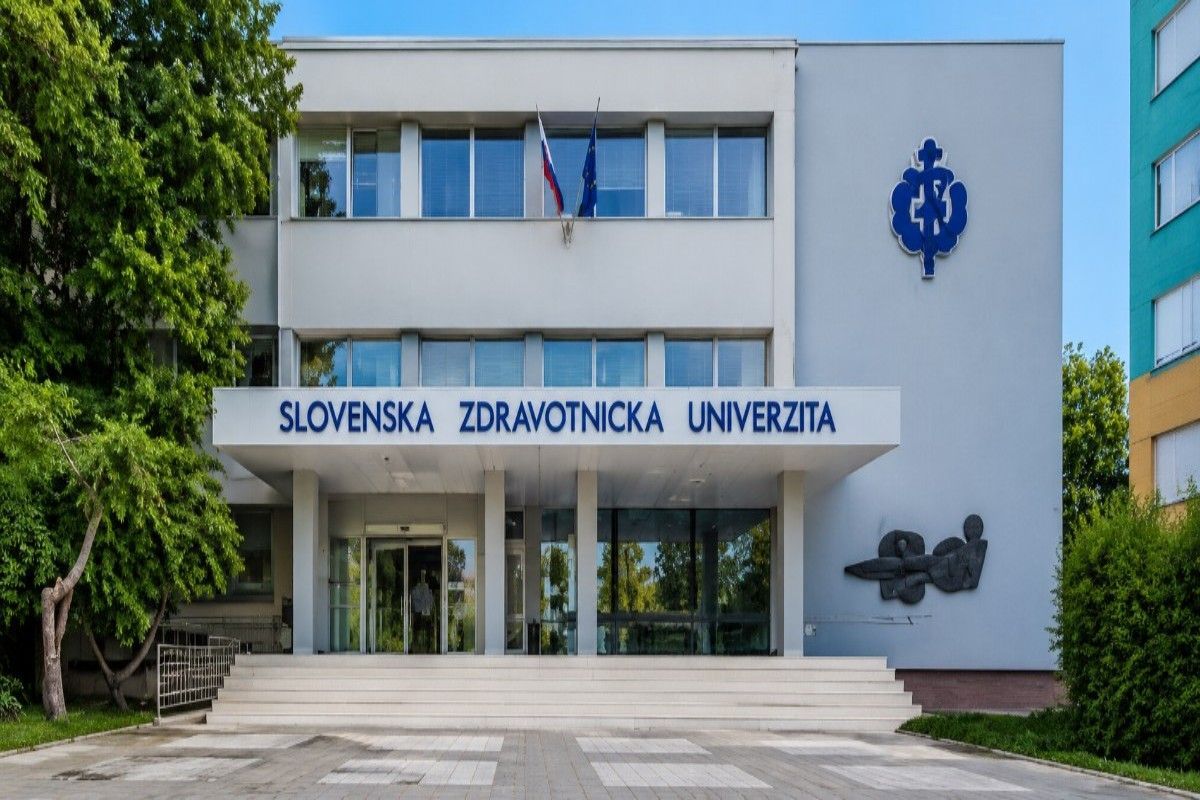
 Slovakia | Est. 1953
Slovakia | NMC (India); verify current listing at nmc.org.in before applying; WDOMS listed; EU Professional Qualifications Directive 2005/36/EC; SAAVŠ (Slovak Accreditation Agency for Higher Education); Ministry of Health of the Slovak Republic | English (full medium); Slovak language across four semesters for clinical communication; no Slovak required at admission medium
Expert will call you within 2 hours
The Slovak Medical University in Bratislava, known in Slovak as Slovenská zdravotnícka univerzita v Bratislave and referred to everywhere simply as SZU, holds a position in Slovak healthcare education that no other institution in the country occupies. It is the only university in Slovakia exclusively and entirely devoted to the health professions across all three levels of higher education; undergraduate, graduate, and doctoral; and has been doing this, under various names and structures, since 1953. That is not a marketing claim; it is a factual description of an institution built from the ground up to produce healthcare professionals and to keep upgrading them through the entire span of a medical career.
The roots of SZU go back to 1 May 1953, when the Slovak Institute for Postgraduate Education of Physicians was established in Trenčín to address a specific and practical need: training and continuously upgrading the skills of doctors and pharmacists already working in Slovakia's healthcare system. The Institute relocated to Bratislava in 1966 and went through several name changes over the following decades; the Institute of Further Education of Physicians and Pharmacists, then the Institute for Further Education of Professionals in Healthcare, and finally the Slovak Postgraduate Academy of Medicine in 1998; before being formally reconstituted as the Slovak Medical University in Bratislava by Act No. 401/2002 of the National Council of the Slovak Republic, with effect from 1 September 2002. Each name change reflected an expansion of purpose, not a departure from the original mission. The institution today still carries that founding identity: a place built specifically and only for medicine and healthcare, not a general university that added a medical school later.
SZU currently has four faculties; the Faculty of Medicine, the Faculty of Public Health, the Faculty of Nursing and Professional Health Studies, and the Faculty of Health; and operates from its campus at Limbová 12 in Bratislava's well-connected Nové Mesto district. One structural fact about SZU that sets it apart from most universities in Slovakia and elsewhere is that it operates under the Slovak Ministry of Health rather than the Ministry of Education. That might seem like an administrative detail, but it has a real effect on the institutional culture. SZU is accountable to the healthcare system, oriented toward clinical practice, and shaped by the needs of a functioning national health service. That practical, system-facing character runs through the way the Faculty of Medicine is structured, the way clinical training is prioritised, and the way graduates are prepared for real-world medical environments.
The Faculty of Medicine's English-medium General Medicine programme was launched in the 2012–2013 academic year and has since been fully accredited and listed in the World Directory of Medical Schools. This listing matters for international students from India because WDOMS registration is a prerequisite for NMC eligibility verification; though students must confirm the current NMC listing at nmc.org.in before applying, as that list is reviewed and updated periodically. The programme leads to the MUDr. Degree; Doctor of General Medicine; which is automatically recognised across all 27 EU member states under the Professional Qualifications Directive 2005/36/EC. The degree also carries international reach: SZU graduates are ECFMG-eligible, making the USMLE pathway to US residency available, and the General Medical Council in the UK recognises the university, enabling graduates to pursue GMC registration through the PLAB route.
One of the defining features of studying at SZU is the scale. Approximately 36 seats are available in the General Medicine programme each year, and places are genuinely competitive; admission is based on a written entrance examination in Biology and Chemistry, 160 questions across 150 minutes, with a maximum score of 640 points. Because the cohort is small, the teaching model is correspondingly intimate. Seminars and practicals run in groups of 8 to 15 students, which means you are not sitting in a 300-seat lecture theatre hoping the professor notices you exist. You are in small rooms, working through clinical problems, being directly assessed by faculty who know who you are. For students who learn well in that kind of environment, it is a significant advantage.
The six-year programme is taught entirely in English, which removes the language preparation burden that makes programmes in Portugal, Hungary, or Romanian-medium tracks considerably more demanding for Indian applicants. Slovak language instruction is included across four semesters of the degree; not as a hurdle but as a practical clinical tool, because you will be working with Slovak patients and Slovak-speaking medical staff during your hospital rotations. Most students find this manageable and genuinely useful. The Slovak language component is embedded within the programme and does not require any prior knowledge at the time of admission.
Clinical training is delivered at the University Hospital of the Slovak Medical University, which operates 14 outpatient departments and 5 laboratories, alongside affiliated hospitals across Bratislava. Students begin patient contact from Year 3 and move into full clinical rotations from Year 4 onwards, working under direct supervision across internal medicine, surgery, paediatrics, obstetrics and gynaecology, psychiatry, emergency medicine, and a range of specialities in Year 5. The maximum contact teaching load per week is 38 hours, which is structured across lectures, practical sessions, clinical training, and mandatory practice; a schedule designed to prevent the theoretical-clinical gap that can develop when students spend too long in classrooms before encountering real medicine.
SZU is a member of the European University Association, the Inter-Academy Medical Panel, and the Union Européenne des Médecins Spécialistes, situating it within the recognised international framework of European medical and academic bodies. It operates in the spirit of the Magna Charta Universitatum, the foundational charter of European universities, and its academic programmes run under the ECTS credit system, ensuring full compatibility with European higher education standards and credit transfer across EU institutions.
For Indian students weighing EU-regulated medical education options in 2026, SZU offers something specific: a fully English-medium, EU-recognised MUDr. degree from a state university inside the Schengen Area, with small cohorts, direct clinical access, and a total six-year cost; tuition plus living expenses in one of Central Europe's most affordable capitals; that sits comfortably below what comparable outcomes would cost in the UK, Ireland, or Australia. It is not the right choice for everyone, and the limited intake means it should not be treated as an easy option. But for students who meet the entrance standard and want a clean, English-medium path to an EU medical degree, it is a solid, factually verifiable choice.
No hidden charges, no donation. The full picture of costs at MBBS at the Slovak Medical University in Bratislava.
Tuition Fee
Approx. €9,000–10,500/year (₹8.1–9.5 lakh); total 6-year tuition €54,000–63,000 / ₹49–57 lakh; living costs €500–800/month
€9,000–10,500/year; 6-year total €54,000–63,000 (₹49–57 lakh)
Hostel Fee
Campus hostel for limited applicants; shared apartments €300–500/month; private studio €450–650/month
Campus hostel for limited applicants; shared apartments €300–500/month
Food & Meals
€150–300
Per month
Insurance
€150–300
Per year
Donation
No donation
No hidden charges
Total Estimated Cost
Approx. €65,000–80,000 all-inclusive (₹59–72 lakh).
6 Year
25–35%
Average FMGE first-attempt pass rates for students from many overseas medical universities. Students from structured programs consistently score higher.
Students returning to India need to clear the FMGE/NExT exam. MBBS at the Slovak Medical University in Bratislava integrates exam-oriented coaching into the regular curriculum so students are prepared from day one.
A structured program that takes you from foundational sciences to clinical mastery.
Introduction to Medicine, Latin for Medicine Foundation year covering the structural and molecular basis of human biology. Anatomy is taught with laboratory and histological sessions. Medical ethics introduced from semester one.
Anatomy I (Gross Anatomy & Histology), Medical Biophysics, Biochemistry I, Cell Biology, Physiology I,
Neuroanatomy taught with clinical relevance. Genetics and molecular medicine formally introduced. Pathophysiology begins building disease-mechanism thinking.
Anatomy II (Neuroanatomy & Topographic), Physiology II, Biochemistry II, Medical Genetics, Microbiology & Immunology I, Embryology, Pathophysiology I Systems-based deepening of Year 1.
Evidence-Based Medicine, Slovak Language I & II Bridge year between sciences and clinical medicine. Semiology becomes a standalone subject. First supervised patient contact begins. Slovak language instruction starts, building communication skills for hospital rotations.
General Pathology, Pathophysiology II, Pharmacology I & II, Microbiology & Immunology II, Epidemiology & Medical Statistics, Semiology & Physical Examination
Slovak Language III & IV First full clinical year at the University Hospital of SZU and affiliated Bratislava hospitals. Ward rounds, patient clerking, and case presentations in small supervised groups across all major disciplines.
Internal Medicine I, General Surgery I, Obstetrics & Gynaecology, Paediatrics I, Psychiatry, Radiology & Diagnostic Imaging.
Emergency Medicine, Family & Community Medicine Expanded speciality exposure across Bratislava's hospital network. Primary care introduced through family medicine placements. Research dissertation runs alongside clinical rotations.
Internal Medicine II, Surgery II, Neurology, ENT, Ophthalmology, Dermatology, Orthopaedics & Traumatology
Thesis Defence, State Final Examinations All clinical disciplines consolidated through a supervised internship, culminating in state final examinations and conferral of the MUDr. degree. Internship completed at SZU-affiliated hospitals in Slovakia. NMC-mandated internship in India required before NExT eligibility.
Supervised internship; Internal Medicine, Surgery, O&G, Paediatrics, Psychiatry, Emergency Medicine, Community Medicine

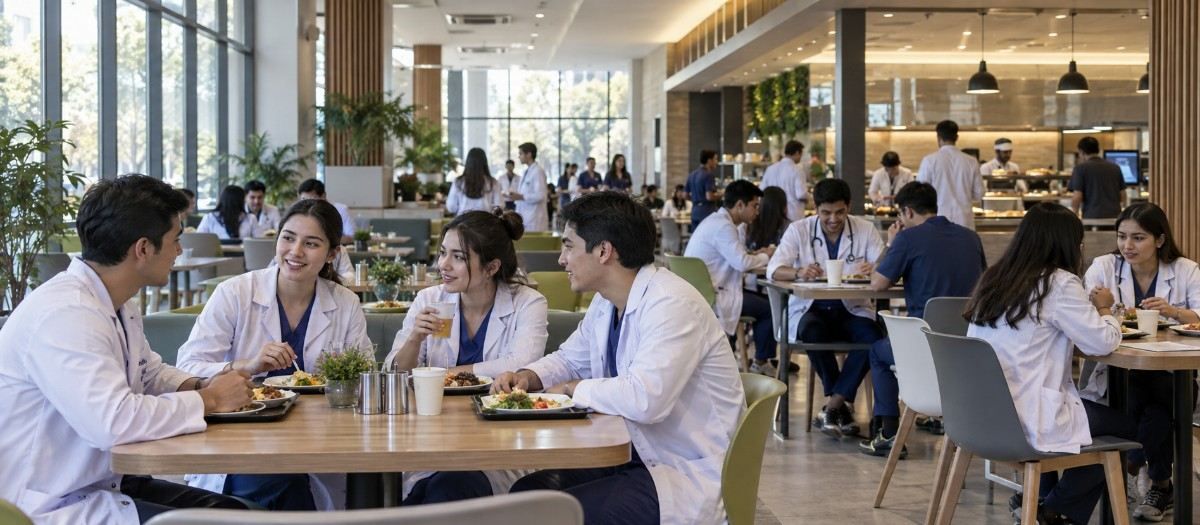
Furnished hostel rooms with Wi-Fi, laundry, 24/7 security, and Indian mess on or near campus.
Indian restaurants and mess facilities serving vegetarian and non-vegetarian home-style food daily.
Strong Indian community with cultural events, festival celebrations, and peer support groups.
Students get hands-on clinical training in government and private hospitals affiliated with the university.
Practical information for students planning to study at MBBS at the Slovak Medical University in Bratislava.
Prepare for all seasons. Thermal wear for winters, light clothing for summers. University provides heating in hostels.
Student visa processed with university invitation letter. Direct and connecting flights from major Indian cities.
Health insurance included in fees. Medical facility on campus plus city hospitals easily accessible.
Local SIM cards available. WhatsApp and video calls keep you connected with family back home.
Average monthly expenses of $150–$250 covering food, transport, and personal needs.
University library, online databases, and study groups. Seniors mentor juniors through academic challenges.
Our team guides you through every step — from application to arriving on campus.
Compare Comenius, Jessenius, and UPJŠ on tuition, city, entrance exam format, and intake size — not just which one costs the least.
Submit your application along with academic transcripts and NEET scorecard through the university’s official online admissions portal.
The university’s international admissions office reviews and verifies your submitted documents.
Sit the university’s Biology and Chemistry entrance exam, online (Jessenius) or on-campus (Comenius, UPJŠ), depending on your chosen faculty.
Universities issue offer letters after entrance exam results are finalized; timing varies by university and exam session.
Pay the first tuition installment or agreed deposit to confirm your seat.
Apply for the National (D-type) visa at the Slovak Embassy in New Delhi; realistic processing time is 15–45 working days.
Book flights and coordinate arrival timing with the university’s international office ahead of the September intake.
In the final weeks, finalize documents, arrange winter clothing and health insurance, confirm dormitory allotment in writing, and set up currency exchange.
Complete on-arrival residence registration with local authorities, open a local bank account, get a local SIM card, attend orientation, and begin settling into your dormitory and academic schedule.
Admission Helpline — Contact our counsellors for step-by-step assistance.
“The faculty here is incredibly supportive. The clinical training during hospital rotations has given me real confidence in patient care.”
“Affordable fees without compromising on quality. The campus facilities and hostel life made my transition abroad very smooth.”
“English medium instruction and WHO-recognized curriculum were the deciding factors for me. No regrets so far — excellent experience overall.”
“The university helped with everything from visa to accommodation. Hospital exposure from year three has been invaluable for my FMGE prep.”
“Just cleared my licensing exam on the first attempt. The structured coaching and mock exams during final year were a game-changer.”
“Safe campus, good food options, and a strong Indian student community. The teaching methodology is very practical and hands-on.”
Yes; fully. Slovak is integrated across four semesters for clinical communication only, not required at admission.
Around 36 per year across all General Medicine applicants. Limited intake makes the entrance exam genuinely competitive.
160 MCQs; 80 Biology, 80 Chemistry; covering secondary school knowledge. 150 minutes, 640 points maximum.
SZU is WDOMS-listed, a prerequisite for NMC verification. Always confirm the current NMC listing at nmc.org.in before applying.
It is recognised across all 27 EU states under Directive 2005/36/EC, is ECFMG-eligible for USMLE, and accepted by the GMC (UK) via the PLAB route.
The University Hospital of SZU has 14 outpatient departments and 5 laboratories, plus additional affiliated hospital placements across Bratislava.
Yes. Valid NEET qualification is mandatory for all Indian students applying to foreign medical universities under NMC guidelines.
No. Slovak is taught within the programme itself over four semesters; no prior proficiency needed at admission.
A: Yes. A valid NEET score is mandatory for Indian students applying to any foreign medical university under NMC regulations. NEET qualification is a prerequisite before applying.
A: No. Slovak proficiency is not required at the time of application or admission. Slovak language is taught within the programme itself over four semesters to equip students for clinical communication with patients during hospital rotations.


Our expert counsellors will guide you through the complete admission process — from documents to airport pickup.