Q. Is this a public university or a private college?
+UoM is Mauritius's only national public university, established in 1965 by an Act of Parliament. The Department of Medicine is fully part of this institution.

 Mauritius | Est. 2004
Mauritius | Medical Council of Mauritius | TEC Mauritius | WDOMS listed | AIU member | NMC (India); verify your specific batch status at nmc.org.in before applying. | English throughout. No French, no Creole, no language preparation needed. medium
Expert will call you within 2 hours
The University of Mauritius was established in 1965 and holds the distinction of being the country's oldest and only national public university. That matters more than it might first seem. When a family is deciding where to send their child for a six-year medical degree, the difference between a private college and a government-backed public university is not just a matter of prestige; it is about stability, accountability, and the long-term credibility of the degree. The Faculty of Medicine and Health Sciences, and specifically its Department of Medicine, is UoM's medical arm. It is where that institutional weight actually shows up in practice.
Medical education at UoM did not begin overnight. The university has been involved in health sciences since 1997, when it ran a BSc (Hons) Medical Science programme in partnership with the University of Bordeaux in France. That programme eventually led to an MBChB degree awarded by UoM. The Department of Medicine itself was formally set up in August 2004, bringing together qualified medical academics from the former Department of Health and Medical Sciences and the SSR Centre for Medical Research and Studies. So by the time the current MD programme launched in 2013, there was already a decade and a half of medical education experience sitting behind it.
The MD programme that exists today was built in collaboration with two significant partners; the University of Geneva in Switzerland and the Mauritian Ministry of Health and Wellness. The University of Geneva connection is worth paying attention to. This is not a branding exercise. The partnership shaped the actual curriculum structure, brought in a problem-based learning methodology, and defined the clinical training framework that students go through today. Swiss medical education is known for being rigorous, evidence-based, and carefully sequenced; and that influence is embedded in how UoM teaches medicine.
In September 2020, the University Council formally created the Faculty of Medicine and Health Sciences as a standalone faculty, separating medical and health science education from the broader Faculty of Science. The FMHS now has two departments under it; the Department of Medicine, which runs the MD programme, and the Department of Health Sciences, which handles allied health disciplines like Physiotherapy, Pharmacy, Nursing, Biomedical Sciences, and Nutritional Sciences. The faculty operates from UoM's main campus in Réduit, Moka; a planned university town in the geographic centre of the island, surrounded by greenery, connected to Port Louis, and genuinely pleasant to live in.
The MD degree is a six-year programme, structured in two halves. Years 1 to 3 form the Bachelor of Medicine phase, covering pre-clinical and para-clinical sciences; anatomy, physiology, biochemistry, pathology, pharmacology, and the foundational knowledge that underpins clinical practice. Years 4 to 6 form the Master of Medicine phase, where students move into full clinical rotations at government hospitals across Mauritius. Year 6 is a dedicated ten-month supervised internship, rotating through all major disciplines before graduation. The research dissertation starts in Year 4 and is submitted at the end of Year 5; so students are doing academic work alongside clinical training, not as a separate isolated exercise.
All teaching is in English. There is no language preparation year, no French requirement, and no Creole needed for academic work. For Indian students, this is a straightforward advantage. The curriculum is taught and examined in the same language in which most Indian students have studied throughout school; and the clinical environment in Mauritius operates in English as well.
Clinical training happens at real government hospitals; Victoria Hospital, Sir Seewoosagur Ramgoolam National Hospital, Jawaharlal Nehru Hospital, Flacq Hospital, and other public health facilities across the island. These are not purpose-built training units attached to a private college. They are functioning public hospitals that serve the Mauritian population, handling genuine emergencies, referrals, and a wide variety of cases across all specialties. Students rotate through these hospitals under the supervision of consultants, which means the clinical exposure is grounded in actual practice, not a controlled simulation environment.
The first batch of students who enrolled in 2013 graduated in September 2019. After completing eighteen months of pre-registration training and passing examinations conducted by the Professional Council, they received full Medical Council of Mauritius registration in June 2022. That full cycle has now been completed. The pathway from enrolment to licensure has been walked by real graduates; it is not theoretical.
The University of Mauritius is listed in the Times Higher Education World University Rankings and holds membership in several respected international bodies; the Association of Commonwealth Universities, the Association of African Universities, the Association of Indian Universities, and the International Association of Universities, among others. The Faculty of Medicine and Health Sciences appears in the World Directory of Medical Schools (WDOMS), which is the fundamental requirement for NMC eligibility in India and for international licensing examinations like the USMLE in the United States and PLAB in the United Kingdom.
For Indian students, the non-academic factors also stack up well. Over 65% of Mauritius's population is of Indian origin. Hindi and Bhojpuri are spoken widely. Indian food is not difficult to find. Festivals are celebrated publicly. The cultural distance between an Indian student and Mauritian daily life is genuinely small compared to studying in Eastern Europe, Central Asia, or most of Southeast Asia. Mauritius is also a politically stable, visa-friendly country with a functioning public healthcare system, low crime, and a standard of infrastructure that makes daily life comfortable rather than stressful.
The cost is a real advantage too. International tuition runs approximately USD 7,500 to 9,000 per year. Living costs in Réduit are modest. Over six years, the all-in cost is a fraction of what private Indian medical colleges charge; and the degree is from a public national university, not a private institution operating with variable oversight. That combination of cost, quality, English-medium instruction, and institutional credibility makes UoM a genuinely strong option for students who want a serious medical education at a price that does not require their family to take on extraordinary financial risk.
No hidden charges, no donation. The full picture of costs at MBBS in University of Mauritius Faculty of Medicine and Health Sciences, Department of Medicine.
Tuition Fee
USD 7,500–9,000/year (INR 6–7.5 lakh/year). Total six-year tuition: USD 45,000–54,000 / INR 36–45 lakh. Living costs around USD 250–350/mont
USD 7,500–9,000/year; 6-year total: USD 45,000–54,000 / INR 36–45 lakh. No capit
Hostel Fee
Shared accommodation approx. USD 125–170/month; private options available
Shared accommodation approx. USD 125–170/month; private options available
Food & Meals
Approx. USD 80–150/month; Indian food accessible; self-cooking possible
per momonth
Insurance
Mandatory for student visa; approx. USD 150–300/year
per year
Donation
no Donation
no Hidden Fee
Total Estimated Cost
Approx. USD 55,000–70,000 all-inclusive / INR 45–58 lakh; one of the most cost-effective public university medical degrees available to Indi
year
25–35%
Average FMGE first-attempt pass rates for students from many overseas medical universities. Students from structured programs consistently score higher.
Students returning to India need to clear the FMGE/NExT exam. MBBS in University of Mauritius Faculty of Medicine and Health Sciences, Department of Medicine integrates exam-oriented coaching into the regular curriculum so students are prepared from day one.
A structured program that takes you from foundational sciences to clinical mastery.
Year 1 builds the foundation; how the body is structured and how it works. Anatomy includes cadaveric dissection. Importantly, medical ethics and patient communication are introduced from semester one, which is a direct reflection of the Geneva-influenced curriculum. Students start thinking like doctors, not just studying for exams.
Anatomy, Physiology I, Biochemistry I, Cell Biology, Medical Ethics, Introduction to Clinical Medicine
Year 2 goes deeper into systems-level science and begins introducing disease. Students study the nervous system, genetics, and microbiology, and start connecting normal function with what goes wrong; the first step toward clinical thinking.
Neuroanatomy, Physiology II, Biochemistry II, Genetics, Microbiology & Immunology, Introduction to Pathology
The bridge year. Semiology; reading patient signs and symptoms; is taught through actual patient-encounter practice. Pharmacology is taught with prescribing logic. Research methods are introduced here to prepare students for the dissertation that begins in Year 4.
Sciences General Pathology, Pharmacology, Microbiology II & Immunology, Epidemiology & Biostatistics, Semiology & Physical Examination, Evidence-Based Medicine, Research Methods
First full hospital year. Students attend supervised ward rounds, clerk patients, present cases, and go through structured clinical assessments at government teaching hospitals. Medicine, Surgery, O&G, and Paediatrics form the core. Research dissertation begins alongside rotations.
Internal Medicine I, Surgery I, Obstetrics & Gynaecology I, Paediatrics I, Psychiatry, Radiology & Imaging
Year 5 covers the full range of specialities; Eye, ENT, Skin, Bones, Emergency, and Community Medicine alongside continued Medicine and Surgery postings. Research dissertation is completed and submitted by end of Year 5.
Internal Medicine II, Surgery II, ENT, Ophthalmology, Dermatology, Orthopaedics & Trauma, Family & Community Medicine, Emergency Medicine
A ten-month full-time internship rotating through all core disciplines at FMHS-affiliated government hospitals. This is the final stage before graduation. Indian students must confirm with NMC whether completing the internship in Mauritius satisfies NExT eligibility, or whether it needs to be done in India; clarify this before enrolling.
Internal Medicine, Surgery, O&G, Paediatrics, Psychiatry, Emergency, Community Medicine

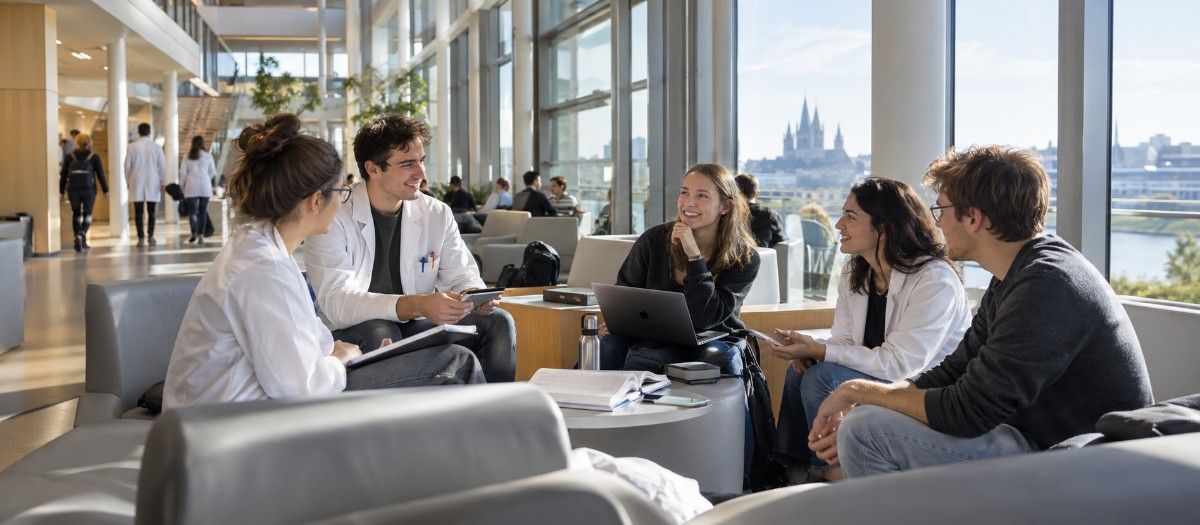
Furnished hostel rooms with Wi-Fi, laundry, 24/7 security, and Indian mess on or near campus.
Indian restaurants and mess facilities serving vegetarian and non-vegetarian home-style food daily.
Strong Indian community with cultural events, festival celebrations, and peer support groups.
Students get hands-on clinical training in government and private hospitals affiliated with the university.
Practical information for students planning to study at MBBS in University of Mauritius Faculty of Medicine and Health Sciences, Department of Medicine.
Prepare for all seasons. Thermal wear for winters, light clothing for summers. University provides heating in hostels.
Student visa processed with university invitation letter. Direct and connecting flights from major Indian cities.
Health insurance included in fees. Medical facility on campus plus city hospitals easily accessible.
Local SIM cards available. WhatsApp and video calls keep you connected with family back home.
Average monthly expenses of $150–$250 covering food, transport, and personal needs.
University library, online databases, and study groups. Seniors mentor juniors through academic challenges.
Our team guides you through every step — from application to arriving on campus.
Our Mauritius specialist confirms the partner institution's current NMC status, provides an honest cost comparison with Nepal and Georgia, and explains the cultural advantages.
Our team provides the Mauritius-specific checklist. All documents are verified before university submission.
Direct submission to NMC-verified Mauritius partner. Offer letter typically within 7–14 days.
Receives offer, explains terms, and manages initial fee payment.
Our team assists with the Mauritius e-visa application processed within 2–5 business days.
Mauritius island orientation, accommodation, transport, cyclone awareness, currency, Indian community contacts, and first-week university logistics.
We advise on routing to SSR International Airport (MRU). Direct Air Mauritius / Air India from Mumbai or Delhi.
Our local Mauritius team meets you at the airport.
Our local team handles accommodation check-in and university registration in the first week.
We file the Student Residence Permit at the Mauritius Passport and Immigration Office within your first weeks. Renewed annually.
Admission Helpline — Contact our counsellors for step-by-step assistance.
“The faculty here is incredibly supportive. The clinical training during hospital rotations has given me real confidence in patient care.”
“Affordable fees without compromising on quality. The campus facilities and hostel life made my transition abroad very smooth.”
“English medium instruction and WHO-recognized curriculum were the deciding factors for me. No regrets so far — excellent experience overall.”
“The university helped with everything from visa to accommodation. Hospital exposure from year three has been invaluable for my FMGE prep.”
“Just cleared my licensing exam on the first attempt. The structured coaching and mock exams during final year were a game-changer.”
“Safe campus, good food options, and a strong Indian student community. The teaching methodology is very practical and hands-on.”
UoM is Mauritius's only national public university, established in 1965 by an Act of Parliament. The Department of Medicine is fully part of this institution.
A Doctor of Medicine (MD), awarded by the University of Mauritius; a two-part degree: Bachelor of Medicine (Years 1–3) and Master of Medicine (Years 4–6).
The MD was developed in collaboration with the University of Geneva, Switzerland, and runs with the active involvement of Mauritius's Ministry of Health and Wellness.
Yes. NEET is compulsory for Indian students as per NMC regulations for overseas medical programmes.
Victoria Hospital, SSR National Hospital, Jawaharlal Nehru Hospital, Flacq Hospital, and other government-affiliated facilities across Mauritius.
FMHS is listed in WDOMS. Always verify your specific intake's NMC status at nmc.org.in before enrolling, as recognition listings can change.
Indian students should confirm with NMC directly whether the Year 6 Mauritius internship is accepted or whether they need to complete internship in India for NExT eligibility.
Yes, completely. No French or Creole is required for academic coursework.
Graduates can appear for NExT (India), USMLE via ECFMG (USA), PLAB (UK), or register in other countries. The UoM MD degree is internationally recognised through WDOMS listing.
Approximately USD 55,000–70,000 all-inclusive (INR 45–58 lakh), covering tuition, accommodation, food, insurance, and personal expenses; well below private Indian medical college fees.


Our expert counsellors will guide you through the complete admission process — from documents to airport pickup.