Q1 Is SSR NMC-recognised for Indian students?
+SSR has historically been NMC-listed. Verify your specific batch's current status at nmc.org.in before applying.

 Mauritius | Est. 1999
Mauritius | NMC (India); verify current batch status at nmc.org.in; Medical Council of Mauritius; WHO (World Directory of Medical Schools listed); Tertiary Education Commission (TEC) Mauritius; University of Mauritius (degree-awarding body) | English (full medium of instruction throughout); no language preparation year required medium
Expert will call you within 2 hours
Sir Seewoosagur Ramgoolam Medical College, known widely as SSR Medical College or SSRMC, holds a singular place in the history of medical education in Mauritius. It is the first medical college ever established in the country, set up in 1999 by the Indian Ocean Medical Institute Trust (IOMIT) in memory of Sir Seewoosagur Ramgoolam, the first Prime Minister of Mauritius and the man revered across the island as the father of the nation. The founder chairman and managing trustee of IOMIT is Rudra Pratap Narain Singh, an educationist and social planner from India who championed the idea of bringing structured medical education to the Indian Ocean island nation. The college is situated in Belle Rive, a quiet locality near Curepipe in the central plateau region of Mauritius, approximately 15 kilometres from Port Louis, the capital city. The setting is green, hilly, and peaceful; exactly the kind of environment where focused study and clinical training can coexist without the noise and distraction of a crowded urban centre.
The origin of SSR Medical College was not a private commercial venture. It came out of a formal planning exercise involving multiple government ministries including Health, Education, and Economic Planning, along with the Tertiary Education Commission, the University of Mauritius, and the IOMIT working together under a task force formed under the Prime Minister's Office of Mauritius. This institutional origin gives SSR a solidity that many newer overseas medical colleges lack. It is affiliated with the University of Mauritius, which is the degree-awarding body, and holds approvals from the Tertiary Education Commission (TEC) of Mauritius. The MBBS degree awarded to students of SSRMC carries the seal of the University of Mauritius and is recognised by the Medical Council of Mauritius, the World Health Organization (WHO), and the National Medical Commission (NMC) of India; the last of which is the most critical recognition for Indian students aiming to return home and practice medicine.
The campus at Belle Rive spreads across approximately 30 acres of land provided by the Government of Mauritius. The built-up area of academic buildings alone covers around 175,000 square feet, housing the pre-clinical and para-clinical departments. The infrastructure is modern and purposefully built for medical education. The college has air-conditioned lecture theatres, a large examination hall, a well-stocked library with online connectivity and Wi-Fi access, and more than a dozen seminar and tutorial rooms for small-group teaching. One of its more distinctive features is the Clinical Skills Laboratory; a dedicated simulation space equipped with medical teaching aids imported from Japan. The dissection hall spans 5,000 square feet and is equipped with teaching aids from Germany, enabling anatomy instruction of a standard that matches the depth of the subject. For Indian students accustomed to the MBBS format, the physical infrastructure at SSR will feel familiar without feeling inferior.
Where SSR Medical College holds a genuine and verifiable structural advantage is in its clinical training network. The Ministry of Health and Quality of Life of Mauritius has formally committed its hospital infrastructure to support the clinical education of SSR students. This includes access to Jawaharlal Nehru Hospital, Victoria Hospital, SSR National Hospital, and other specialty hospitals; collectively providing more than 2,000 beds for student clinical postings. Victoria Hospital is an 800-bed multispeciality facility and Jawaharlal Nehru Hospital adds another 600 beds, both of which serve as the primary clinical training grounds from the third year onwards. College transportation ferries students to and from hospital postings, and the structure of clinical rotations is coordinated with the affiliated hospitals to ensure supervised ward exposure across all major medical and surgical disciplines.
The MBBS programme at SSR Medical College follows a 5-year curriculum divided into 10 semesters of approximately six months each, with the degree awarded after completion of a one-year compulsory rotating internship; making the total duration effectively six years for students who complete internship locally. The medium of instruction is English throughout, which removes one of the biggest barriers Indian and international students face in several other overseas medical destinations such as Russia, Ukraine, China, or Portugal. The curriculum structure mirrors the NMC-prescribed framework for MBBS programmes, covering pre-clinical, para-clinical, and clinical phases in a structured and progressive sequence. Students who complete the programme and sit for the NExT (National Exit Test) in India must verify their batch's current NMC recognition status at nmc.org.in before applying, as regulatory listings should always be confirmed independently.
For Indian students in particular, SSR Medical College offers a combination of factors that are genuinely rare in the overseas MBBS market. English as the teaching language means no language preparation year is needed. The curriculum structure is familiar. The cultural environment in Mauritius is, arguably, one of the easiest transitions for Indian students of any medical college abroad; Mauritius has a population that is over 60% of Indian origin, Hindi is widely understood, Indian vegetarian food is available on campus and in local restaurants, and the legal and administrative systems are stable. The two on-campus cafeterias, Nilkanth and Kailash, serve subsidised North and South Indian vegetarian and non-vegetarian meals. The hostel facilities are within campus and are gender-segregated. Cost of living in Mauritius is moderate and significantly below what students would spend in the UK, Australia, or even certain European destinations.
Tuition fees at SSR Medical College are in the mid-range for overseas MBBS programmes. Approximate annual tuition is in the range of USD 8,000–$9,000 USD/year, with total MBBS tuition over five years estimated at approximately USD 60,000–75,000 (INR 50–63 lakh). When living costs, accommodation, food, and insurance are factored in, the total six-year cost including internship remains well below the benchmarks set by private Indian medical colleges or Western university medical programmes. There are no donation or capitation fees. What you pay is what the institution charges; a transparency that is not universal in this sector.
Graduates of SSR Medical College hold a degree from the University of Mauritius, a WHO-listed institution, and are eligible to appear for the NExT in India (subject to current NMC listing verification), pursue USMLE preparation and ECFMG certification for residency pathways in the United States, and explore registration routes in other countries. Mauritius itself offers internship opportunities, and students who complete their internship locally do so under the supervision of qualified clinicians at affiliated government hospitals. The career trajectory from SSR is comparable to other mid-tier international MBBS programmes, provided students put in the preparation required for licensing examinations in whichever country they intend to practice.
No hidden charges, no donation. The full picture of costs at MBBS in SSR Medical College.
Tuition Fee
Approx. USD 8,000 per year; Total 5-year tuition approx. USD 40,000/year; living costs approx. USD 250–350/month
USD 8,000/year; total 5 years: USD 40,000. No capitation or donation fees.
Hostel Fee
On-campus, gender-segregated; shared rooms; approx. USD 100–200/month
On-campus, gender-segregated; shared rooms; approx. USD 100–200/month
Food & Meals
Two campus cafeterias (Nilkanth & Kailash); Indian meals, veg & non-veg; approx. USD 80–150
Per Month
Insurance
Mandatory for student visa; approx. USD 150–300
Per Year
Donation
No donation
No hidden charges
Total Estimated Cost
Approximately USD 80,000–96,000 all-inclusive (INR 67–80 lakh), covering tuition, hostel, food, insurance, and living costs.
6 Year
25–35%
Average FMGE first-attempt pass rates for students from many overseas medical universities. Students from structured programs consistently score higher.
Students returning to India need to clear the FMGE/NExT exam. MBBS in SSR Medical College integrates exam-oriented coaching into the regular curriculum so students are prepared from day one.
A structured program that takes you from foundational sciences to clinical mastery.
Cadaveric dissection is conducted in the dedicated 5,000 sq ft hall with German teaching aids. Basic body systems and cellular foundations are covered alongside early public health orientation.
Anatomy (Gross Anatomy, Histology & Embryology), Physiology I, Biochemistry I, Community Medicine (Intro), Medical Ethics.
Year 2 moves into system-level physiology and disease mechanisms. Students begin linking normal function to pathology — the first step toward para-clinical thinking.
Anatomy II (Neuroanatomy, Applied Anatomy), Physiology II, Biochemistry II, Pathology I (General), Microbiology I.
This is the bridge year. Pharmacology is taught with clinical prescribing logic. Students begin supervised hospital visits and observation postings at affiliated hospitals.
Pathology II (Systemic), Pharmacology I & II, Microbiology II & Immunology, Forensic Medicine, Community Medicine II, Epidemiology & Biostatistics.
The first full clinical year, with regular postings at Victoria and JN Hospitals. Students participate in ward rounds, patient clerking, case presentations, and clinical skill assessments.
Internal Medicine I, General Surgery I, Obstetrics & Gynaecology I, Paediatrics I, Radiology & Clinical Imaging.
Year 5 covers the full breadth of clinical specialities. Students rotate through casualty departments for Emergency Medicine exposure and complete a research component before graduating.
Internal Medicine II, Surgery II, ENT, Ophthalmology, Dermatology, Orthopaedics & Trauma, Psychiatry, Emergency Medicine, Family & Community Medicine.
Internship can be completed at SSRMC-affiliated hospitals in Mauritius. Indian students should confirm with NMC whether this qualifies toward NExT eligibility or must be done in India.
Internal Medicine, Surgery, O&G, Paediatrics, Psychiatry, Emergency, Community Medicine

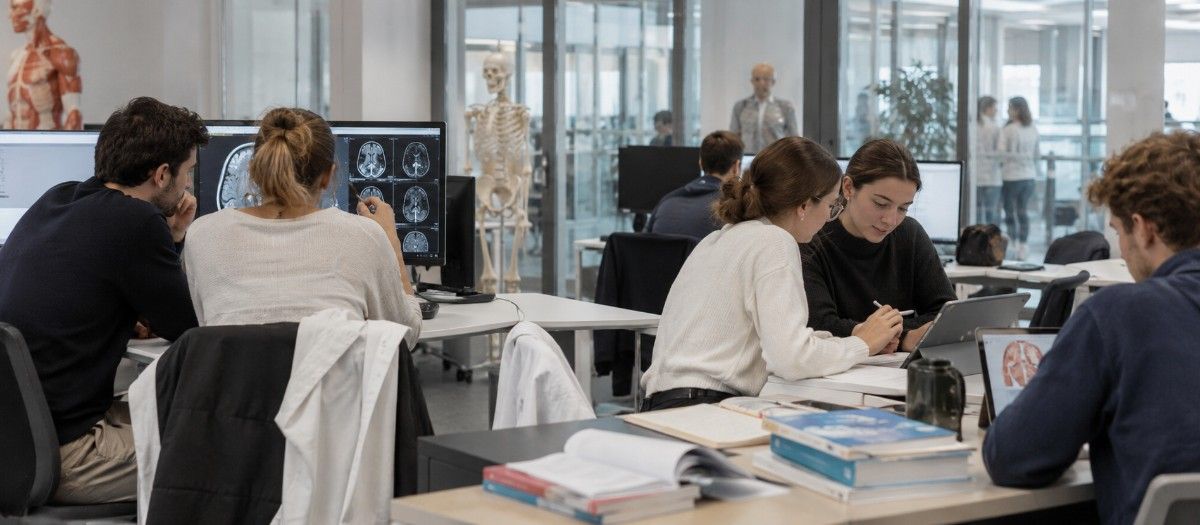
Furnished hostel rooms with Wi-Fi, laundry, 24/7 security, and Indian mess on or near campus.
Indian restaurants and mess facilities serving vegetarian and non-vegetarian home-style food daily.
Strong Indian community with cultural events, festival celebrations, and peer support groups.
Students get hands-on clinical training in government and private hospitals affiliated with the university.
Practical information for students planning to study at MBBS in SSR Medical College.
Prepare for all seasons. Thermal wear for winters, light clothing for summers. University provides heating in hostels.
Student visa processed with university invitation letter. Direct and connecting flights from major Indian cities.
Health insurance included in fees. Medical facility on campus plus city hospitals easily accessible.
Local SIM cards available. WhatsApp and video calls keep you connected with family back home.
Average monthly expenses of $150–$250 covering food, transport, and personal needs.
University library, online databases, and study groups. Seniors mentor juniors through academic challenges.
Our team guides you through every step — from application to arriving on campus.
Our Mauritius specialist confirms the partner institution's current NMC status, provides an honest cost comparison with Nepal and Georgia, and explains the cultural advantages.
Our team provides the Mauritius-specific checklist. All documents are verified before university submission.
Direct submission to NMC-verified Mauritius partner. Offer letter typically within 7–14 days.
Receives offer, explains terms, and manages initial fee payment.
Our team assists with the Mauritius e-visa application processed within 2–5 business days.
Mauritius island orientation, accommodation, transport, cyclone awareness, currency, Indian community contacts, and first-week university logistics.
We advise on routing to SSR International Airport (MRU). Direct Air Mauritius / Air India from Mumbai or Delhi.
Our local Mauritius team meets you at the airport.
Our local team handles accommodation check-in and university registration in the first week.
We file the Student Residence Permit at the Mauritius Passport and Immigration Office within your first weeks. Renewed annually.
Admission Helpline — Contact our counsellors for step-by-step assistance.
“The faculty here is incredibly supportive. The clinical training during hospital rotations has given me real confidence in patient care.”
“Affordable fees without compromising on quality. The campus facilities and hostel life made my transition abroad very smooth.”
“English medium instruction and WHO-recognized curriculum were the deciding factors for me. No regrets so far — excellent experience overall.”
“The university helped with everything from visa to accommodation. Hospital exposure from year three has been invaluable for my FMGE prep.”
“Just cleared my licensing exam on the first attempt. The structured coaching and mock exams during final year were a game-changer.”
“Safe campus, good food options, and a strong Indian student community. The teaching methodology is very practical and hands-on.”
SSR has historically been NMC-listed. Verify your specific batch's current status at nmc.org.in before applying.
English throughout. No language preparation year needed.
5 years (degree) + 1 year internship = 6 years effective.
Victoria Hospital (800 beds), Jawaharlal Nehru Hospital (600 beds), SSR National Hospital, and other government-affiliated specialty hospitals; over 2,000 beds total.
Yes, a valid NEET score is required for Indian students as per NMC regulations.
Approximately USD 80,000–96,000 all-inclusive (INR 67–80 lakh), covering tuition, hostel, food, insurance, and living costs.
Very much so. Over 60% of the population is of Indian origin, Hindi is widely spoken, and Indian food is available on campus. The cultural transition is much smoother compared to most overseas MBBS destinations.
Check with NMC directly; confirm whether a Mauritius-completed internship counts or whether it must be done in India before enrolling.
Graduates can appear for NExT (India), pursue USMLE through ECFMG (USA), or register in other countries. The University of Mauritius degree is WHO-listed and internationally recognised.
A valid NEET score is required. Minimum PCB percentage at 10+2 level is 50–60%; confirm current NMC guidelines before applying. Age must be 17–25 years by December 31 of the admission year.


Our expert counsellors will guide you through the complete admission process — from documents to airport pickup.