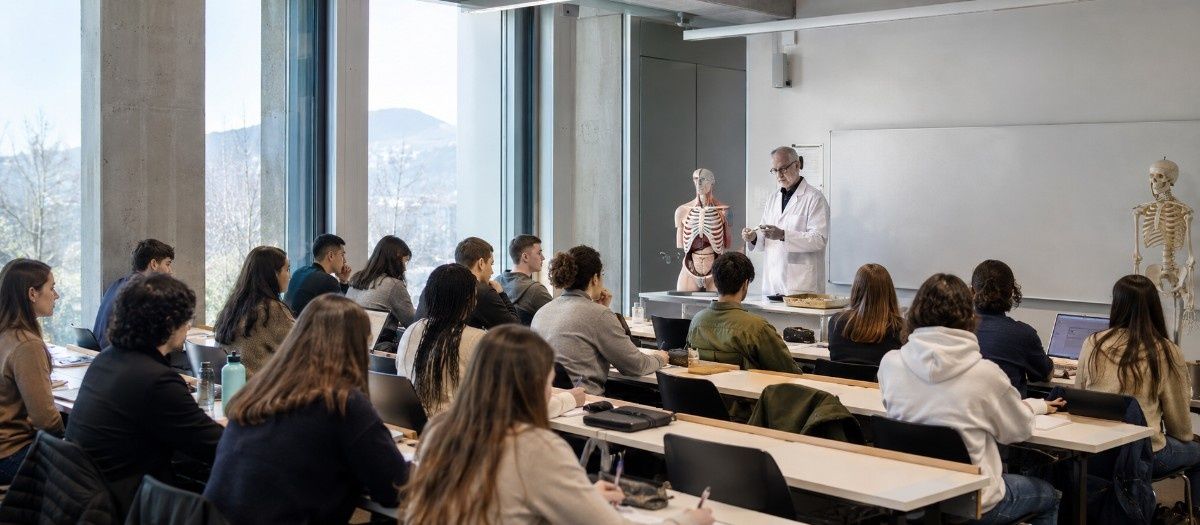
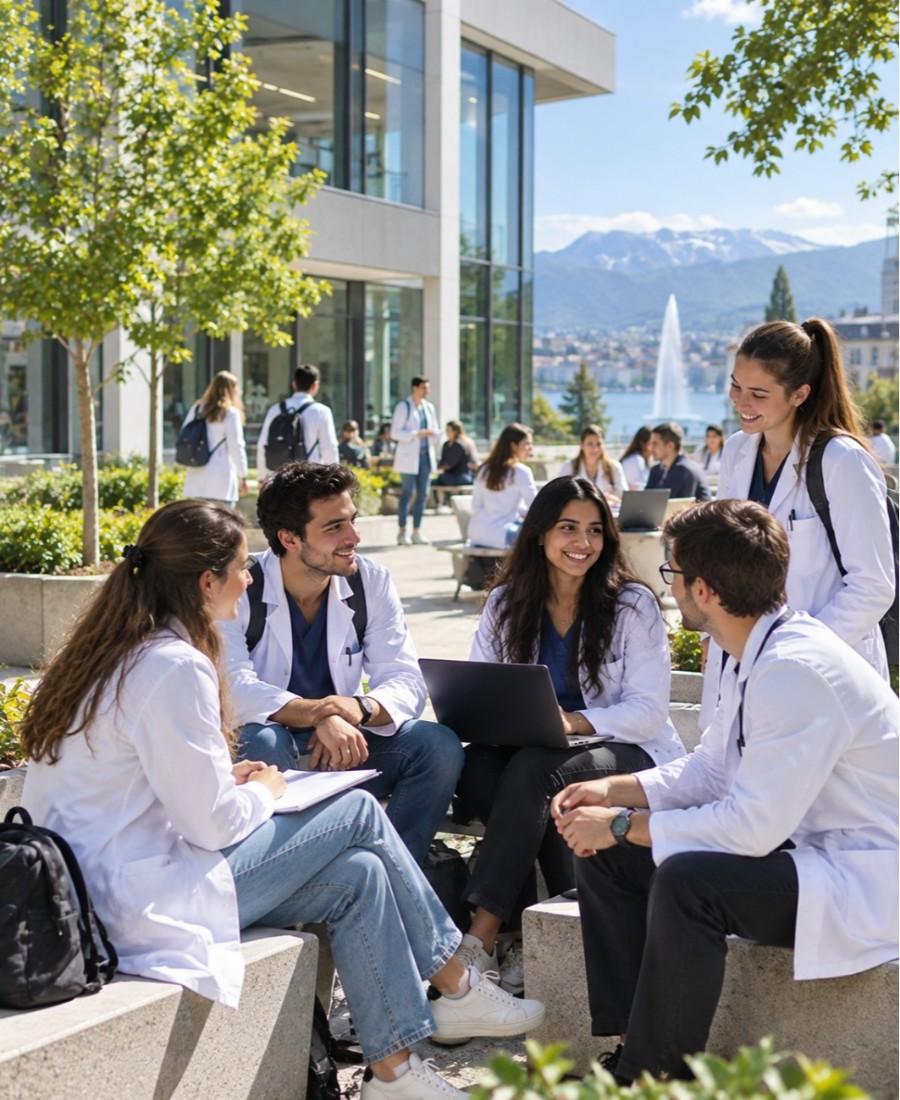
The Faculty of Medicine at the University of Geneva is one of Switzerland's most prestigious and internationally recognised medical schools. Renowned for excellence in medical education, biomedical research, clinical innovation, and global health, the faculty has consistently contributed to advances in healthcare while educating generations of physicians, surgeons, researchers, and healthcare leaders. Located in Geneva, one of the world's foremost diplomatic and scientific hubs, the faculty benefits from close collaboration with international organisations, leading research institutions, and one of Switzerland's largest university hospitals.
Founded in 1559 by the French theologian John Calvin as the Academy of Geneva, the institution originally focused on theology and the humanities. Over the centuries, it gradually expanded its academic disciplines and evolved into the modern University of Geneva in 1873. The Faculty of Medicine was officially established in 1876, marking the beginning of structured medical education and scientific research at the university. Since then, it has grown into one of Europe's leading centres for medical training and biomedical discovery.
Throughout its history, the Faculty of Medicine has continuously adapted to changing healthcare needs by integrating advances in medical science, technology, and patient care into its curriculum. Today, it offers a comprehensive medical programme that combines rigorous scientific education with extensive clinical experience and research opportunities. Students are encouraged to develop analytical thinking, professional ethics, effective communication, and lifelong learning skills essential for modern medical practice.
The curriculum begins with a strong foundation in anatomy, physiology, biochemistry, histology, embryology, molecular biology, genetics, pathology, microbiology, immunology, pharmacology, and behavioural sciences. As students progress, theoretical knowledge is integrated with clinical skills through problem-based learning, simulation training, laboratory work, and early patient interaction. This progressive educational model ensures that graduates are well prepared for clinical practice and future specialisation.
Clinical education is delivered primarily through the Geneva University Hospitals (HUG), one of Switzerland's largest and most advanced academic healthcare systems. HUG comprises multiple hospitals and specialised healthcare centres that provide comprehensive medical services across nearly every specialty. Students gain practical experience in internal medicine, surgery, paediatrics, obstetrics and gynaecology, psychiatry, neurology, cardiology, oncology, emergency medicine, intensive care, and many other disciplines under the supervision of experienced clinicians.
One of the defining characteristics of the Faculty of Medicine is its leadership in biomedical research. Researchers at the university conduct internationally recognised studies in oncology, immunology, infectious diseases, neuroscience, genetics, precision medicine, cardiology, endocrinology, transplantation, regenerative medicine, digital health, and public health. The faculty actively promotes translational research, enabling discoveries made in laboratories to be rapidly applied in clinical practice for improved patient care.
The university is particularly recognised for its contributions to global health research. Geneva hosts numerous international organisations, including the World Health Organization, the International Committee of the Red Cross, UNAIDS, the World Trade Organization, and several United Nations agencies. This unique environment enables students and researchers to engage directly with international healthcare initiatives, humanitarian medicine, global disease surveillance, health policy, and public health programmes.
Research infrastructure at the university includes advanced molecular biology laboratories, biomedical imaging facilities, simulation centres, clinical research units, genomics platforms, and specialised research institutes. Students are encouraged to participate in research projects early in their academic journey, allowing them to develop scientific thinking alongside clinical competence.
The Faculty of Medicine maintains extensive collaborations with leading universities, hospitals, and research institutes worldwide. International exchange programmes, joint research projects, visiting faculty, and student mobility initiatives provide valuable global exposure and strengthen the university's international reputation. These partnerships enable students to experience different healthcare systems and contribute to multinational research initiatives.
Education at the University of Geneva follows the Bologna Process, ensuring compatibility with European higher education standards. The programme emphasises patient-centred care, ethical decision-making, interdisciplinary teamwork, evidence-based medicine, digital healthcare technologies, and continuous professional development.
Geneva itself offers an exceptional environment for medical education. Situated on the shores of Lake Geneva and surrounded by the Alps and Jura Mountains, the city consistently ranks among the world's best places to live. It is recognised for its safety, multicultural atmosphere, efficient public transportation, environmental sustainability, and high quality of life.
Students benefit from a vibrant academic community enriched by international cultures and languages. Museums, theatres, music festivals, art galleries, sporting facilities, and outdoor recreational activities provide numerous opportunities for personal development beyond academics. Geneva's extensive public transport network makes commuting between the university, hospitals, and student accommodation highly convenient.
Accommodation options include university residences, student housing associations, shared apartments, and private rentals. While Geneva has one of Europe's higher living costs, students benefit from world-class infrastructure, excellent healthcare services, and numerous student support programmes.
The Faculty of Medicine is particularly attractive to international students because of its globally recognised academic reputation, advanced research facilities, extensive clinical training, and unique location within one of the world's leading centres for diplomacy and global health. Graduates are highly regarded by employers, healthcare organisations, and universities across Europe and internationally.
What distinguishes the University of Geneva Faculty of Medicine is its exceptional integration of medical education, cutting-edge biomedical research, international healthcare collaboration, and clinical excellence. By combining scientific innovation with patient-centred education and strong global partnerships, the faculty continues to shape the future of medicine while preparing graduates to become leaders in healthcare, research, and public health worldwide.