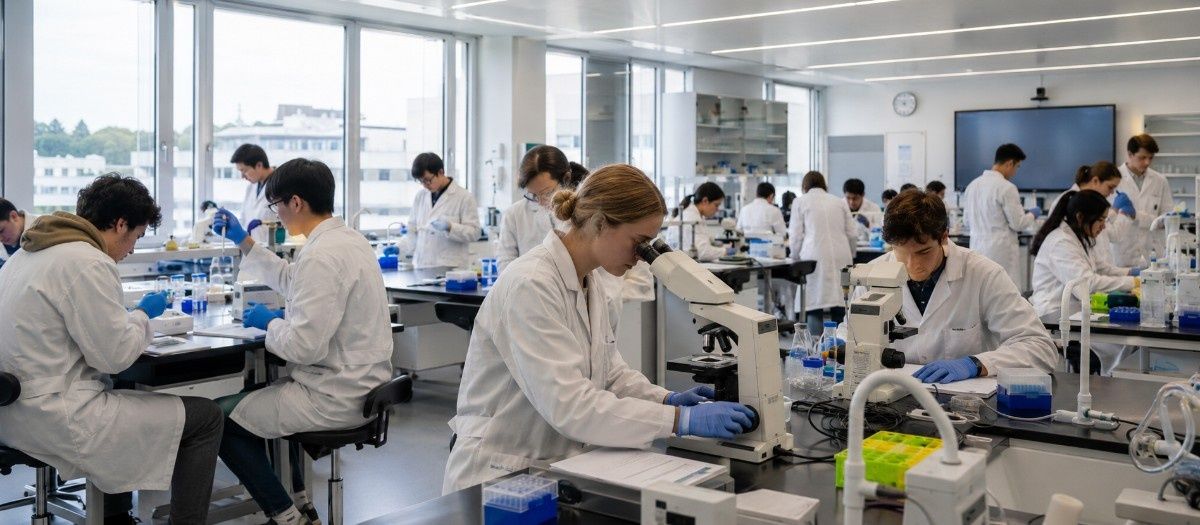
The Faculty of Science and Medicine at the Université de Fribourg is one of Switzerland's most respected centres for higher education, known for its multidisciplinary approach to medical sciences, strong research culture, and multilingual academic environment. Located in the historic city of Fribourg, the university offers students an exceptional combination of academic excellence, personalised learning, cutting-edge scientific research, and close collaboration with healthcare institutions across Switzerland. Its medical programmes are designed to prepare future physicians with strong scientific foundations, clinical competence, and a commitment to patient-centred healthcare.
Founded in 1889, the Université de Fribourg is Switzerland's only fully bilingual university, offering education in both French and German. This unique linguistic environment encourages intercultural collaboration and prepares students to work within Switzerland's multilingual healthcare system. Over the years, the university has earned a reputation for excellence in teaching, research, and international cooperation while maintaining relatively small class sizes that foster close interaction between students and faculty members.
The Faculty of Science and Medicine was established to strengthen education and research in medicine, life sciences, and biomedical sciences. Although relatively newer than some of Switzerland's historic medical faculties, it has rapidly developed into an important contributor to Swiss medical education through innovative curricula, interdisciplinary research, and strategic partnerships with major university hospitals.
Medical education at Fribourg begins with a comprehensive study of biomedical sciences. Students develop a thorough understanding of anatomy, physiology, biochemistry, molecular biology, histology, embryology, genetics, pathology, microbiology, pharmacology, immunology, and behavioural sciences before progressing to clinically oriented subjects. The curriculum integrates theoretical instruction with laboratory work, simulation-based learning, and problem-solving exercises that encourage critical thinking and scientific reasoning.
A distinctive feature of the university is its emphasis on interdisciplinary education. Medical students collaborate with researchers and students from biology, chemistry, physics, computer science, psychology, and biomedical engineering. This integrated learning environment reflects the increasingly collaborative nature of modern healthcare and scientific research.
Clinical education is delivered through partnerships with several leading Swiss university hospitals, including the University Hospital of Lausanne (CHUV), Inselspital Bern, and other affiliated healthcare institutions. Students receive comprehensive clinical exposure across internal medicine, surgery, paediatrics, obstetrics and gynaecology, psychiatry, neurology, emergency medicine, cardiology, oncology, and community healthcare. These collaborations provide access to highly specialised healthcare services and advanced clinical training environments.
Research plays a central role in the Faculty of Science and Medicine. Faculty members conduct internationally recognised research in neuroscience, cancer biology, molecular medicine, immunology, infectious diseases, cardiovascular science, developmental biology, regenerative medicine, public health, and biomedical engineering. The university actively encourages students to participate in research projects from an early stage of their education, helping them develop analytical and investigative skills alongside clinical knowledge.
The faculty is particularly recognised for research in neurobiology, developmental biology, cardiovascular physiology, and molecular medicine. Modern research laboratories equipped with advanced imaging systems, molecular biology platforms, genomics facilities, and biomedical technologies enable scientists to conduct high-impact research addressing major healthcare challenges.
International collaboration remains an important aspect of the university's academic strategy. The Université de Fribourg maintains partnerships with universities, hospitals, and research institutes across Europe, North America, and Asia. Exchange programmes, international research projects, collaborative doctoral programmes, and scientific conferences provide students with valuable global exposure while enhancing research productivity.
The curriculum follows the Bologna Process and complies with Swiss national medical education standards. Students are trained in evidence-based medicine, patient safety, ethical decision-making, communication skills, interdisciplinary teamwork, and digital healthcare technologies. The programme also encourages lifelong learning and continuous professional development, essential qualities for modern healthcare professionals.
Fribourg offers an excellent environment for higher education. The city combines medieval architecture with modern infrastructure, creating a safe and welcoming atmosphere for domestic and international students. Located between Bern and Lausanne, Fribourg provides convenient access to major Swiss cities while maintaining a quieter and more affordable lifestyle than many larger urban centres.
Students benefit from modern libraries, sports complexes, cultural festivals, museums, theatres, parks, and excellent public transportation. Outdoor enthusiasts can enjoy hiking, cycling, skiing, and other recreational activities throughout the surrounding Swiss countryside.
Accommodation options include university residences, student housing associations, shared apartments, and private rentals. Compared with larger Swiss cities such as Zurich and Geneva, Fribourg generally offers more affordable housing while maintaining Switzerland's high standard of living.
The Faculty of Science and Medicine attracts international students because of its bilingual education, personalised teaching environment, strong research opportunities, and collaborative clinical training model. Graduates are well prepared for postgraduate medical education, residency programmes, biomedical research, and healthcare careers throughout Switzerland and internationally.
What distinguishes the Université de Fribourg is its combination of bilingual education, interdisciplinary scientific training, personalised learning, and collaborative clinical education. By integrating biomedical sciences, innovative research, and patient-centred medicine, the faculty continues to make important contributions to Swiss healthcare and medical education.