The Medical University of Innsbruck, known locally as Medizinische Universität Innsbruck or MUI, carries one of the longest medical traditions in the German-speaking world. Its roots stretch back to 1307, when the first hospital was established in the nearby silver-mining city of Schwaz, Tyrol. A formal medical faculty followed when Emperor Leopold I founded the University of Innsbruck in 1669, with medicine becoming one of its four founding faculties by 1674. For more than three centuries, MUI trained physicians within that larger university. In 2004, it became an independent institution in its own right, joining two other Austrian medical universities in breaking away from their parent universities as part of a national reform. Today, it stands as the leading centre for medical education and research in western Austria, with around 3,800 students and approximately 2,500 staff members.
The university sits in the heart of Innsbruck, Tyrol, nestled in the Alps at one of central Europe's most scenic locations. This is not just a picturesque setting. The location matters clinically too. MUI is directly tied to the University Hospital of Innsbruck, the largest hospital in western Austria and one of the biggest in the country overall. The hospital has 1,600 beds and serves roughly 1.8 million people across Tyrol and the surrounding regions. It is one of the few hospitals in Europe offering the full spectrum of organ transplantation, including liver, kidney, heart, and lung procedures. With over 35 departments and a workforce of more than 6,000 people across the hospital complex, it gives MUI students access to a genuinely large and complex clinical environment from early in their training.
The academic standing of MUI is solid and well-documented. In the Times Higher Education World University Rankings 2026, it sits at position 201 globally, a strong result for a focused medical university of its size. In the QS World University Rankings by Subject 2026, it is placed in the 251–300 band for Medicine globally. It also ranked an impressive 30th in the THE Young University Rankings, reflecting how much it has achieved since becoming independent in 2004. It is a respected member of the European University Association and is widely regarded as the premier medical institution for western Austria, as well as for Tyrol, Vorarlberg, South Tyrol, and Liechtenstein.
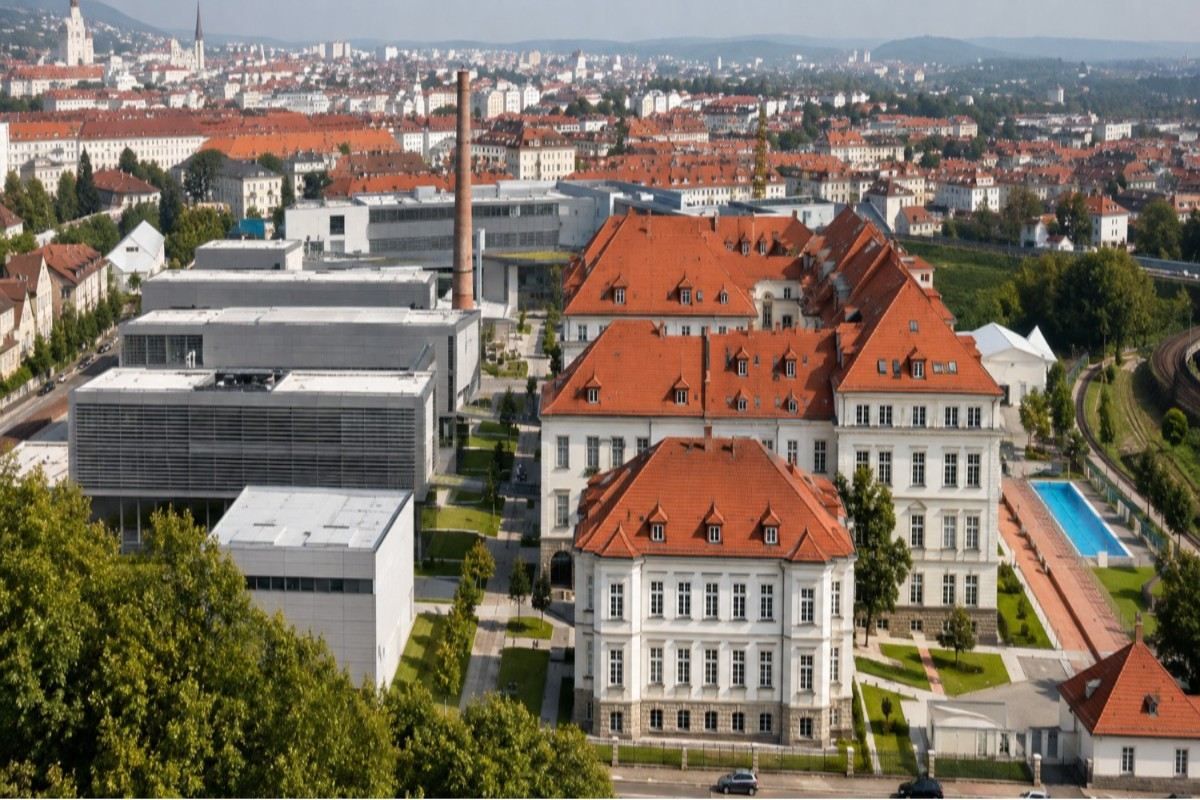
Research is central to MUI's identity, not an add-on. The university focuses on four core research areas: oncology, neurosciences, infectiology and immunology combined with transplant medicine, and the interface of genetics, epigenetics, and genomics. These are not arbitrarily chosen. They reflect the real clinical strengths of the university hospital, which is one of very few hospitals in Europe that covers the full range of organ transplantation. MUI's campus is designed so that research institutes sit around the hospital buildings, keeping laboratory science and clinical practice physically close. That proximity shapes how research gets done here. Roughly 300 PhD postgraduates work across nine doctoral programmes at any given time.
The Human Medicine degree at MUI is a six-year programme taught in German, leading to the Dr. med. univ. degree. This is equivalent to the MBBS or MD under EU frameworks. The programme takes in approximately 360 new students per year for Human Medicine. Dentistry is offered separately. The curriculum follows three phases: foundational science in the early years, integrated pre-clinical and clinical sciences in the middle years, and a supervised clinical practical year in the final phase. Students work in the university hospital and Tyrolean partner clinics, not as observers but as contributing members of clinical teams. The language requirement is real and should not be underestimated. B2 German is needed for admission, and C1 is required before full clinical training begins. For Indian students, this means planning a language preparation year well before applying.
The tuition structure is the same as at other Austrian public medical universities. Non-EU international students pay €726.72 per semester, coming to roughly €1,453 per year or approximately ₹1.3 lakh. Over six years, total tuition comes to around €8,720. The ÖH student union fee adds roughly €25 per semester on top. For a nationally independent, internationally ranked medical degree inside the European Union, this is still one of the lowest tuition figures available anywhere in Europe.
MUI is listed in the World Directory of Medical Schools, which is the relevant prerequisite for NMC/NExT verification in India. The Dr. med. univ. is also fully recognised under EU Directive 2005/36/EC, allowing graduates to register as doctors across all 27 EU member states without sitting additional licensing exams.
Innsbruck as a city is a genuinely good place to live and study. It is compact, very safe, and served by excellent public transport. It is a university city, so student life is well-established and affordable relative to cities like Vienna or Zurich. The Alps are right there, which matters for quality of life. Housing is available in student halls and shared flats, and costs are manageable. For Indian students who commit to the German language requirement and prepare seriously for the MedAT entrance exam, MUI offers a rare combination: deep historical roots, strong research output, direct access to a large teaching hospital, near-zero tuition fees, and the legal right to practise across Europe after graduation.