Yerevan State Medical University, widely known as YSMU, is the oldest and most prominent medical university in Armenia. Its roots go back to 1920, when the medical faculty of Yerevan was formally established by the government of Armenia. It became an independent institution in 1930, separating from Yerevan State University by a formal government decree. In 1989, the university was named after Mkhitar Heratsi, a celebrated 12th-century Armenian physician, in recognition of the deep medical heritage it carries. Since then, it has grown into the flagship public medical institution of the country. It is officially known today as the Mkhitar Heratsi Yerevan State Medical University. Over its century-long history, it has trained more than 45,000 doctors, dentists, and pharmacists who now work across Armenia and around the world.
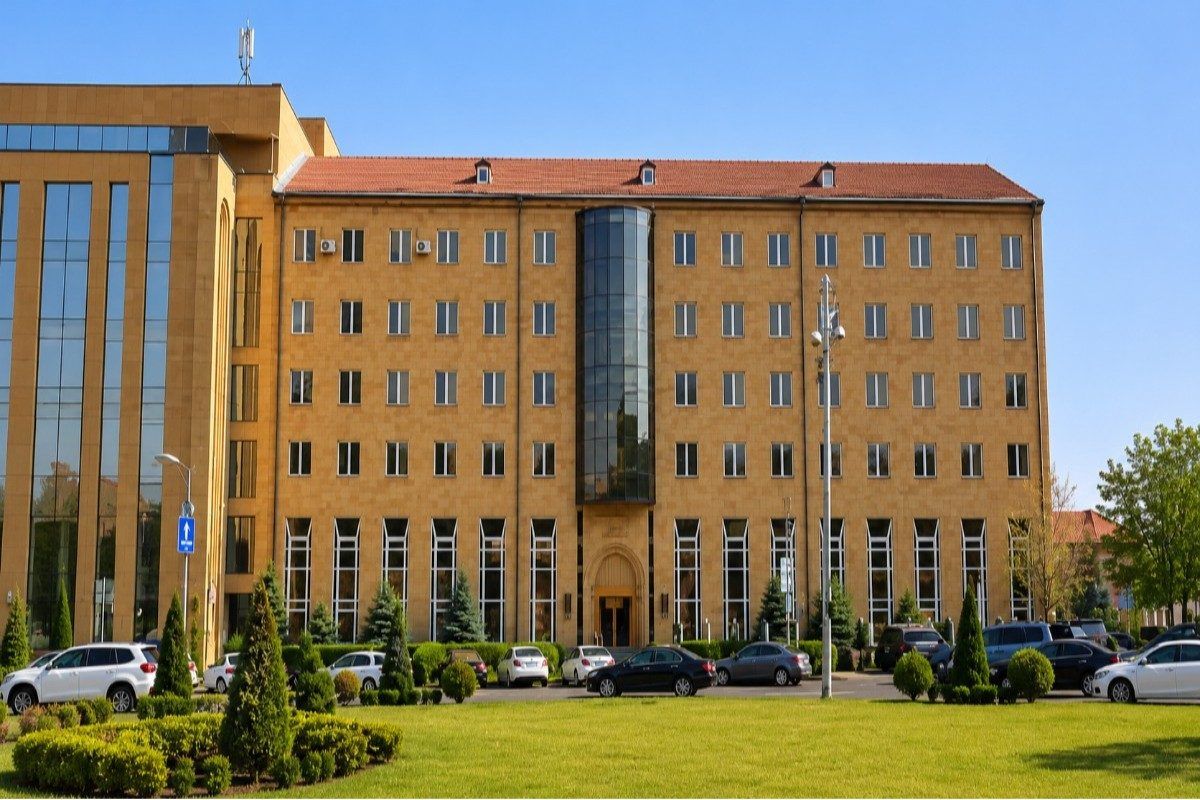
The university is located in the centre of Yerevan, the capital city of Armenia, on Koryun Street. It is closely tied to two major teaching hospitals. The first is the Heratsi Hospital Complex No. 1, which sits right next to the university campus and houses fourteen clinical departments. The second is the Muratsan Hospital Complex, located in the Erebuni district of Yerevan. A third affiliated hospital, the Mikayelyan Hospital Complex, is also listed under the university's medical network. Together, these hospitals give students direct access to real patient care from the early clinical years. Students work in the wards under consultant supervision, not as passive observers but as active participants in the medical team. The campus itself is large, with 462 auditoriums for student groups, dedicated diagnostic laboratories, an outpatient clinic, and a Simulation Training Centre established in 2014. The simulation centre uses modern equipment including mannequins and simulators to train students in procedures like resuscitation, obstetrics, gynaecology, paediatrics, and surgery. That kind of structured skills training is not something you find at every medical school in the region.
YSMU currently has over 8,000 students enrolled across its various programmes. More than 2,000 of them are international students, representing around 24% of the total student body and coming from over 33 countries. The university has more than 1,100 professors and teaching staff across 102 academic departments. Roughly 461 of those staff members hold a PhD. This is not a small institution. It is a busy, active university, and the diversity of its student community is one of the things that makes it a genuinely international environment to study in.
One important thing to note is that YSMU teaches its MBBS programme entirely in English for international students. This is a significant difference from medical universities in Austria, Germany, or many Eastern European countries where German, Polish, or other local languages are required. For Indian students, not having any barriers when it comes to language is definitely an asset. The curriculum offered here follows all international standards and has been designed in such a way that students develop both theoretical knowledge and skills within six years of study.
The reputation of YSMU is very good for Indian students. The university is recognised by the World Health Organization (WHO) as the sole state medical university in Armenia. It is listed in the World Directory of Medical Schools (WDOMS), which is a mandatory requirement for NMC/NExT eligibility verification in India. It is also recognised by NMC India, ECFMG for US licensing purposes, and FAIMER. These are the exact bodies that Indian students and their families check before making a decision, and YSMU clears all of them.
Research is a genuine focus at YSMU, not just a line in the brochure. The university has a dedicated research centre, the COBRAIN Center, which focuses on neuroscience and brain research. Priority research areas include oncology, immunology, pathology, surgery, and psychiatry. The university holds institutional accreditation granted in 2021 by the National Center for Professional Education Quality Assurance of Armenia. It also participates in international programmes including Erasmus+ and maintains exchange partnerships with universities across Europe.
The tuition fee at YSMU is one of its most talked-about advantages. For international students, the fee is approximately USD 6,500 per year. This works out to roughly ₹5.4 lakh per year at current exchange rates. Over six years, total tuition comes to around USD 39,000, which is approximately ₹32–33 lakh. There are no donation fees or hidden charges. The university itself confirms this. Accommodation is available in two hostel buildings on or near campus, with an annual hostel fee of around USD 600. The hostel rooms are furnished and come with central heating, free utilities, laundry facilities, a cafeteria with Indian food options, a reading hall, and 24-hour security. For Indian students, that combination of a familiar language of instruction, affordable fees, and an organised campus environment makes YSMU a consistently popular choice.
Yerevan as a city is safe, manageable, and genuinely interesting to live in. It is one of the oldest continuously inhabited cities in the world, with a history stretching back to the 8th century BC. The city has good public transport, a strong cafe and cultural scene, and a warm local population. Cost of living is low compared to European capitals. For students who want a serious medical education at an affordable price, without the language barrier that comes with studying in Europe, YSMU makes a strong case for itself. The combination of English-medium teaching, genuine hospital access, over a century of institutional history, and NMC recognition is hard to match at this price point.