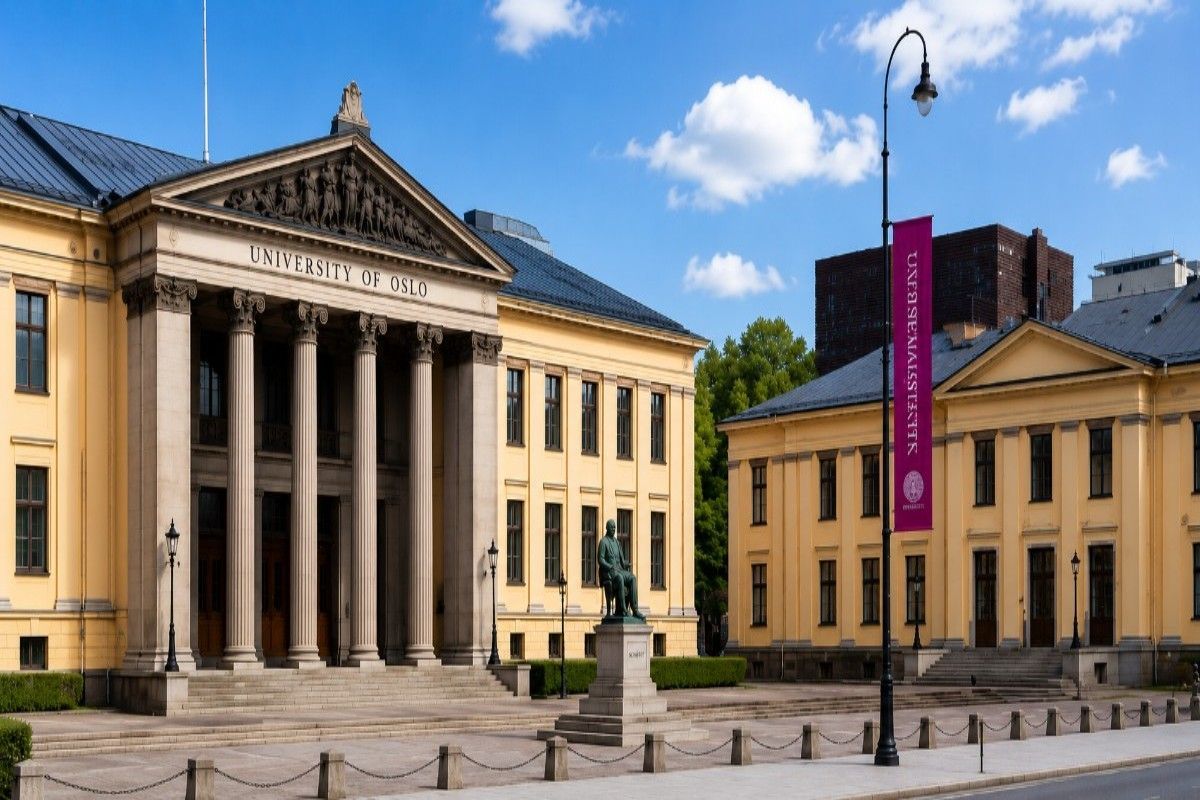
The Faculty of Medicine at the University of Oslo is the oldest medical school in Norway and remains one of the country's most influential centres for medical education, clinical training, and health research. The faculty plays a major role in educating physicians, researchers, and healthcare professionals who contribute to Norway's healthcare system. What makes the faculty unique is its position within Norway's oldest university, its close links with the country's largest hospitals, and its leadership in medical research across Scandinavia.
The University of Oslo was established in 1811 by royal decree issued by King Frederick VI of Denmark-Norway. At the time of its founding, the institution was named The Royal Frederick University (Det Kongelige Frederiks Universitet). It was created to provide higher education within Norway and reduce the need for students to travel abroad for university studies. The Faculty of Medicine was one of the university's original faculties and began teaching shortly after the university opened in 1813.
During the nineteenth century, the Faculty of Medicine became the centre of medical education in Norway. As the country's population grew and healthcare systems developed, the faculty expanded its teaching activities and clinical training programmes. Many of Norway's earliest physicians received their education through the University of Oslo, helping establish the institution's national importance.
A significant milestone occurred in 1939 when the university officially adopted the name University of Oslo. By that time, the medical faculty had already developed a strong reputation in teaching, clinical practice, and scientific research. New departments were established to support emerging fields such as pathology, microbiology, pharmacology, and public health.
During the Second World War, the university and its students faced major disruptions. Many staff members and students participated in resistance efforts, while academic activities were affected by the German occupation of Norway. Following the war, the faculty expanded rapidly to support the rebuilding and modernisation of Norway's healthcare sector.
The second half of the twentieth century saw major growth in medical research and healthcare education. New laboratories, research institutes, and clinical training facilities were established. Partnerships with major hospitals strengthened, allowing students to gain practical experience in increasingly specialised healthcare environments.
Today, the Faculty of Medicine consists of several institutes and research centres covering clinical medicine, health sciences, basic medical sciences, public health, and healthcare management. Thousands of students study medicine and related health disciplines, while researchers contribute to scientific projects that address national and global health challenges.
The faculty maintains close partnerships with Oslo University Hospital, Akershus University Hospital, and several other healthcare institutions. These partnerships provide students with access to a wide range of clinical environments and patient populations. Clinical training forms a central part of the medical programme and begins progressively throughout the course of study.
Research is one of the faculty's greatest strengths. Scientists at the University of Oslo conduct research in cancer biology, neuroscience, cardiovascular disease, immunology, genetics, infectious diseases, mental health, and precision medicine. The faculty is responsible for a significant share of Norway's medical research output and regularly collaborates with international research organisations.
One area where the faculty has gained particular recognition is translational medicine. Researchers work to convert laboratory discoveries into practical healthcare solutions that can improve patient outcomes. This connection between scientific research and clinical application helps strengthen the university's reputation both nationally and internationally.
Medical education follows the Norwegian professional medicine programme. Students study anatomy, physiology, biochemistry, pathology, pharmacology, microbiology, ethics, communication skills, and clinical medicine. The curriculum combines scientific foundations with practical patient care and professional development.
Clinical training takes place primarily through Oslo University Hospital, Norway's largest hospital network. Students gain experience in internal medicine, surgery, paediatrics, psychiatry, neurology, emergency medicine, and other specialties. Exposure to advanced healthcare facilities allows students to observe a broad range of medical conditions and treatment approaches.
The faculty also participates in international research partnerships and academic exchange programmes. Researchers collaborate with institutions throughout Europe, North America, and Asia. These collaborations contribute to scientific publications, innovation, and educational opportunities for students and academic staff.
The medicine programme is taught primarily in Norwegian. Since students interact directly with patients during clinical placements, advanced Norwegian language proficiency is required for admission and successful completion of the programme. This requirement reflects the importance of effective communication in healthcare settings.
Oslo, the capital city of Norway, has a population of approximately 720,000 people. It is the country's largest city and serves as Norway's political, economic, and cultural centre. Students benefit from access to museums, libraries, cultural institutions, healthcare facilities, and research organisations.
The city combines modern urban infrastructure with extensive green spaces, forests, and waterfront areas. Public transport is efficient and includes buses, trams, metro services, ferries, and rail connections. Students can travel easily throughout the city and to other parts of Norway.
Student life in Oslo is diverse and active. University organisations, student societies, sports clubs, and cultural groups provide opportunities for social engagement and professional development. International students also benefit from support services that help them adapt to life in Norway.
Accommodation is available through student housing organisations and private rental providers. While Oslo is generally more expensive than many European student cities, students have access to high-quality services, healthcare, and public facilities.
What truly distinguishes the Faculty of Medicine at the University of Oslo is its status as Norway's oldest medical school, its leadership in medical research, and its close integration with the country's largest hospital network. These strengths continue to make it one of Scandinavia's most respected institutions for medical education and healthcare research.