The Faculty of Medicine and Surgery at the University of Malta is one of the oldest medical schools in the Mediterranean. It was formally set up as the Collegio Medico on 25 May 1771. This was part of the Pubblica Università di Studi Generali, established by Grand Master Pinto de Fonseca on 22 November 1769. That makes the Faculty over 250 years old. This rare distinction places it among a very small group of continuously operating medical institutions in Europe. For Indian and international students, this history is not just symbolic. It reflects an institution that has adapted across centuries and emerged with a strong clinical identity, a clear curriculum, and a well-established place in European medicine.
Today, the Faculty is located at Block A, Level 0, Mater Dei Hospital in Msida. This is not simply an administrative arrangement. Mater Dei is Malta's national referral hospital. It opened in 2007 and is considered one of the most modern hospital buildings in the Mediterranean. Students do not travel to a separate clinical site. They study, train, and attend ward rounds within the same building. This daily proximity to real patient care sets the University of Malta apart from many other European medical schools where the teaching institution and the main hospital are separate.
The degree awarded is the Doctor of Medicine and Surgery (M.D.). It is a five-year programme taught entirely in English. This is a genuinely important point for students from India and other English-speaking countries. Malta is the only EU member state where English is an official language alongside Maltese. The hospital environment, clinical conversations, and everyday life all happen in English. There is no language learning curve. Students from India, Nigeria, the Philippines, or the United States can focus entirely on medicine from day one.
The M.D. programme follows a structured pre-clinical and clinical format. The first two years cover foundational biomedical sciences. These include anatomy with cadaveric dissection, physiology, biochemistry & cell biology, along with early ethics and communication training. From Year Three, students begin clinical exposure in hospital settings. By Years Four and Five, they rotate through core specialities. These include internal medicine, surgery, obstetrics and gynaecology, paediatrics, psychiatry, and emergency medicine. Year Five is largely hospital-based. Students work alongside qualified doctors to sharpen clinical reasoning and patient management skills.
The Faculty has earned accreditation from both AMSE (Association of Medical Schools in Europe) and ASIIN, a German Accreditation Agency. This dual accreditation is notably rare. In a 2019 pilot, only three European medical schools achieved both certificates, and the University of Malta was one of them. This external validation confirms that the quality and standards of teaching here are independently verified and not merely self-reported.
For Indian students, the M.D. from the University of Malta satisfies the requirements set by the National Medical Commission (NMC) for NExT eligibility verification. Students must meet current NMC norms including NEET qualification. The degree is also listed in the World Directory of Medical Schools (WDOMS). This makes graduates eligible for ECFMG certification, which is an essential step for those aiming at the USMLE pathway in the United States. GMC registration in the United Kingdom is also accessible via the PLAB or portfolio route. As an EU degree, the M.D. carries recognition across all 27 member states under the EU Professional Qualifications Directive 2005/36/EC.
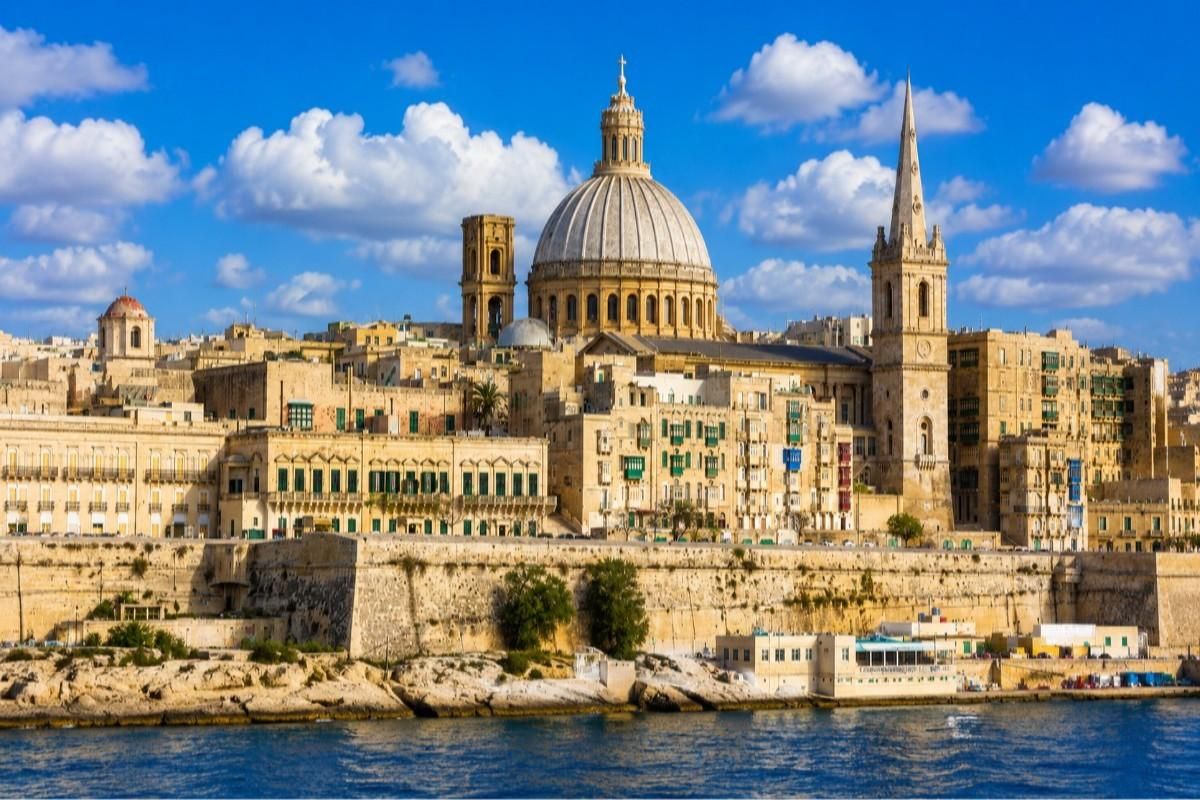
Malta as a place to live and study deserves mention. The island is small; you can cross it in under 45 minutes; but it offers a high quality of life. Valletta, the capital, is a UNESCO World Heritage Site. The Mediterranean climate means over 300 sunny days a year, warm summers, and mild winters. The crime rate is one of the lowest in Europe. The island is widely regarded as safe & community-oriented. The cost of living is lower than in Ireland, the UK, or Cyprus. Student accommodation options in and around Msida and nearby Sliema are plentiful. The University of Malta also has a student residence in Lija, with a shuttle service connecting to the Msida campus.
The Indian student community at the University of Malta is growing and well-organised. The Malta Medical Students' Association (MMSA) is an active body. It runs international exchange programmes through IFMSA, health campaigns, and social events. Students from India have noted the quality of faculty support, the diversity of clinical cases at Mater Dei, and the ease of settling into Maltese life.
In terms of cost, the M.D. programme at the University of Malta is more affordable than medical degrees in the United Kingdom, Ireland, Australia, or the United States. Tuition fees for international (non-EU) students are approximately €20,000 per year or above. This is higher than some Eastern European options but comes with EU degree recognition, English-medium instruction, and access to a modern national hospital. Domestic EU and Maltese students pay significantly lower fees or study free. Total costs; including tuition, accommodation, food, insurance, and personal expenses; are estimated at approximately ₹75–95 lakh. This places Malta in a competitive range for EU destinations.
The University of Malta is ranked #741 globally by QS World University Rankings 2026 and #801 by Times Higher Education (THE) 2026. It is the country's only public university and its largest and most established institution. The Faculty of Medicine and Surgery is the primary and oldest medical training provider on the island.