Q1. Is NEET mandatory for Indian students?
+Yes. A valid NEET score is mandatory for Indian students as per NMC regulations, both for admission and for future NExT eligibility in India.

 Bosnia | Est. 1975
Bosnia | NMC (India); verify current status at nmc.org.in; WDOMS listed; World Directory of Medical Schools; WFME accreditation (March 2026, awarded by MAB Hungary, valid 6 years); ECFMG eligible; USMLE pathway | English (100% for the international/English-medium programme) medium
Expert will call you within 2 hours
The Faculty of Medicine at the University of Banja Luka, commonly referred to as the Medicinski Fakultet UNIBL, is the leading medical institution in Republika Srpska and one of the most established medical faculties in Bosnia and Herzegovina. The University of Banja Luka itself was founded on 7 November 1975, making it the second-oldest university in the country. The Faculty of Medicine followed shortly after; the University initiated the idea in 1976, and after nearly two years of formal preparations, the Faculty was officially established on 17 March 1978, by Decision No 01-012-33/78 of Banja Luka Municipal Assembly. The first cohort had 152 students, and the first lecture was held on 15 November 1978. Over four and a half decades of continuous operation have produced thousands of physicians who now serve across Bosnia, the wider Balkans, and internationally; and the institutional depth that comes from that kind of unbroken track record is visible in everything from the research culture to the quality of faculty supervision during clinical training.
The Faculty's reputation built quickly. By the end of the 1990s, there were more than 240 international students enrolled among a total of 1,216 students; a remarkable indicator of early international confidence in the institution, even in the difficult post-war period of the region. Since then, the Faculty has continued to develop its programmes, infrastructure, and international recognition, and it is now firmly established as the flagship medical school of Republika Srpska, offering undergraduate, postgraduate, and doctoral studies across Medicine, Dentistry, Pharmacy, Nursing, Physiotherapy, Midwifery, Radiological Technology, Medical Laboratory Diagnostics, and more.
The primary teaching hospital for the Faculty is the University Clinical Center (UKC) of Republika Srpska; the largest and most advanced hospital in this part of Bosnia and Herzegovina. The UKC is a major regional referral centre equipped with modern diagnostic technology including MRI, CT, and PET-CT, and it houses specialised centres for cardiology, oncology, and robotic surgery. Students begin clinical rotations at the UKC from the third year of the programme, which means clinical exposure comes earlier here than in many comparable European medical programmes. The volume and diversity of cases at the UKC; given its role as the tertiary referral hub for Republika Srpska; provides students with broad and substantive clinical exposure across all major disciplines before they ever sit their final examinations.
The Faculty building and the UKC are both located within the academic and medical zone of Banja Luka, giving students practical proximity to their clinical training environment. The Faculty's physical infrastructure has expanded considerably over the years, and now includes modern lecture theatres, specialised laboratories for anatomy, histology, biochemistry, microbiology, and pharmacology, simulation facilities for pre-clinical skills training, research laboratories, a medical library, and computer-equipped seminar rooms. The Centre for Specialisations and Continuing Education operates within the Faculty as a dedicated unit for postgraduate professional development, which speaks to the institution's depth beyond undergraduate teaching.
In terms of formal recognition, the Faculty received a significant credential in March 2026: international accreditation for its Medicine programme in accordance with the standards of the World Federation for Medical Education (WFME), awarded by the Hungarian Accreditation Committee (MAB) for a period of six years. This is a substantive quality benchmark; WFME accreditation is the global standard for medical education quality assurance and is referenced by regulators including the ECFMG for USMLE eligibility. The Faculty is also listed in the World Directory of Medical Schools (WDOMS), is recognised by the ECFMG for the USMLE pathway, and holds recognition from the NMC of India. The University of Banja Luka is an EUA (European University Association) member and a signatory of the Magna Charta Universitatum.
For international students and specifically for Indian applicants, the most significant practical development in recent years has been the availability of a fully English-medium version of the six-year integrated Medicine programme. The English-taught track runs parallel to the Serbian-language domestic programme, carrying 360 ECTS credits and awarding the Doctor of Medicine degree on completion. The programme follows the Bologna Process structure, with three years of basic medical sciences followed by three years of clinical rotations and practical training. Tuition fees for the English-medium programme are approximately €2,500 per semester; €5,000 per academic year; which positions the University of Banja Luka as one of the most affordable English-taught medical programmes in the whole of Europe for its quality level. This is a meaningful distinction: affordability and quality do not always align, but UNIBL's combination of a nearly five-decade institutional history, WFME accreditation, a major tertiary teaching hospital, and fees at this level is genuinely difficult to match elsewhere on the continent.
Admission to the English-medium programme requires a 10+2 certificate with a minimum of 50% in Physics, Chemistry, and Biology, a valid NEET score for Indian students as per NMC regulations, and successful completion of an entrance examination in Biology and Chemistry conducted in English. This entrance exam is a genuine academic filter; not an administrative formality; and students should prepare accordingly. Minimum age requirements follow NMC guidelines.
Banja Luka is a city of around 200,000 people on the banks of the Vrbas River, often described as one of the greenest cities in the Balkans for its parks, tree-lined boulevards, and riverside areas. It is the administrative and cultural centre of Republika Srpska, home to the Kastel fortress, the Cathedral of Christ the Saviour, and a growing cafe and restaurant culture that makes it a genuinely pleasant place to live as a student. The cost of living is very low by European standards; a one-bedroom apartment in the city centre costs around €200–300 per month, groceries and daily food are highly affordable, and public transport is inexpensive. The university has its own student dormitory, offering an even more budget-friendly accommodation option for those who secure a place. For Indian students looking at European medical education, the total monthly living cost in Banja Luka; accommodation, food, transport, and personal expenses combined; sits comfortably in the €350–500 range, making the total six-year cost of studying here very competitive. Bosnia ranks well on global peace indices, and Banja Luka specifically is safe, welcoming to international students, and home to a growing community of medical students from across South Asia, the Middle East, and Europe.
No hidden charges, no donation. The full picture of costs at MBBS In University of Banja Luka, Faculty of Medicine.
Tuition Fee
Approx. €2,500/semester; €5,000/year (approx. ₹4.5 lakh/year
€2,500/semester; €5,000/year (approx. ₹4.5 lakh/year); total 6-year
Hostel Fee
living costs in Banja Luka approx. €350–500/month; among the most affordable in Europe
University dormitory €100–150/month; shared apartment €150–250/month
Food & Meals
€150–250
Per Month
Insurance
€200–400
Per Year
Donation
no donation
capitation fee
Total Estimated Cost
capitation fee Approx. €55,000–63,000 all-inclusive (₹49–57 lakh) including tuition, accommodation, food, insurance, and personal expenses
6 Year
25–35%
Average FMGE first-attempt pass rates for students from many overseas medical universities. Students from structured programs consistently score higher.
Students returning to India need to clear the FMGE/NExT exam. MBBS In University of Banja Luka, Faculty of Medicine integrates exam-oriented coaching into the regular curriculum so students are prepared from day one.
A structured program that takes you from foundational sciences to clinical mastery.
The foundation year builds structural and functional biology across anatomy, histology, biochemistry, and cell biology. Anatomy is taught using cadaveric material alongside histology practicals in the Faculty's specialised laboratories. Introduction to Medicine and medical ethics establishes the professional framework and doctor-patient relationship thinking from the first semester.
Subjects: Anatomy I (Gross Anatomy & Histology), Biochemistry I, Cell Biology & Genetics, Medical Physiology I, Biophysics, Introduction to Medicine & Medical Ethics
A systems-level deepening of core biomedical sciences. Neuroanatomy and topographic anatomy with surgical and clinical relevance. Microbiology and immunology bring the first serious engagement with infectious disease and immune system pathology. Disease-mechanism thinking is progressively integrated with physiology and biochemistry.
Subjects: Anatomy II (Neuroanatomy & Topographic), Physiology II (Systems), Biochemistry II, Medical Genetics, Medical Microbiology, Immunology
The bridge year and the first point of clinical hospital contact. Semiology and physical examination are taught through structured patient-facing sessions. Pharmacology follows clinical prescribing logic. Students begin supervised clinical rotations at the UKC from Year 3; a distinctive feature of the UNIBL programme that gives students a clinical head-start over many peer institutions.
Subjects: General Pathology, Pharmacology I & II, Microbiology II, Clinical Semiology & Physical Examination, Epidemiology & Biostatistics, Evidence-Based Medicine, Research Methodology
Supervised ward rounds, patient clerking, case presentations, and clinical assessments across all major disciplines. Students engage with complex tertiary referral caseloads, building diagnostic reasoning under direct supervision.
Subjects: Internal Medicine I, General Surgery I, Obstetrics & Gynaecology I, Paediatrics I, Psychiatry & Mental Health, Radiology & Medical Imaging Full clinical immersion at the University Clinical Center of Republika Srpska and affiliated hospitals.
Emergency Medicine Extended speciality rotations across the UKC's broad departmental network and affiliated community and outpatient settings. Family medicine and community health placements run alongside hospital rotations. Research dissertation work continues in parallel with clinical responsibilities.
Subjects: Internal Medicine II, Surgery II, Neurology, Family & Community Medicine, Ophthalmology, Otorhinolaryngology (ENT), Dermatology, Orthopaedics & Traumatology
Elective Final-year supervised internship across all core medical and surgical disciplines at UNIBL-affiliated hospitals in Bosnia and Herzegovina. The internship must be completed in Bosnia. NMC-mandated internship completion in Bosnia is required before NExT eligibility in India.
Subjects: Comprehensive supervised internship; Internal Medicine, Surgery, Obstetrics & Gynaecology, Paediatrics, Psychiatry, Emergency Medicine, Community Medicine

Furnished hostel rooms with Wi-Fi, laundry, 24/7 security, and Indian mess on or near campus.
Indian restaurants and mess facilities serving vegetarian and non-vegetarian home-style food daily.
Strong Indian community with cultural events, festival celebrations, and peer support groups.
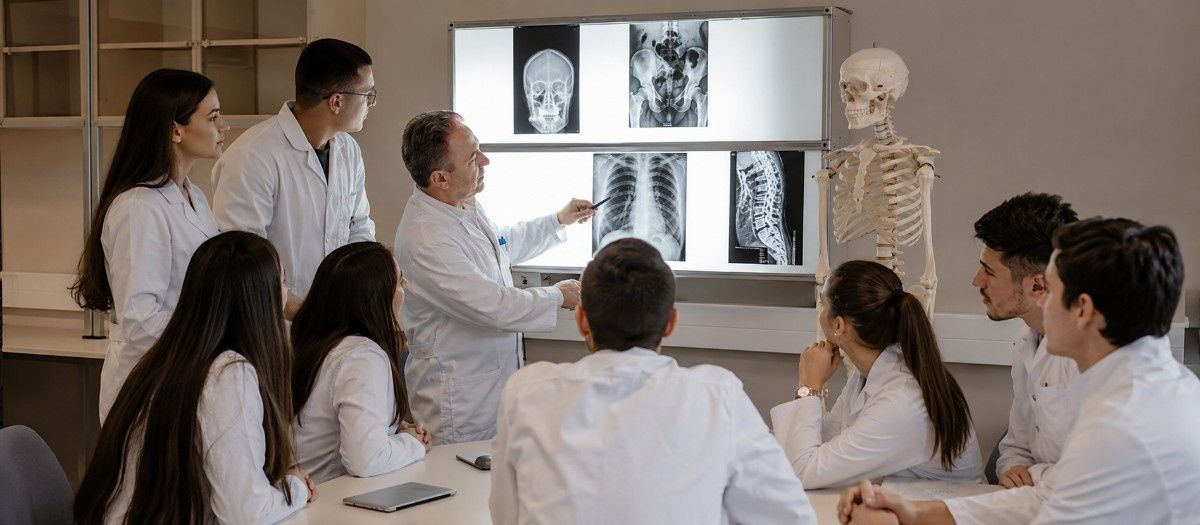
Students get hands-on clinical training in government and private hospitals affiliated with the university.
Practical information for students planning to study at MBBS In University of Banja Luka, Faculty of Medicine.
Prepare for all seasons. Thermal wear for winters, light clothing for summers. University provides heating in hostels.
Student visa processed with university invitation letter. Direct and connecting flights from major Indian cities.
Health insurance included in fees. Medical facility on campus plus city hospitals easily accessible.
Local SIM cards available. WhatsApp and video calls keep you connected with family back home.
Average monthly expenses of $150–$250 covering food, transport, and personal needs.
University library, online databases, and study groups. Seniors mentor juniors through academic challenges.
Our team guides you through every step — from application to arriving on campus.
Our specialist confirms the current NMC listing status, explains the distinction between EU and non-EU countries, and compares Bosnia with Georgia and Romania.
Full Bosnia admission and visa document package prepared.
Direct submission to the University of Sarajevo or the University of Mostar Faculty of Medicine.
Receives offer, explains terms, and manages initial fee payment.
Full visa documentation submitted to the Bosnian Embassy in New Delhi.
Sarajevo city orientation, accommodation, transport, currency, cultural briefing, safety zones.
Our team advises on routing to Sarajevo International Airport (SJJ). Confirms arrival with the local team.
Our local Sarajevo team meets you at the airport
Our local team manages hostel check-in and Faculty of Medicine registration.
We filed the permit at the Service for Foreigners Affairs. Renewed annually.
Admission Helpline — Contact our counsellors for step-by-step assistance.
“The faculty here is incredibly supportive. The clinical training during hospital rotations has given me real confidence in patient care.”
“Affordable fees without compromising on quality. The campus facilities and hostel life made my transition abroad very smooth.”
“English medium instruction and WHO-recognized curriculum were the deciding factors for me. No regrets so far — excellent experience overall.”
“The university helped with everything from visa to accommodation. Hospital exposure from year three has been invaluable for my FMGE prep.”
“Just cleared my licensing exam on the first attempt. The structured coaching and mock exams during final year were a game-changer.”
“Safe campus, good food options, and a strong Indian student community. The teaching methodology is very practical and hands-on.”
Yes. A valid NEET score is mandatory for Indian students as per NMC regulations, both for admission and for future NExT eligibility in India.
Yes. Applicants must pass an entrance exam in Biology and Chemistry, conducted in English. It is an academic filter, so preparation in these two subjects is important.
The international programme is taught 100% in English. No Serbian language requirement for the English-medium track.
The University Clinical Center (UKC) of Republika Srpska; the largest and most advanced hospital in the region, equipped with MRI, CT, PET-CT, and specialised centres for cardiology, oncology, and robotic surgery.
Clinical rotations begin from Year 3; earlier than many European medical schools, giving students more cumulative hands-on hospital experience before graduation.
Verify the current listing at nmc.org.in before applying. The Faculty is WDOMS-listed and received WFME accreditation in March 2026; the structural foundations for international recognition.
Approximately €30,000 in tuition (€5,000/year). All-in total including living is estimated at €55,000–63,000 (₹49–57 lakh) over six years; among the lowest for an English-medium European MD programme.
No. The Year 6 supervised internship must be completed at UNIBL-affiliated hospitals in Bosnia and Herzegovina. After graduation and NMC verification, graduates can sit for NExT in India.
Graduates are ECFMG-eligible (USMLE pathway to US residency), can pursue GMC registration in the UK via PLAB, and can sit for NExT in India after NMC compliance verification. WFME accreditation further strengthens the degree's international portability.
The academic year begins in October. Entrance exams are typically held in July and September. Monitor the official Faculty website at med.unibl.org for current admission cycles and deadlines.


Our expert counsellors will guide you through the complete admission process — from documents to airport pickup.