Q1. Is the Medicine programme at Aarhus taught in English?
+No. The BSc and MSc in Medicine are taught in Danish. One English-taught international exchange semester is available at the MSc level for students from partner universities.

 Denmark | Est. 1992
Denmark | Danish Health and Medicines Authority; Danish Accreditation Institution; WHO listed; ECFMG eligible | Danish for BSc and MSc; English exchange semester available at MSc level from 2016 medium
Expert will call you within 2 hours
Most blogs about Aarhus University Faculty of Health say the same things. Top 150 globally. Great hospital. Strong research. But none of them explains what actually happens inside this programme. So let me do that.
First, a truth most pages hide. The Bachelor of Medicine at Aarhus is taught in Danish. Not English. That is the one thing every Indian student must know before applying. The good news is this. The MSc programme has one English-language international semester. And exchange students from partner universities can join for a semester entirely in English.
Now, why does this still matter for Indian students? Aarhus is one of only three universities in Denmark offering a full medicine programme. And among the three, Aarhus has the oldest and most extensive clinical training setup. The Faculty of Health has worked with Aarhus University Hospital since 1936. That is 89 years of unbroken collaboration. No other Danish medical school can say that.
The programme runs for 6 years in total. Three years for the BSc. Three more for the MSc. So, it is not called MBBS here. It is called Kandidatuddannelsen i Medicin. But the outcome is the same. A fully licensed medical doctor recognised across Europe and globally.
The Faculty of Health is not small. It has 5 academic departments and over 1,800 employees. Each year, it publishes 3,700 peer-reviewed articles. Its Field-Weighted Citation Impact score is 2.36. That means its research is cited 2.36 times as often as the global average. That is a number most study-abroad blogs do not even look for. But it matters. It shows how seriously this faculty takes science.
Clinical training begins early. From the second year of the BSc, students start patient contact at Aarhus University Hospital. The hospital is one of the largest in Scandinavia. It handles complex trauma, oncology, cardiac surgery, and neuroscience at a very high level. Students do not just observe. They are part of the ward team.
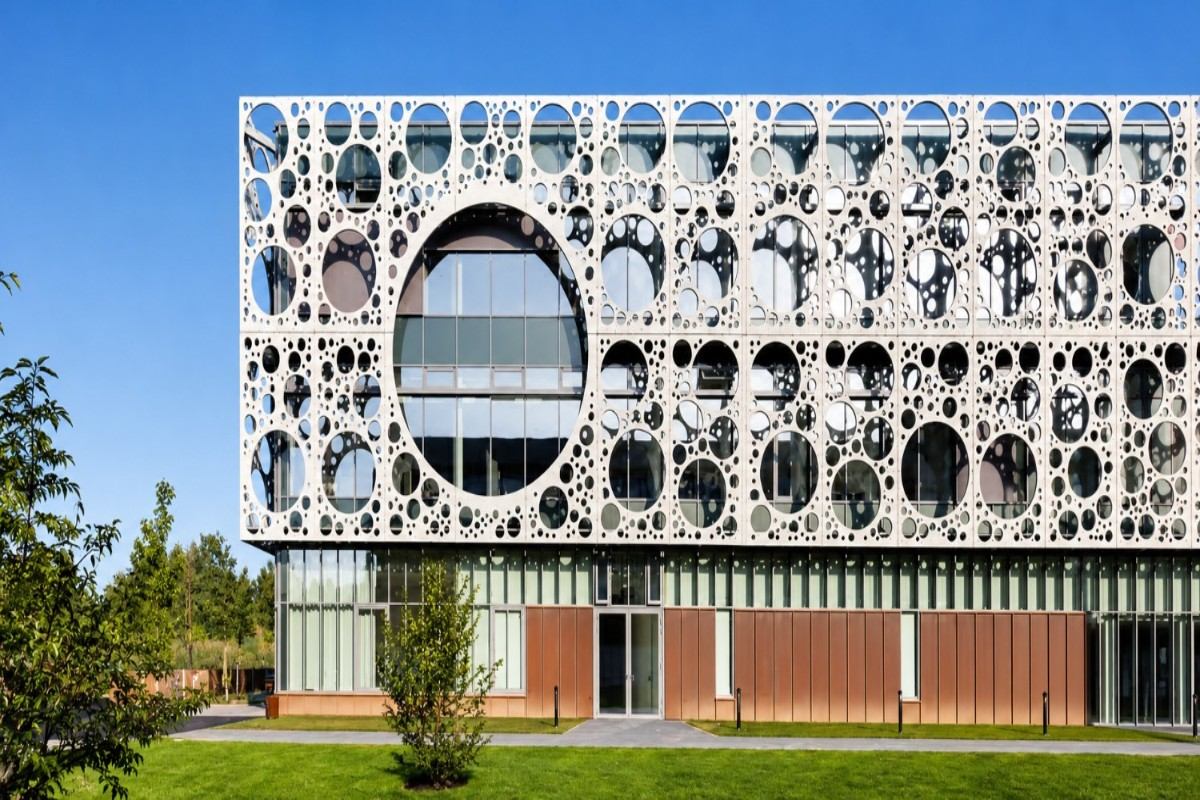
Also, in May 2026, Aarhus officially opened the University City. This is a brand-new neighbourhood built on the former hospital grounds. It brings the Faculty of Health, clinical departments, and research centres into one connected area. Most blogs have not covered this yet. It is the biggest change to Aarhus University's physical setup in decades.
The Faculty also runs a Novo Nordisk BioMedical Design Fellowship. Novo Nordisk is the world's largest insulin producer and a global leader in diabetes care. That industry link gives students a direct window into pharmaceutical research and medical device innovation during their studies.
For Indian students, the path is this. Learn Danish. Apply to the BSc. Then move into the MSc. Or apply for an exchange semester during your existing medical degree back home. Either way, what you get is clinical training inside one of Europe's top research hospitals, in a country ranked among the best in the world for healthcare.
Aarhus is the second-largest city in Denmark. It has a student population of over 44,000. The city is compact, very bikeable, and extremely safe. The cost of living is lower than in Copenhagen. Public transport is good. The weather is cold but manageable. And the quality of life in Denmark consistently ranks among the top in the world.
This is not the easiest path for an Indian student. But for those who are serious about European medicine, research, and global practice, Aarhus is one of the best decisions you can make.
Quick Overview
Parameter | Details |
Established | 1928 (Faculty of Health formally created in 1992; medicine teaching since 1933) |
Location | Aarhus, Denmark (2nd largest city; University City campus opened May 2026) |
University Type | Public Research University, State Funded; No Tuition Fee for EU/EEA Citizens |
Teaching Hospital | Aarhus University Hospital (AUH), one of Scandinavia's largest, has been a partner since 1936 |
Course Duration | 6 Years Total (3-Year BSc Medicine + 3-Year MSc Medicine) |
Medium of Instruction | Danish (BSc + MSc); English available for Exchange Semester (MSc Level) |
Annual Tuition Fee | EUR 10,000–15,000/Year for Non-EU Students (Approx. INR 9–13.5 Lakhs) |
Fee Structure (2025–26)
Fee Component | Amount (Approx.) | Notes |
Tuition Fee (Non-EU) | EUR 10,000–15,000/Year (INR 9–13.5 Lakhs) | EU/EEA students pay zero tuition; state-funded |
Application Fee | EUR 100 (Covers up to 3 applications) | Refunded if you enrol and stay past 1 October |
Accommodation | EUR 300–600/Month (INR 27,000–54,000) | On-campus and off-campus options are both available |
Living Expenses | EUR 800–1,200/Month (INR 72,000–1,08,000) | Food, transport, books, and personal expenses included |
Scholarship (Health Faculty) | EUR 14,800 Tuition Waiver (Merit-Based) | Available to non-EU students; Faculty of Health scholarship |
Total (6 Years Estimated) | EUR 1,30,000–1,60,000 All Inclusive (INR 1.2–1.5 Crore Approx.) | Tuition + living costs combined |
Why Aarhus University Faculty of Health Deserves a Harder Look Than You’ve Given It
Most study-abroad pages rank Aarhus, show a number, and stop. They never explain what makes this faculty different from other European medical schools. So here is what they miss.
First, the clinical relationship here is not new. The Faculty of Health has worked with Aarhus University Hospital since 1936. That is 89 years of one hospital and one faculty building a shared system. Students do not just visit the hospital. They are part of it. Patient contact starts from Year 2 of the BSc. That is earlier than most European medical schools.
Second, the research output is something no other competitor blog discusses. This faculty publishes 3,700 peer-reviewed articles every year. Its Field-Weighted Citation Impact is 2.36. That means its work is cited more than twice the global average. If you want to go into research medicine, that number tells you everything. You will be working alongside people whose papers are read all over the world.
Third, the Novo Nordisk BioMedical Design Fellowship is rarely mentioned on any page. Novo Nordisk is the company behind more than 50% of the world’s insulin supply. Having them as a direct academic partner is not just a prestige point. It means students can work on real pharmaceutical problems during their studies. That kind of exposure is hard to find anywhere in Asia or the Middle East.
Also, the University City opened in May 2026. It is a brand-new neighbourhood built on the old hospital grounds. The Faculty of Health, clinical labs, and research units are now all in one connected space. Most blogs have not written about this yet. It changes the daily experience of being a student here. Everything is closer. Everything is linked.
Now, the honest part. The BSc Medicine is in Danish. That is a real barrier. But it is also a filter. The students who clear it come out with Danish medical skills, European clinical experience, and a degree that opens doors across the EU, UK, USA, and Australia. That is a combination that very few programmes in the world offer.
Finally, Denmark has the highest doctor-to-patient ratio in the EU. Graduates who stay in Denmark earn between EUR 60,000 and 80,000 per year. The healthcare system here is considered one of the best in the world. So, the career path after Aarhus is clear and strong.
That is why Aarhus deserves a second, harder look.
No hidden charges, no donation. The full picture of costs at MBBS in Medicine at Aarhus University Faculty of Health, Denmark.
Tuition Fee
EUR 10,000–15,000 per year for non-EU students; zero fees for EU/EEA students
EUR 10,000–15,000/year for non-EU; EU students fully funded by the Danish state
Hostel Fee
EUR 300–600/month;
EUR 300–600/month; on-campus and private rentals are both available in Aarhus ci
Food & Meals
EUR 400–600 covers groceries, transport, books, and daily expenses
per month
Insurance
Covered by Danish state healthcare for registered students no extra premium needed
per year
Donation
No donation
No hidden charges
Total Estimated Cost
EUR 1,30,000–1,60,000, approx. INR 1.2–1.5 crore — over 6 years, all inclusive
6 years
25–35%
Average FMGE first-attempt pass rates for students from many overseas medical universities. Students from structured programs consistently score higher.
Students returning to India need to clear the FMGE/NExT exam. MBBS in Medicine at Aarhus University Faculty of Health, Denmark integrates exam-oriented coaching into the regular curriculum so students are prepared from day one.
A structured program that takes you from foundational sciences to clinical mastery.
• Small group teaching is the main format; classes are intimate and research-integrated from Day 1
• Anatomy, Physiology, Biochemistry, and Cell Biology are the core Year 1 subjects taught
• First patient contact begins at Aarhus University Hospital; supervised clinical observation starts
• Microbiology, Immunology, Pathology, and Pharmacology are introduced in the second year
• An 8-week supervised research module within a Faculty of Health research group is conducted
• Clinical examination skills, diagnostics, and evidence-based medicine are the main focus
• An English international exchange semester is offered this year to partner university students
• Full rotations at Aarhus University Hospital in Medicine, Surgery, OB-GYN, and Paediatrics
• Master’s thesis research runs alongside clinical rotations; industry collaboration is allowed
• Neurology, Cardiology, Psychiatry, Oncology, and Emergency Medicine rotations run this year
• After graduation, a 12-month introductory position at a hospital completes the full medical licence
• 12-month basic clinical internship across all departments at Aarhus University Hospital

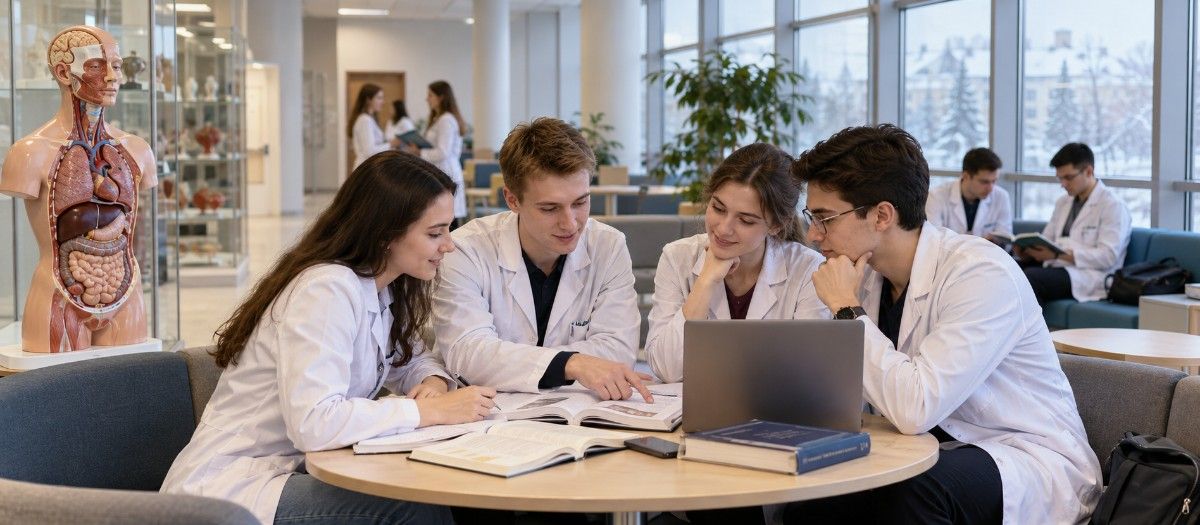
Furnished hostel rooms with Wi-Fi, laundry, 24/7 security, and Indian mess on or near campus.
Indian restaurants and mess facilities serving vegetarian and non-vegetarian home-style food daily.
Strong Indian community with cultural events, festival celebrations, and peer support groups.
Students get hands-on clinical training in government and private hospitals affiliated with the university.
Practical information for students planning to study at MBBS in Medicine at Aarhus University Faculty of Health, Denmark.
Prepare for all seasons. Thermal wear for winters, light clothing for summers. University provides heating in hostels.
Student visa processed with university invitation letter. Direct and connecting flights from major Indian cities.
Health insurance included in fees. Medical facility on campus plus city hospitals easily accessible.
Local SIM cards available. WhatsApp and video calls keep you connected with family back home.
Average monthly expenses of $150–$250 covering food, transport, and personal needs.
University library, online databases, and study groups. Seniors mentor juniors through academic challenges.
Our team guides you through every step — from application to arriving on campus.
Our Denmark specialist assesses academic profile, Danish language status, and career goals. Denmark is not formally recommended without this session.
We connect you with certified Danish language instructors. Preparation typically takes 18–24 months to achieve clinical-level proficiency.
Full Danish admission and residence permit document set prepared — transcripts, financial proof, language certification.
Our team manages your application through Denmark's centralised admissions system and university-specific portals.
: University admission letter is required immediately to begin residence permit application.
We submit the residence permit application to Udlændingestyrelsen (Danish Immigration Service) immediately after admission. Allow 1–3 months.
We advise on the fee structure and safe international transfer to the Danish university account.
Copenhagen or Aarhus orientation, student housing applications, cycling culture, banking, SIM cards, campus navigation
Admission Helpline — Contact our counsellors for step-by-step assistance.
“The faculty here is incredibly supportive. The clinical training during hospital rotations has given me real confidence in patient care.”
“Affordable fees without compromising on quality. The campus facilities and hostel life made my transition abroad very smooth.”
“English medium instruction and WHO-recognized curriculum were the deciding factors for me. No regrets so far — excellent experience overall.”
“The university helped with everything from visa to accommodation. Hospital exposure from year three has been invaluable for my FMGE prep.”
“Just cleared my licensing exam on the first attempt. The structured coaching and mock exams during final year were a game-changer.”
“Safe campus, good food options, and a strong Indian student community. The teaching methodology is very practical and hands-on.”
No. The BSc and MSc in Medicine are taught in Danish. One English-taught international exchange semester is available at the MSc level for students from partner universities.
Yes, but Danish language proficiency at the B2 level is needed. Most Indian students first learn Danish, then apply. It takes 1 to 2 years of preparation.
6 years in total. 3 years for the BSc and 3 years for the MSc. After that, a 12-month introductory hospital position completes the full licence.
Graduates must clear the NMC India screening test (FMGE or NExT) to practice in India. WHO lists the degree, so eligibility is confirmed.
Non-EU students pay EUR 10,000 to 15,000 per year. Over 6 years, the total cost, including living, is approximately. INR 1.2 to 1.5 crore.
Yes. The Faculty of Health offers a EUR 14,800 tuition waiver scholarship to non-EU students based on academic merit. Apply at the same time as your admission.
From Year 2 of the BSc. Students begin supervised clinical observation at Aarhus University Hospital earlier than most European schools.
Yes. Students can work up to 20 hours per week. Lab assistant and research roles at Aarhus University Hospital are common options for medicine students.
15 January each year for the autumn intake. Apply via optagelse.dk and pay the EUR 100 application fee. The fee covers up to 3 applications.
It is Aarhus’s newest neighbourhood, built on the former hospital grounds. It connects the Faculty of Health, clinical labs, and research units within a single area. It opened in May 2026.


Our expert counsellors will guide you through the complete admission process — from documents to airport pickup.