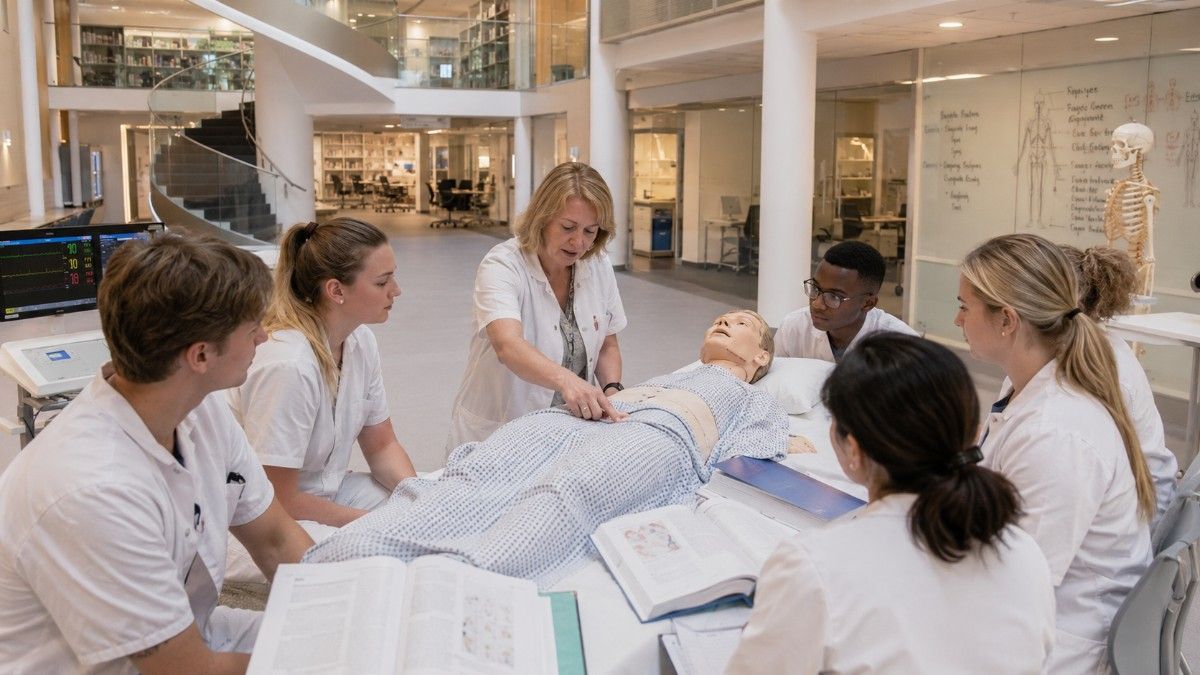
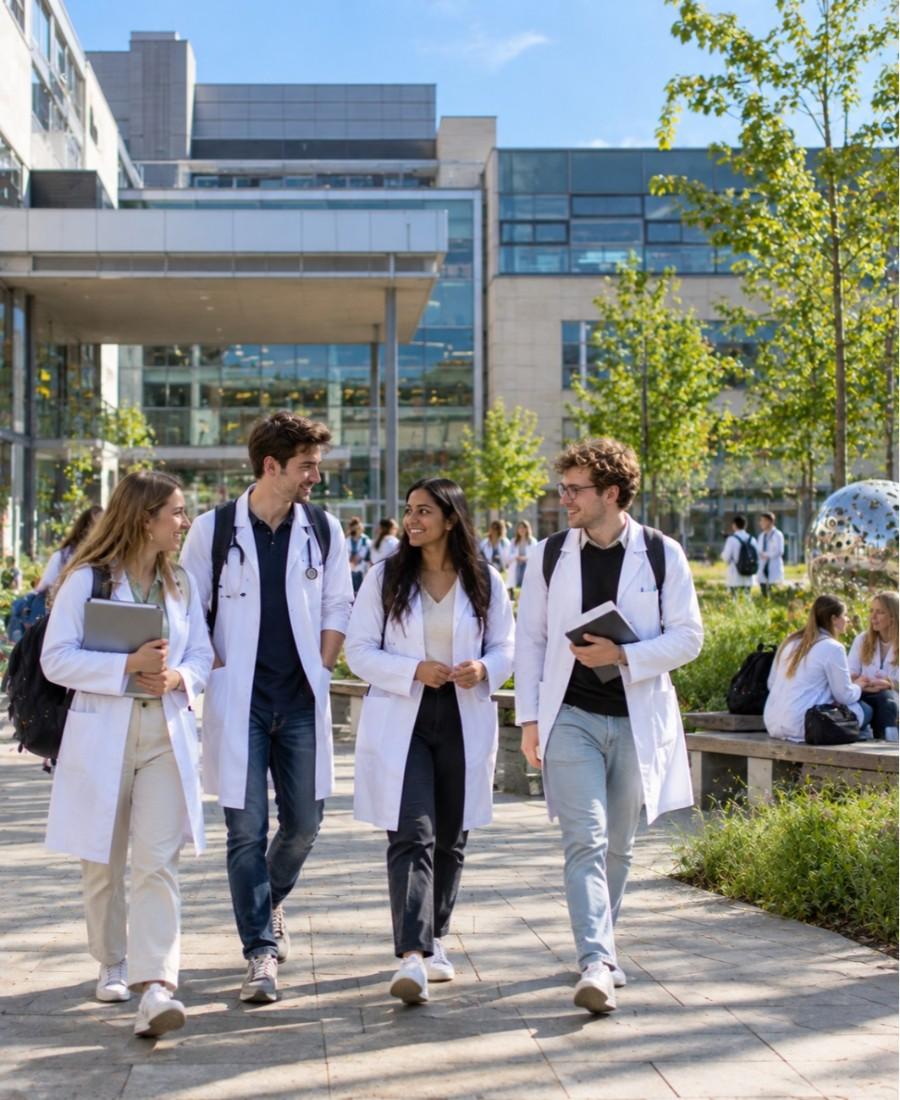
The Faculty of Medicine and Health Sciences at Linköping University is one of Sweden's most innovative centres for medical education and healthcare research. The faculty is best known for introducing problem-based learning into Swedish medical education, a teaching method that later influenced many medical schools across Europe. This educational approach remains one of the university's defining characteristics and continues to shape how future doctors are trained.
Linköping University was officially established in 1975, making it one of Sweden's newer universities. Its roots, however, extend back to the 1960s when higher education activities began in Linköping through partnerships with existing Swedish institutions. During this period, Sweden experienced a growing need for healthcare professionals, researchers, and university graduates. The government responded by expanding higher education opportunities, leading to the creation of a new university in Linköping.
The Faculty of Medicine developed alongside the university itself. From its earliest years, the faculty focused on creating a more student-centred model of medical education. Instead of relying primarily on traditional lectures, students were encouraged to work in small groups, analyse clinical cases, and develop independent learning skills. This became the foundation of the university's problem-based learning system.
Over the following decades, the faculty expanded significantly. New departments, research centres, and healthcare partnerships were established. Academic programmes grew beyond medicine to include nursing, physiotherapy, occupational therapy, biomedical sciences, public health, and healthcare management. This multidisciplinary environment encouraged collaboration between different healthcare professions.
Today, the Faculty of Medicine and Health Sciences educates thousands of students across undergraduate, postgraduate, and doctoral programmes. The faculty consists of several departments covering clinical medicine, biomedical sciences, rehabilitation medicine, health sciences, public health, and medical technology. Researchers, physicians, nurses, and healthcare professionals work together in an environment that combines education, research, and patient care.
Research plays a major role within the faculty. Scientists contribute to important work in neuroscience, cardiovascular disease, ageing, cancer biology, regenerative medicine, medical imaging, artificial intelligence in healthcare, and health technology. Many projects involve collaboration between clinicians and engineers, reflecting the university's strong tradition of interdisciplinary research.
One of the faculty's greatest strengths is its connection to University Hospital Linköping. This hospital serves as the primary teaching hospital for medical students and is recognised as one of Sweden's leading healthcare institutions. Students gain clinical experience in a wide range of specialties while learning directly from practising healthcare professionals.
Medical education at Linköping follows the Swedish physician programme structure. Students study anatomy, physiology, pathology, pharmacology, microbiology, ethics, communication, public health, and clinical medicine. Practical training is integrated throughout the programme, allowing students to apply theoretical knowledge in real healthcare settings from an early stage.
The faculty has also built a strong international reputation through research partnerships and academic collaborations. Researchers work with universities, hospitals, and scientific organisations across Europe, North America, Asia, and other regions. These partnerships contribute to student exchange opportunities and joint research projects.
Unlike many medical universities that attract international students through English-medium undergraduate medicine programmes, the physician programme at Linköping University is taught primarily in Swedish. Since students interact directly with patients during clinical placements, fluency in Swedish is required. The university does, however, offer several master's and research programmes taught in English.
Linköping is one of Sweden's major university cities and has a population of approximately 170,000 people. The city is known for its strong technology sector, research environment, and high quality of life. It combines modern infrastructure with a welcoming student atmosphere, making it a popular destination for higher education.
Student life is an important part of the Linköping experience. The city hosts a large student community supported by student unions, academic associations, sports clubs, and cultural organisations. Events organised throughout the year help students build social connections and develop professional networks.
Transport links are excellent. Linköping is connected to Stockholm and other major Swedish cities through rail and road networks. Students benefit from efficient public transport, cycling infrastructure, and convenient access to airports and national transportation routes.
Accommodation is available through student housing organisations and private rental providers. International students receive support through orientation programmes, housing assistance, and academic services. Although the physician programme attracts relatively few international students due to language requirements, students from many countries participate in the university's postgraduate and research programmes.
What truly distinguishes the Faculty of Medicine and Health Sciences at Linköping University is its pioneering role in problem-based learning. Combined with strong clinical training at University Hospital Linköping, interdisciplinary research, and a student-focused educational philosophy, the faculty has earned a reputation as one of Sweden's most forward-thinking medical education institutions.