Q1 Is Polish required to study at JUMC?
+A: No. The six-year MD course runs fully in English. You do not need Polish to get in. A Medical Polish course is built into the early curriculum, though, to help with patient talks later.

 Poland | Est. 1364
Poland | Polish Ministry of Education and Science; EU Professional Qualifications Directive 2005/36/EC (via Poland's EU membership); WDOMS listed through WHO; recognised by the UK General Medical Council; NMC (India) - verify current status directly at nmc.org.in | English (School of Medicine in English); entrance exam conducted in English. medium
Expert will call you within 2 hours
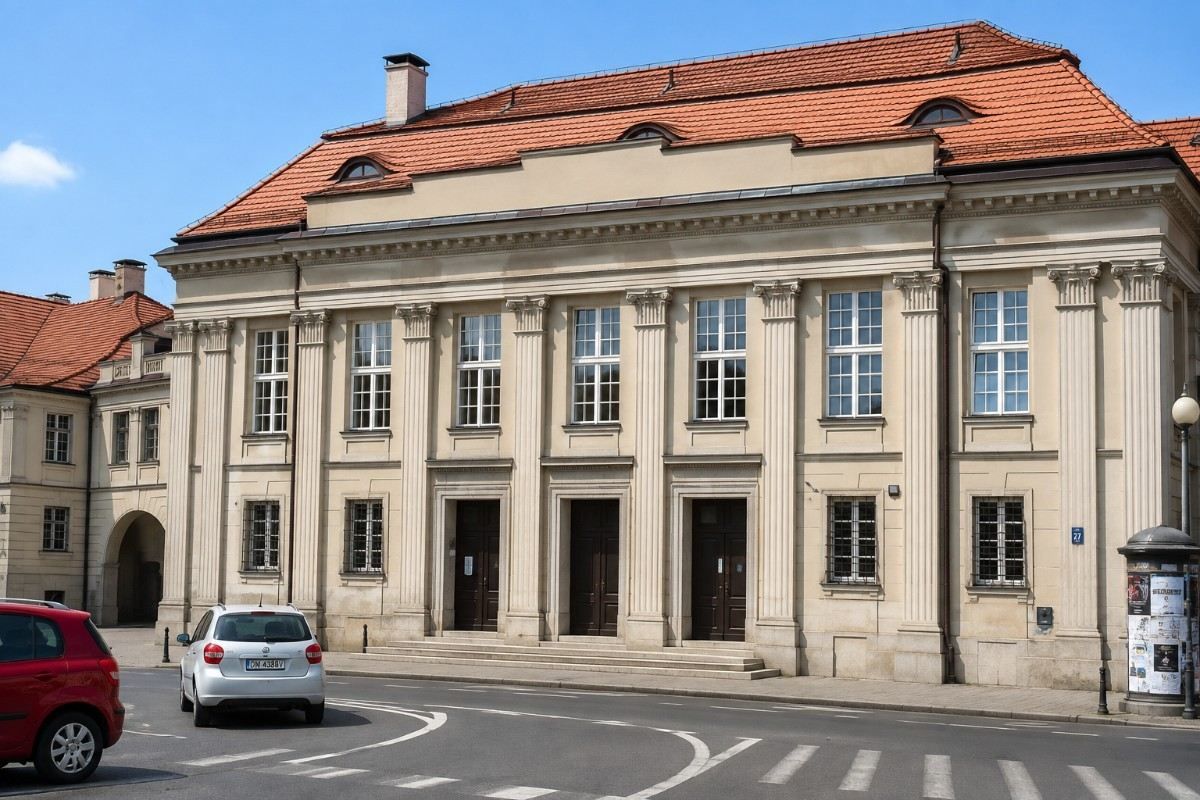
JUMC is the medical school of Jagiellonian University, and it is genuinely old. Its story starts in 1364. That year, King Casimir III the Great set up Jagiellonian University in Krakow. The Faculty of Medicine was one of its first three faculties. This makes JUMC one of the oldest medical schools in the world. It is also the oldest in Poland by a wide margin. Early lectures were held in the Royal Castle on Wawel Hill. Lessons in astronomy happened there too, since the two subjects were closely linked back then. Over the centuries, the school grew into a full medical college within Jagiellonian University. Today it is known as Collegium Medicum. Famous names studied here too. The astronomer Nicolaus Copernicus enrolled in 1491. Karol Wojtyla later became Pope John Paul II. He studied at Jagiellonian during the Second World War. Those classes ran in secret, since the Nazis tried to shut the university down. That long, layered history still shapes the school today.
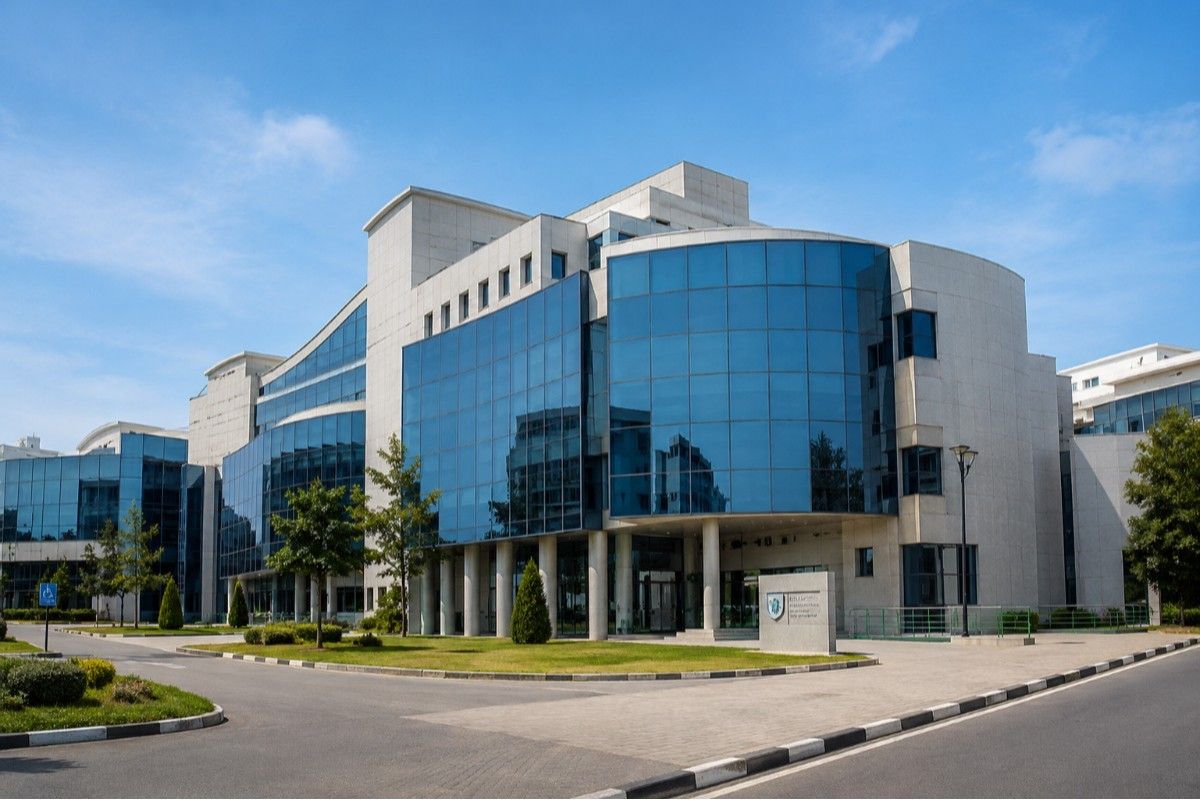
Clinical training at JUMC runs through a small group of major teaching hospitals in Krakow. It does not happen at just one site. The main hospital is University Hospital on Kopernika Street. It is Poland's oldest and largest hospital. It has roughly 1,300 beds spread across 28 departments. Students also train at University Children's Hospital. They use the University Clinic of Dentistry too. A fourth site, the University Hospital of Orthopedics and Rehabilitation in Zakopane, rounds out the network. This spread gives students a wide mix of patients to learn from. It also means a hospital network with real depth and history behind it.
JUMC's academic standing is strong, both in Poland and beyond. Jagiellonian University placed 303rd in the QS World University Rankings overall for 2026. In the QS World University Rankings by Subject for Medicine, it has placed in the 251–300 band in recent editions. That is the highest position among Polish medical schools in this subject. It sits ahead of other well-known Polish institutions. The university is also known for strong research. Its output spans pathology, psychiatry, surgery, and immunology. Researchers at JUMC publish widely in international journals. The school also takes part in European Union research programmes.
The six-year MD course at JUMC runs through what the school calls its School of Medicine in English, or SME. It is taught entirely in English from day one. Admission rests only on an entrance exam. This exam covers Biology, Chemistry, and reasoning skills. There is no graduate-entry option here. Transfers from other schools are not accepted either. Every student starts from year one. The course structure follows the usual pattern for Polish medical schools. The first years cover basic science. Students also take a medical Polish course early on. This helps later, with patient communication. From the third year, the focus shifts toward clinical practice. Bedside teaching begins at JUMC's hospitals. Students complete summer clerkships each year too. This adds real hands-on hours on top of term-time study. By year six, students have worked across every major clinical speciality. They graduate with the degree title Lekarz, the Polish equivalent of MD.
For Indian students, JUMC carries a genuine weight that fewer Polish schools can claim. It is recognised by the World Health Organization, through the World Directory of Medical Schools. The UK General Medical Council recognises it too. That said, the same rule applies here as everywhere else. The NMC does not keep one fixed, permanent list of approved foreign schools. Recognition status can shift as rules change. So Indian applicants must check JUMC's current NMC status themselves. Check it on the official site, nmc.org.in, before applying. Do not trust third-party claims of guaranteed recognition without checking first. Tuition for the English-medium MD course sits on the higher end among Polish medical schools. This reflects JUMC's standing and demand. The official rate for the 2026/27 academic year is 18,000 EUR per year. This comes from the university's own published fee schedule. The rate applies across all six years for that intake, rather than rising each year. Krakow itself is one of Poland's most popular student cities. It is generally cheaper to live in than Warsaw. It has a strong student culture, a well-preserved old town, and a large international student population.
Getting into JUMC is genuinely competitive. It should not be treated as an easy option. Seats on the English-medium course are limited. Demand from international applicants stays high each year. Unlike some Polish schools, JUMC does not accept standardised test scores like the UCAT or BMAT. Every applicant sits the same entrance exam instead. It runs online, in May or June. It covers Biology or Physics, Chemistry, and broader reasoning, through things like text analysis and chart interpretation. There is no separate exemption path for strong school grades alone. Indian applicants also need a valid NEET-UG score. This is a fixed NMC requirement. It cannot be skipped, regardless of the entrance exam result. Strong secondary grades alone will not guarantee a seat here. Because of that, most successful applicants spend real time preparing for the entrance test itself, well ahead of the exam window each year.
Beyond the medical curriculum, JUMC sits inside a wider university with real cultural weight. The Old Town of Krakow and Jagiellonian University together form a UNESCO World Heritage Site. Collegium Maius, the oldest university building in Poland, still stands at the heart of campus. It now houses the Jagiellonian University Museum, with old lecture halls and a historic library room open to visitors. The wider Jagiellonian Library holds close to 6.5 million volumes, making it one of the largest in Poland. Medical students also have access to dedicated medical libraries closer to their own faculty buildings, alongside this main collection. Much of the clinical and pre-clinical teaching for medicine now runs through the Prokocim Medical Campus, a more modern site built specifically to support medical and research training, separate from the historic Old Town buildings used by other faculties. This mix of old and new is fairly typical of Jagiellonian as a whole. Centuries-old courtyards sit a short ride away from modern labs and lecture halls.
No hidden charges, no donation. The full picture of costs at MBBS In Jagiellonian University Medical College.
Tuition Fee
18,000 EUR per year (2026/27 admission; flat rate across all six years)
18,000 EUR per year (2026/27 admission, per the university's official fee schedu
Hostel Fee
130-330 EUR/month
130-330 EUR/month (university dormitory, where available)
Food & Meals
100-150 EUR
Per month
Insurance
150-300 EUR
Per Year
Donation
No donation
No hidden charges
Total Estimated Cost
Approx. 135,000-150,000 EUR all-inclusive
6 Year
25–35%
Average FMGE first-attempt pass rates for students from many overseas medical universities. Students from structured programs consistently score higher.
Students returning to India need to clear the FMGE/NExT exam. MBBS In Jagiellonian University Medical College integrates exam-oriented coaching into the regular curriculum so students are prepared from day one.
A structured program that takes you from foundational sciences to clinical mastery.
This first year covers the basics. Students learn how the human body is built and how it works. Anatomy is taught through real lab and dissection work. Students also begin a dedicated Medical Polish course early on. This helps later, when they start talking to real patients.
Anatomy, Histology and Embryology, Biochemistry, Physiology, Medical Polish, Introduction to Medicine
The focus shifts toward body systems and the roots of disease. Microbiology and immunology lay groundwork for understanding infection later. Pathology and pharmacology begin here too. They start building the link between science and future clinical decisions.
Physiology, Biochemistry, Microbiology and Immunology, Genetics, Pathology, Pharmacology
This is the bridge year. Students begin bedside teaching at JUMC's hospitals for the first time. They work in small groups, directly with patients. This means practising history taking and physical exams, alongside ongoing classroom science.
Pathology, Pharmacology, Pathophysiology, Clinical Skills, Introduction to Internal Medicine, Introduction to Surgery
This is a full clinical year. Students rotate through JUMC's hospital network. They take patient histories. They join ward rounds. They present cases under supervision. This builds the core skills used in daily clinical work.
Internal Medicine, Surgery, Obstetrics and Gynaecology, Paediatrics with Paediatric Surgery, Psychiatry
Speciality exposure broadens further this year. Students rotate across a wide range of hospital departments. They also complete a summer clerkship. This adds extra hands-on hours to the academic-year rotations.
Neurology with Neurosurgery, Ophthalmology, ENT, Infectious Diseases, Orthopaedics and Traumatology, Radiology, Emergency Medicine
The final year brings everything together. Students complete professional internships and elective rotations. Some students complete part of this training abroad. This must happen at an approved hospital, and it must match the scope of the Krakow-based programme. Indian students should note one thing. NMC verification of training completion is a separate step. It is required before NExT eligibility is confirmed back in India.
Subjects: Public Health, Clinical and Environmental Toxicology, Nuclear Medicine, Occupational Medicine, Clinical Microbiology, Professional Internships, Elective Rotations


Furnished hostel rooms with Wi-Fi, laundry, 24/7 security, and Indian mess on or near campus.
Indian restaurants and mess facilities serving vegetarian and non-vegetarian home-style food daily.
Strong Indian community with cultural events, festival celebrations, and peer support groups.
Students get hands-on clinical training in government and private hospitals affiliated with the university.
Practical information for students planning to study at MBBS In Jagiellonian University Medical College.
Prepare for all seasons. Thermal wear for winters, light clothing for summers. University provides heating in hostels.
Student visa processed with university invitation letter. Direct and connecting flights from major Indian cities.
Health insurance included in fees. Medical facility on campus plus city hospitals easily accessible.
Local SIM cards available. WhatsApp and video calls keep you connected with family back home.
Average monthly expenses of $150–$250 covering food, transport, and personal needs.
University library, online databases, and study groups. Seniors mentor juniors through academic challenges.
Our team guides you through every step — from application to arriving on campus.
Compare universities based on fees, city, ranking, and entrance-test format, not just the cheapest option.
Submit the application online, along with academic transcripts and the NEET scorecard, either directly or through an authorised admission partner.
Appear for the university's own Biology/Chemistry MCQ test, sometimes followed by a short personal interview or motivation-based discussion.
Most universities issue a conditional or confirmed offer letter within 1–2 weeks of the interview, though this may take longer during peak intake season.
Pay the initial tuition instalment to confirm the seat, ideally after receiving the fee structure and escalation policy in writing.
Apply for the Type D student visa at the Polish consulate/embassy in India; realistic processing time is several weeks.
Arrange university hostel or private accommodation before departure, and book flights with some buffer before the official reporting date.
In the final 30 days, finalise documents, arrange winter clothing, sort health/travel insurance, arrange currency exchange, and confirm hostel allotment in writing.
Complete on-arrival registration formalities, usually organised by the university for the whole batch; settle into the hostel room and get the university ID card issued.
Open a local bank account, buy a local SIM card, attend orientation sessions, get the class schedule, and begin building a grocery/cooking routine and connections with the Indian student community. With the right preparation at each step, an MBBS in Poland can be a well-planned, confidence-inspiring path to an EU medical degree.
Admission Helpline — Contact our counsellors for step-by-step assistance.
“The faculty here is incredibly supportive. The clinical training during hospital rotations has given me real confidence in patient care.”
“Affordable fees without compromising on quality. The campus facilities and hostel life made my transition abroad very smooth.”
“English medium instruction and WHO-recognized curriculum were the deciding factors for me. No regrets so far — excellent experience overall.”
“The university helped with everything from visa to accommodation. Hospital exposure from year three has been invaluable for my FMGE prep.”
“Just cleared my licensing exam on the first attempt. The structured coaching and mock exams during final year were a game-changer.”
“Safe campus, good food options, and a strong Indian student community. The teaching methodology is very practical and hands-on.”
A: No. The six-year MD course runs fully in English. You do not need Polish to get in. A Medical Polish course is built into the early curriculum, though, to help with patient talks later.
A: Check this yourself first. Do not assume it. The NMC does not keep one fixed, permanent list. Status can change. Check JUMC's current standing at nmc.org.in before you apply.
A: The official rate is 18,000 EUR per year for the 2026/27 admission cycle, per JUMC's own published fee schedule. This rate stays flat across all six years for that intake.
A: Yes. You need a valid NEET-UG score under current NMC rules. This is required regardless of your entrance exam result at JUMC.
A: Yes. Poland is a full EU member and part of the Schengen Area. This means the degree gets automatic recognition across EU states, under the Professional Qualifications Directive.
A: Admission is based only on JUMC's own entrance exam, taken online in May or June. It covers Biology or Physics, Chemistry, and general reasoning. No standardised test scores are accepted instead, and strong school grades alone do not guarantee a seat.
A: Students train mainly at University Hospital in Krakow, Poland's oldest and largest hospital. They also use University Children's Hospital, the University Clinic of Dentistry, and a hospital in Zakopane for orthopedics and rehabilitation.
A: Yes. Past the automatic EU recognition, JUMC is also recognised by the UK General Medical Council, with a path via PLAB or the portfolio route. The school also supports students through ECFMG-linked processes for the US.
A: No. JUMC does not offer a graduate-entry pathway, and transfers from other medical schools are not accepted. Every student begins the six-year course from year one.
A: Students apply online through the Jagiellonian Online Application System. They submit academic documents and proof of English, then sit the entrance exam in May or June. Successful candidates pay the tuition instalment and move on to visa steps.
Our expert counsellors will guide you through the complete admission process — from documents to airport pickup.