
Q1. Is UMF Cluj recognised by the WHO and the NMC in India?
+Yes. WHO, NMC India, GMC UK and ECFMG approve it. Also check wdoms.org before you join.

 Romania | Est. 1919
Romania | Only Romanian medical faculty accredited by AMSE and holding the CIDMEF Label simultaneously | English and French (Romanian also available) medium
Expert will call you within 2 hours
If you want to know what actually sets this college apart from every other MBBS option in Europe, let me tell you.
Iuliu Hatieganu University of Medicine and Pharmacy is in Cluj-Napoca, Romania. It is the oldest medical institution in Transylvania. However, its roots go back even further than 1919. Higher education in Cluj started in 1581. The Hungarian Faculty of Medicine was set up in 1872. Moreover, between 1888 and 1901, hospitals and clinics were built on Miko Street, today known as Clinicilor Street, or Clinics Street. So, when students walk to their teaching hospitals, they walk on a street that has been home to medical training for over 135 years. That kind of history is not found at every college.
In 1919, after Transylvania joined Romania, the Romanian Faculty of Medicine was established as part of the University of Dacia Superior. Professor Iuliu Hatieganu became its first dean. He also became rector magnificus. Furthermore, he introduced medical semiology, radiology, stomatology, and the history of medicine into the Romanian medical curriculum for the first time. The university was named after him in 1992. So, the name on the degree isn't just branding. It is a tribute to a doctor who built Romanian medical education from the ground up.
Today, UMF Cluj is called the Ivy League of Romania. It is the only medical faculty in Romania accredited by AMSE, the Association of Medical Schools in Europe. Moreover, it holds the CIDMEF Label, a quality certificate from the International Conference of French-Speaking Medical Deans. No other Romanian medical university holds both of these at the same time. As a result, the degree is not just nationally recognised. It carries a standard that European medical bodies have formally endorsed.
The programme runs for 6 years. The first 3 years are pre-clinical and para-clinical. The last 3 years are full clinical training in affiliated teaching hospitals. However, what most blogs miss is how clinical training actually works here. Students are divided into groups of 10 to 12. An assistant lecturer supervises each group. So, students are not sitting in large halls watching demonstrations. They are learning in small groups with direct supervision. That is a significant difference from most other European medical colleges.
Also, UMF Cluj now has a campus in Novara, Italy. From 2025, the Medicine programme in English will also be available there. The Romanian Ministry of Education provisionally authorises this. So, students have the option to study in Romania or Italy under the same degree programme. No other Romanian medical university currently offers this.
The university has over 6,000 students from more than 70 countries. Over 1,100 teachers and researchers work here. Moreover, 2,400 resident physicians train at the affiliated hospitals. The Medicalis conference runs every year and attracts over 800 national and international participants. These students participate in presentations and workshops led by experienced doctors across Europe. So, academic life here goes well beyond the classroom.
For Indian students, NEET is needed. No IELTS or TOEFL is required. Instead, a certificate of medium of instruction or an English interview is accepted. NMC India, WHO, GMC UK, ECFMG, and WDOMS recognise the degree. So, graduates can sit for FMGE, NExT, USMLE, and PLAB. Furthermore, Romania is an EU country. After 5 years of legal stay, permanent residency is possible. After 8 years, EU citizenship is a pathway. For Indian students thinking long-term, that is a route that no non-EU destination can offer.
Cluj-Napoca itself is a real city. It has a population of around 450,000. It is also Romania's unofficial Silicon Valley, one of Europe's fastest-growing IT hubs. Living costs are around EUR 500-700 per month. That is far below Western Europe. However, the city has all the cafes, transport, safety, and student life of a major European capital. It is consistently rated one of the safest cities in Eastern Europe.
The total cost for 6 years is around INR 55-70 lakhs. There is no donation. There is no capitation fee. No hidden charges are asked at any stage. For an EU-based, AMSE-accredited, 100+-year-old public university, that is one of the best value propositions in global medical education.
Quick Overview
Parameter | Details |
Established | 1919 (Medical roots in Cluj since 1872; higher education since 1581) |
Location | Cluj-Napoca, Transylvania, Romania (Also new campus in Novara, Italy, from 2025) |
University Type | Public State University, Ministry of Education, Romania |
Teaching Hospitals | Multiple Affiliated Hospitals on Historic Clinicilor Street, Cluj-Napoca |
Course Duration | 6 Years (3 Years Pre-Clinical + 3 Years Clinical) |
Medium of Instruction | English and French (Romanian also available) |
Annual Tuition Fee | EUR 5,000–7,000 | Approx. INR 4.5–6.3 Lakhs/Year |
Accreditation | AMSE Accredited | CIDMEF Label | Only Medical Faculty in Romania with Both |
Fee Structure (2025–26)
Fee Component | Per Year (Approx.) | 6-Year Total (Approx.) |
Tuition Fee | EUR 5,000–7,000 | INR 4.5–6.3 Lakhs | INR 27–37.8 Lakhs |
Accommodation | EUR 100–250/Month | INR 10,000–22,500/Month | INR 7.2–16.2 Lakhs |
Food and Living | EUR 200–350/Month | INR 18,000–31,500/Month | INR 13–22.7 Lakhs |
Insurance and Visa | EUR 200–300/Year | INR 18,000–27,000/Year | INR 1.1–1.6 Lakhs |
Donation | NIL | NIL |
Total Estimated | — | INR 55–70 Lakhs (All Inclusive, 6 Years) |
Note: EUR figures use approx. INR 90 per EUR. Tuition varies slightly by year and programme language: no donation, no capitation fee, no hidden charges at any stage.
Why Iuliu Hatieganu University of Medicine Deserves a Harder Look Than You've Given It
Most pages call UMF Cluj the best in Romania and leave it at that. However, they do not explain what that actually means in practice. So here is what they miss.
First, UMF Cluj is the only medical faculty in Romania accredited by AMSE. Moreover, it is the only one with the CIDMEF Label, a French-language quality certificate awarded to very few medical schools worldwide. These are not just awards. They mean that external European bodies have reviewed the curriculum, hospitals, and faculty and said it meets their standards. As a result, the degree is trusted in ways that no self-declared ranking can match.
Second, the teaching method differs from that of most European colleges. Students here work in groups of just 10 to 12, each supervised by an assistant lecturer. So instead of sitting in a 200-seat hall, students get direct feedback and hands-on training. Furthermore, clinical training runs for the full last 3 years in real hospital settings on Clinicilor Street, a street that has been home to medicine since 1888.
Third, the Novara, Italy campus is something no Indian blog has properly covered yet. From 2025, UMF Cluj will run the same English Medicine programme in Novara, Italy. So, students can choose to complete their degree in Romania or in Italy. That kind of flexibility is extremely rare for any public medical university.
Also, Romania's EU status opens a long-term path that no non-EU country can offer. After 5 years of legal stay in Romania, Indian students become eligible for permanent residency. After 8 years, EU citizenship becomes possible. For students who want to build a career in Europe, that pathway alone changes the calculus of where to study.
Finally, Medicalis, the annual student conference, attracts over 800 participants from across Europe. Students present research, attend workshops, and build real professional connections while still in college. That kind of exposure is not available at most medical colleges, whether in India, Russia, or China.
No hidden charges, no donation. The full picture of costs at MBBS In Iuliu Hatieganu University of Medicine and Pharmacy.
Tuition Fee
EUR 5,000 to 7,000 (around INR 4.5 to 6.3 lakhs per year) for the English programme
EUR 5,000 to 7,000 per year, around INR 4.5 to 6.3 lakhs for English medium
Hostel Fee
EUR 100 to 250 per month
EUR 100 to 250 per month in university dorms; private rooms slightly more
Food & Meals
EUR 200 to 350
per month
Insurance
EUR 200 to 300
per year
Donation
No donation
No Hidden Fees
Total Estimated Cost
Around INR 55 to 70 lakhs, including tuition, living, and all other costs
total 6 year
25–35%
Average FMGE first-attempt pass rates for students from many overseas medical universities. Students from structured programs consistently score higher.
Students returning to India need to clear the FMGE/NExT exam. MBBS In Iuliu Hatieganu University of Medicine and Pharmacy integrates exam-oriented coaching into the regular curriculum so students are prepared from day one.
A structured program that takes you from foundational sciences to clinical mastery.
• Medical Informatics and small group seminars begin from the very first semester itself
• Anatomy, Histology, Biophysics, and Biochemistry build the full pre-clinical base in Year 1
• Study groups of 10 to 12 students run all practical sessions with direct assistant lecturer supervision
• Physiology, Microbiology, Pharmacology, and Pathological Anatomy form the Year 2 core subjects
• Early hospital visits to Clinicilor Street hospitals begin; the clinical skills lab also runs this year
• Pathology, Pathophysiology, Forensic Medicine, and Immunology are taught with real case links
• Emergency Medicine, Dermatology, Psychiatry, and Radiology postings are also added this year
• Full rotations begin in Internal Medicine, Surgery, Paediatrics, OB-GYN, ENT, and Neurology
• FMGE, NExT, and USMLE preparation coaching also begins alongside regular hospital rotations
• Advanced postings run in Cardiology, Oncology, Endocrinology, and Gastroenterology departments
• Medical conference participation and research publication are encouraged for all final year students
• Final year covers all major clinical departments; exam prep and residency applications run together

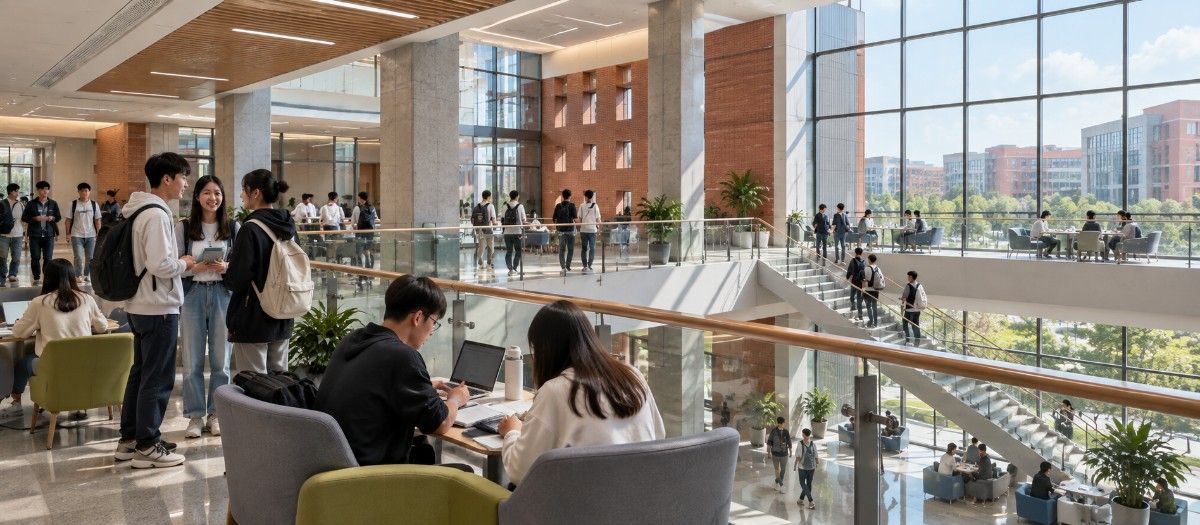
Furnished hostel rooms with Wi-Fi, laundry, 24/7 security, and Indian mess on or near campus.
Indian restaurants and mess facilities serving vegetarian and non-vegetarian home-style food daily.
Strong Indian community with cultural events, festival celebrations, and peer support groups.
Students get hands-on clinical training in government and private hospitals affiliated with the university.
Practical information for students planning to study at MBBS In Iuliu Hatieganu University of Medicine and Pharmacy.
Prepare for all seasons. Thermal wear for winters, light clothing for summers. University provides heating in hostels.
Student visa processed with university invitation letter. Direct and connecting flights from major Indian cities.
Health insurance included in fees. Medical facility on campus plus city hospitals easily accessible.
Local SIM cards available. WhatsApp and video calls keep you connected with family back home.
Average monthly expenses of $150–$250 covering food, transport, and personal needs.
University library, online databases, and study groups. Seniors mentor juniors through academic challenges.
Our team guides you through every step — from application to arriving on campus.
Compare universities based on fees, city, and availability of non-EU seats, not just the cheapest option.
Submit the application, along with academic transcripts, to the university, either directly or through a registered admission partner.
The university's international admissions office verifies documents and publishes a merit-based ranking list.
Issued by the Romanian Ministry of Education after the university confirms your place on the ranking list.
Pay the first-year tuition fee (or the required deposit percentage) to confirm the seat.
Apply for the Type D student visa at the Romanian Embassy/Consulate in India; realistic processing time is 2–8 weeks.
Book travel and plan arrival dates ahead of the late-September start of the academic year.
In the final weeks, finalize documents, arrange winter clothing and travel/health insurance, book flights, arrange currency exchange, and confirm hostel allotment in writing.
Complete local registration (residence permit steps) with the relevant Romanian authorities within the required window after arrival; the university usually assists with this during orientation.
Open a local bank account, get a local SIM card, attend orientation sessions, get the class schedule, and begin building a grocery/cooking routine and connections with the Indian student community.
Admission Helpline — Contact our counsellors for step-by-step assistance.
“The faculty here is incredibly supportive. The clinical training during hospital rotations has given me real confidence in patient care.”
“Affordable fees without compromising on quality. The campus facilities and hostel life made my transition abroad very smooth.”
“English medium instruction and WHO-recognized curriculum were the deciding factors for me. No regrets so far — excellent experience overall.”
“The university helped with everything from visa to accommodation. Hospital exposure from year three has been invaluable for my FMGE prep.”
“Just cleared my licensing exam on the first attempt. The structured coaching and mock exams during final year were a game-changer.”
“Safe campus, good food options, and a strong Indian student community. The teaching methodology is very practical and hands-on.”
Yes. WHO, NMC India, GMC UK and ECFMG approve it. Also check wdoms.org before you join.
Not necessarily. Either the medium-of-instruction certificate or an English-language interview can be used instead of IELTS.
Answer: INR 55-70 lakhs within 6 years. This includes the cost of fees, accommodation, visas, and more.
Yes. NEET is a must per NMC India rules. No other entrance exam is accepted for Indians.
Only the medical faculty in Romania has both AMSE accreditation and the CIDMEF Label together.
Yes. From 2025, the English Medicine programme will also run at a campus in Novara, Italy.
Yes. Romania PR after 5 years of legal stay. EU citizenship pathway opens after 8 years.
Yes. Full English medium is available. The French and Romanian media are also offered here.
Yes. University dorms are near campus and hospitals. Private apartments are also widely available.
Yes. Residency, MD, PhD, Master's in Pharmacy, and Dental Medicine programmes all run here.


Our expert counsellors will guide you through the complete admission process — from documents to airport pickup.