Q1: Is German language required?
+Yes. B2 German is required for admission. C1 is expected during clinical years. A structured language course of 10–12 months helps most students reach B2. A preparatory year before applying is strongly recommended.

 Germany | Est. 1386
Germany | NMC (India); verify current status at nmc.org.in; German Science Council (Wissenschaftsrat); EU Directive 2005/36/EC; WDOMS listed; German Excellence Strategy funded | German (primary medium); B2 required for admission; C1 standard required in clinical years; preparatory language year st medium
Expert will call you within 2 hours
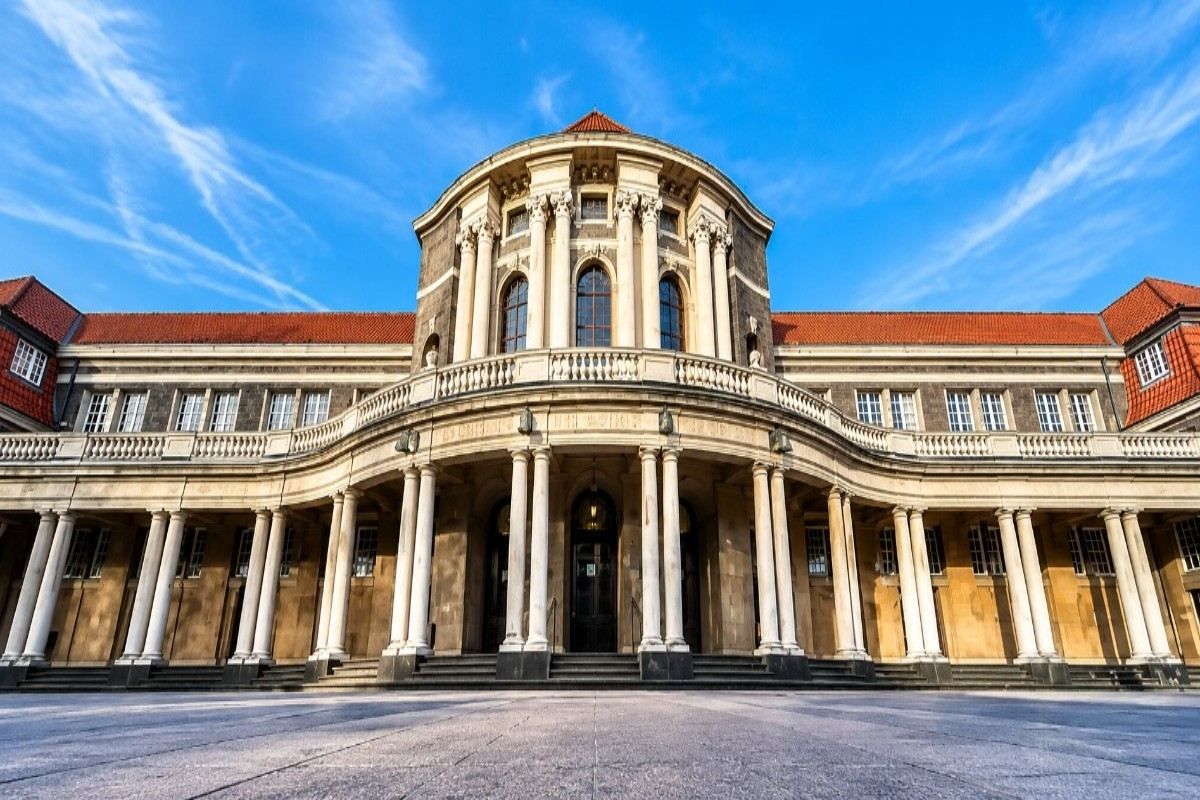
Heidelberg University is Germany's oldest university. It was founded in 1386 by Elector Ruprecht I of the Palatinate. That gives it over six centuries of unbroken academic life. Very few universities anywhere in the world can say the same.
The university sits on the banks of the Neckar River in Baden-Württemberg. It spans three campuses. The Old Town campus in the historic Altstadt focuses on humanities. The Neuenheimer Feld campus houses natural sciences and medicine. The Bergheim campus covers social sciences. This is not just an administrative arrangement. At Neuenheimer Feld, the Faculty of Medicine, the German Cancer Research Centre (DKFZ), and the University Hospital Heidelberg all sit within walking distance of each other. That concentration of world-class institutions has shaped medical education here for over a century.
The Faculty of Medicine is one of the four original faculties the university opened with in 1386. That is not just a historical detail. It means this faculty has been teaching, refining, and improving medical education for longer than most countries have had formal university systems. That accumulated experience shows; in how anatomy is taught, in how clinical placements are structured, and in how students are prepared for real hospital work.
The medical degree at Heidelberg follows the German State Examination in Human Medicine, known as the Staatsexamen. The programme runs for six years and three months. It is delivered under the name HeiCuMed; Heidelberg Curriculum Medicinale. HeiCuMed was introduced in 2001. It was modelled, in part, on the Harvard Medical School curriculum. The focus is on early patient contact, problem-based learning, and clinical reasoning from Year 1. This is very different from a traditional German medical programme. Students here are not just absorbing information. They are being trained to think like doctors from the very beginning.
The academic standing of Heidelberg in medicine is exceptional. In the QS World University Rankings by Subject 2025, Heidelberg ranked 1st in Germany for Medicine and 32nd globally. The university as a whole ranked 80th in the QS World University Rankings 2026. In a country with some of the most competitive public universities in the world, ranking first in medicine is a serious achievement. Heidelberg holds Excellence University status under Germany's national Excellence Strategy. It is a founding member of the League of European Research Universities (LERU). Its alumni and faculty include 33 Nobel Laureates. The German Cancer Research Centre sits directly next to the medical campus. It is one of the largest cancer research organisations in the world. Medical students regularly complete research rotations there.
The teaching hospital here is world-class. The University Hospital Heidelberg; known as UKHD; is the primary clinical training site. In the Newsweek World's Best Hospitals 2025 ranking, the UKHD placed 14th globally out of over 2,400 hospitals. It ranked 2nd in Germany, behind only the Berlin Charité. For students, this means clinical training happens inside one of the top fifteen hospitals in the world. It is not a community hospital or a regional affiliate. It is a major tertiary care centre with specialist units covering oncology, neuroscience, cardiovascular medicine, transplantation, and trauma. The case mix and patient complexity students encounter here cannot be replicated at smaller institutions.
The language of instruction is German. That is the key consideration for international students. B2 German is required for admission. C1 is the expected standard during clinical years. For Indian students, this means committing to a preparatory year of intensive language study before applying. Language learning continues throughout the degree. That is a real commitment. But it needs to be understood in context.
Germany is one of the very few countries where public university medical education is almost tuition-free; even for international students. Non-EU/EEA students pay €1,500 per semester under Baden-Württemberg state policy. That is €3,000 per year. The total tuition for six years at Heidelberg is approximately €18,000–19,000. To put that in perspective; that figure would cover roughly one semester of tuition at most private UK medical schools.
Heidelberg is a city of around 160,000 people. Students make up a large part of that population. It is consistently rated among Germany's most liveable cities. The old town is walkable. Public transport is reliable. The cost of living; around €800–1,000 per month; is lower than Frankfurt, Munich, or Berlin. The city's size makes it easier to build community than in a large, anonymous metropolis. Around 6,600 international students from over 130 countries study at Heidelberg. That international network is a real source of peer support.
For Indian students, Heidelberg offers one of the strongest options for medical education in Europe. The German Staatsexamen degree is recognised across all 27 EU member states. Indian graduates who complete the programme and meet NMC requirements can sit the NExT examination in India. The Approbation; the German medical licence; is awarded after completing the Staatsexamen and the Practical Year. It is valid for clinical practice in Germany and across the EU. Heidelberg graduates are also ECFMG-eligible. That opens the USMLE pathway and access to US residency. GMC registration in the UK is available via PLAB or the portfolio route.
Few degrees in the world open as many doors as this one. EU practice, US residency, UK registration, and Indian NExT; all from a single qualification. That is a measure of what a Heidelberg medical degree is genuinely worth.
No hidden charges, no donation. The full picture of costs at MBBS in Heidelberg University.
Tuition Fee
€1,500/semester for non-EU/EEA students (€3,000/year; approx. ₹3.1 lakh/year); total 6-year tuitionapprox. €18,000–19,000 / ₹18.5–19.5 lakh;
€1,500/semester for non-EU/EEA students (€3,000/year / approx. ₹3.1 lakh/year);
Hostel Fee
€210 to €550 per month
€210 to €550 per month
Food & Meals
€200–350/month; university canteen (Mensa): €2–4 per meal (subsidised for enrolled students); Heidelberg is moderately priced compared to Fr
per month
Insurance
€110–150/month (public health insurance; gesetzliche Krankenversicherung); mandatory for all students; Germany's public system covers enroll
per year
Donation
No donation or capitation fees.
Semester admin fee approx. €170/semester. No hidden charges
Total Estimated Cost
Approx. €75,000–90,000 all-inclusive (₹77–92 lakh) including tuition, accommodation, food, insurance, and personal expenses. Add €2,000–3,00
6 Years
25–35%
Average FMGE first-attempt pass rates for students from many overseas medical universities. Students from structured programs consistently score higher.
Students returning to India need to clear the FMGE/NExT exam. MBBS in Heidelberg University integrates exam-oriented coaching into the regular curriculum so students are prepared from day one.
A structured program that takes you from foundational sciences to clinical mastery.
Year 1 starts differently here. Students meet real patients under supervision from the very first year. Anatomy is taughtthrough cadaveric dissection and histology sessions. Clinical thinking is built into science learning from day one. The doctor-patient relationship is treated as an academic skill; not something left for later.
Anatomy I (Gross Anatomy, Histology, Embryology), Biochemistry I, Medical Psychology & Sociology, Physics for Medicine, Chemistry for Medicine, Introduction to Clinical Medicine
Year 2 deepens the science foundation. Neuroanatomy is taught with clinical and surgical relevance. Physiology connects with early pharmacology concepts. Medical genetics and immunology are introduced with a molecular biology base. Problem-based learning seminars run throughout the year. Small group case discussions train students to think like clinicians; before they are clinicians.
Anatomy II (Neuroanatomy & Topographic Anatomy), Physiology I & II, Biochemistry II, Medical Genetics, Microbiology & Immunology
Year 3 ends with the M1; the first part of the German Staatsexamen. Students must pass M1 to move into clinical years. Semiology is taught as a hands-on discipline. Students clerk patients and conduct supervised physical examinations. Evidence-based medicine and biostatistics are woven into everyday training.
General Pathology, Pharmacology I, Microbiology & Virology II, Epidemiology & Medical Statistics, Semiology & Clinical Examination, Evidence-Based Medicine, First State Examination (M1)
Year 4 is the first fully clinical year. Students rotate through the University Hospital Heidelberg and affiliated sites. The UKHD handles Level 1 trauma, oncology, transplantation, and neuroscience. Students see cases here that many graduates from smaller hospitals will only encounter during residency.
Internal Medicine I, General & Visceral Surgery I, Obstetrics & Gynaecology I, Paediatrics I, Psychiatry & Psychosomatic Medicine, Radiology & Nuclear Medicine
Year 5 broadens the clinical picture. Family medicine placements add primary care to hospital-based training. The second State Examination (M2) is held during this phase. It tests clinical knowledge across all major disciplines.
Internal Medicine II, Surgery II, Neurology, ENT & Ophthalmology, Dermatology & Venereology, Orthopaedics& Trauma, Emergency Medicine, Family & Community Medicine
observers. They rotate through Internal Medicine, Surgery, and one elective of their choice. Passing the third State Examination (M3) at the end results in the medical degree and eligibility for the Approbation; the German medical licence.
Internal Medicine (4 months), Surgery (4 months), Elective Speciality (4 months) The Practical Year is the final stage. Students work as supervised junior doctors;


Furnished hostel rooms with Wi-Fi, laundry, 24/7 security, and Indian mess on or near campus.
Indian restaurants and mess facilities serving vegetarian and non-vegetarian home-style food daily.
Strong Indian community with cultural events, festival celebrations, and peer support groups.
Students get hands-on clinical training in government and private hospitals affiliated with the university.
Practical information for students planning to study at MBBS in Heidelberg University.
Prepare for all seasons. Thermal wear for winters, light clothing for summers. University provides heating in hostels.
Student visa processed with university invitation letter. Direct and connecting flights from major Indian cities.
Health insurance included in fees. Medical facility on campus plus city hospitals easily accessible.
Local SIM cards available. WhatsApp and video calls keep you connected with family back home.
Average monthly expenses of $150–$250 covering food, transport, and personal needs.
University library, online databases, and study groups. Seniors mentor juniors through academic challenges.
Our team guides you through every step — from application to arriving on campus.
Begin German lessons as early as possible, ideally alongside Class 11–12, targeting B1 within 12 months and progressing toward the required B2–C1 level.
Submit Class 10, 12, and any higher-education transcripts for verification. Processing typically takes 3–5 weeks; apply early, since this gates every subsequent step.
portal and apply to the correct track, the M-Kurs for medical aspirants, at your shortlisted Studienkolleg institutions.
Complete the roughly 10–12 month M-Kurs program covering Biology, Chemistry, Physics, and German, then pass the Feststellungsprüfung (FSP), the qualifying exam for university entry.
Submit applications to your shortlisted universities. Uni-assist fees run €75 for the first program and €30 for each additional program in the same semester.
University decisions follow Uni-assist’s document evaluation and forwarding; final admission is always the university’s own decision.
Deposit €11,904 into a blocked account (via Fintiba, Expatrio, or a similar provider) and arrange either public (€140–€160/month) or private health insurance; both are mandatory prerequisites for the visa stage.
Submit your visa application at the German consulate in India (Delhi, Mumbai, Bengaluru, or Chennai), with your admission letter, APS certificate, language proficiency proof, blocked account confirmation, and insurance proof. Realistic processing time is 6–12 weeks.
Bring originals of every document submitted digitally. Be prepared to discuss your study plans, financial arrangements, and reasons for choosing Germany.
Book travel around your intake date (October for Winter, April for Summer), and complete formal university enrollment on arrival. Medical study then begins with the Pre-Clinical phase.
Admission Helpline — Contact our counsellors for step-by-step assistance.
“The faculty here is incredibly supportive. The clinical training during hospital rotations has given me real confidence in patient care.”
“Affordable fees without compromising on quality. The campus facilities and hostel life made my transition abroad very smooth.”
“English medium instruction and WHO-recognized curriculum were the deciding factors for me. No regrets so far — excellent experience overall.”
“The university helped with everything from visa to accommodation. Hospital exposure from year three has been invaluable for my FMGE prep.”
“Just cleared my licensing exam on the first attempt. The structured coaching and mock exams during final year were a game-changer.”
“Safe campus, good food options, and a strong Indian student community. The teaching methodology is very practical and hands-on.”
Yes. B2 German is required for admission. C1 is expected during clinical years. A structured language course of 10–12 months helps most students reach B2. A preparatory year before applying is strongly recommended.
HeiCuMed is Heidelberg's reformed medical curriculum. It was introduced in 2001 and draws on the Harvard Medical School approach. It combines early patient contact, problem-based learning, and clinical reasoning from Year 1; unlike traditional German programmes that keep clinical work separate for the first two years.
Very good. The UKHD was ranked 14th globally and 2nd in Germany in the Newsweek World's Best Hospitals 2025 list. It is a Level 1 trauma centre and major oncology hub.Students train in one of the most complex clinical environments in Europe.
Indian students who complete the Staatsexamen may sit the NExT examination in India, subject to NMC eligibility requirements. Always verify current NMC status at nmc.org.in before applying.
Graduates holding the Approbation can practise across all 27 EU member states. ECFMG eligibility opens the USMLE pathway to the US. GMC registration in the UK is available via PLAB or the portfolio route.
Non-EU/EEA students pay €1,500 per semester; €3,000 per year. Over six years, total tuition is approximately €18,000–19,000. For a globally top-50 ranked medical school, this is among the lowest tuition fees in the world.
Very competitive. Medicine at Heidelberg has a nationwide restriction (Numerus Clausus). Applications go through Hochschulstart. International students compete for around 8–10% of available places. A strong academic record and verified language proficiency are both essential.
Germany requires all non-EU visa applicants to deposit €11,904 into a blocked account (Sperrkonto). After arriving, you can withdraw €992 per month. This is a visa requirement; not a university fee. Services like Fintiba or Deutsche Bank handle this.
Yes. DAAD scholarships are available for Indian students. Heidelberg also offers merit-based awards (€500–800/month), faculty-specific grants, and Erasmus+ funding. The Baden-Württemberg Stipendium supports exchange students specifically.
A valid NEET score is mandatory for NMC compliance in India. It is not part of the Heidelberg admission process. However, Indian students need it to have their German degree recognised for practice in India. Always confirm current NMC guidelines before applying


Our expert counsellors will guide you through the complete admission process — from documents to airport pickup.