1. Does Florence teach medicine in English?
+No. The Medicine and Surgery programme runs in Italian.
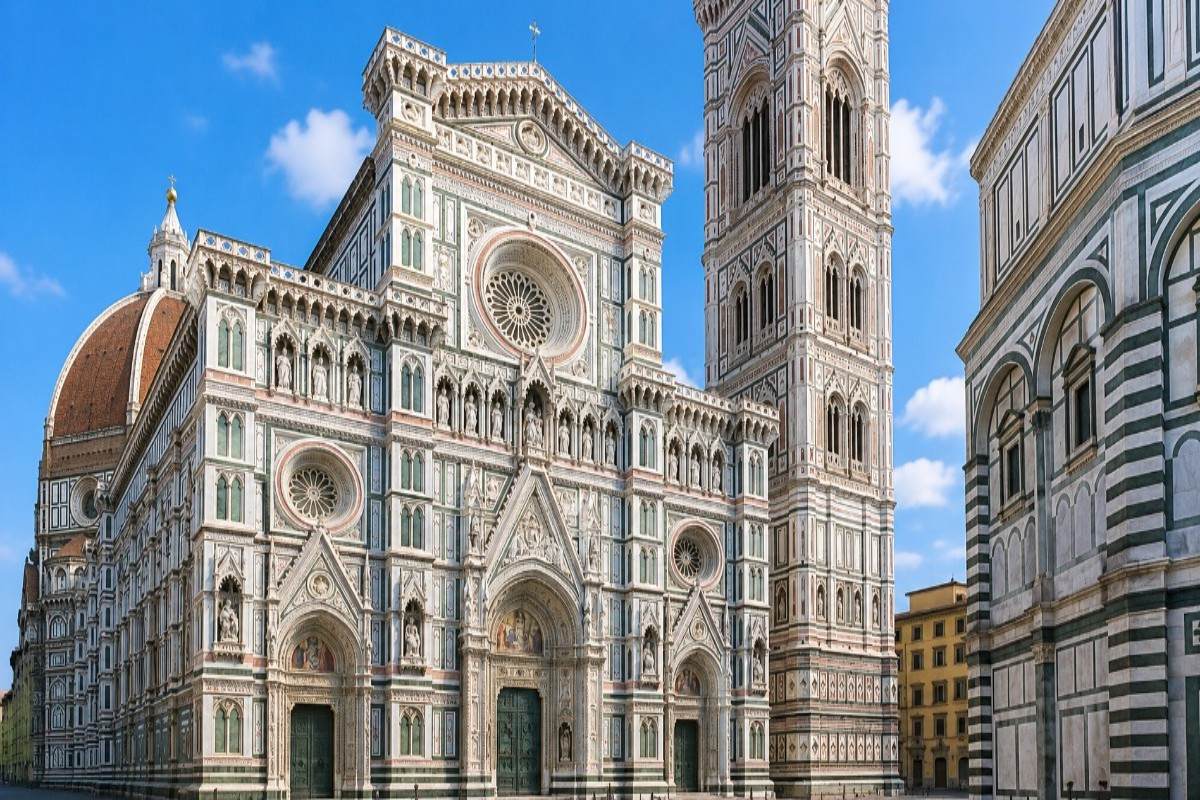
 Italy | Est. 1923
Italy | Italian Ministry of University and Research (MUR); ANVUR quality accreditation; listed in the World Directory of Medical Schools | Italian only medium
Expert will call you within 2 hours
The University of Florence has been around since 1321, when the Florentine Republic set up a studium generale. It was founded in 1859 as the Istituto di Studi Superiori Pratici e di Perfezionamento. In 1923, it became a university. It is one of the bigger and better known public universities in Italy, with about 50,000 students now. Medicine sits inside the School of Human Health Sciences, the Scuola di Scienze della Salute Umana, which coordinates the medical, dental, nursing and allied health programmes across several departments.
The School runs the single-cycle Medicine and Surgery degree over six years, worth 360 ECTS. The award is the Laurea Magistrale a Ciclo Unico in Medicina e Chirurgia, the Italian equivalent of an MBBS. Instruction runs in Italian. Florence does not offer an English-medium medical degree, so you need certified Italian at B2 level and you sit the national admission test in Italian. Some individual modules and elective activities run in English, but the core programme does not.
Florence attracts more applicants than most Italian medical faculties, and the reason is not only the city. The clinical network is large. Azienda Ospedaliero-Universitaria Careggi is the main teaching hospital and one of the biggest hospital complexes in Italy. Careggi covers the full range of tertiary care, including trauma, transplant surgery, cardiac surgery, neurosurgery, stroke care, oncology and rare disease services. Meyer Children's Hospital, a nationally recognised paediatric centre, provides paediatric teaching. Between the two you see a case mix that few other Italian faculties can match. That breadth matters most in years four to six, when your learning depends on the range of patients passing through your wards.
Research at Florence runs deep across several fields. Neuroscience research covers neurodegenerative disease, movement disorders and stroke. Oncology research spans clinical trials and translational laboratory work. Cardiovascular medicine, hormones and clinical immunology all hold strong groups. The university also runs renowned work in regenerative medicine, in internal medicine and in public health. Florence participates in national and European study networks, and you can join a group from the third year onwards. Most students complete their final thesis inside a research group, and a well-chosen thesis project gives you material for your first publication.
Teaching facilities include anatomy and histology laboratories, a clinical simulation centre with mannequin-based scenarios, clinical skills rooms and molecular biology laboratories. The biomedical library at Careggi serves the medical programmes and gives access to the main electronic databases. Preclinical teaching happens partly in the city and partly at the Careggi campus, and clinical years centre on Careggi itself. Careggi sits north-west of the historic centre and connects by tram and bus, so plan your accommodation with that journey in mind.
Living in Florence carries one clear drawback. Housing costs more than in almost any other Italian university city outside Milan and Rome, because tourism drives rents up and short-term rentals absorb much of the housing stock. Expect to pay considerably more for a room than you would in Ferrara or Catania, and expect competition for it. Start your housing search months before you arrive. The regional right-to-study agency, DSU Toscana, runs subsidised halls and canteens, and those places are given by income and merit. Apply for DSU Toscana benefits on time, because the deadline is different from starting college, and if you miss it, you lose the subsidy for a whole year.
The way tuition works is like the Italian government. Your fee is based on how much money your family makes according to the ISEE method, or the ISEE Parificato calculation if your family makes money in a different country. Low-income students only have to pay the regional tax and stamp fee. Students who come from families with more money pay the most. By the due date, you must submit your translated and legalized proof of income to the university. If you miss it, Florence will automatically charge you the highest band, which is hard to reverse.
The national Italian method is used for admission. EU applicants take the national test to get into medicine and fight with people from all over the world. Non-EU applicants who live outside of the EU compete for a small reserved quota that is announced in the annual call for applications. There is a lot of competition for Florence's quota. Get pre-enrolled through Universitaly and then get your study visa from the Italian Embassy. Both stages take time, so start in the spring to get going in October.
There are two preclinical years, a transitional third year, and three clinical years. The program is based on the national framework. Almost all classes require students to be present for at least 70% of the scheduled classes. There are 30 points on the scale, with 18 being the pass mark and 30 being the best grade. There are a lot of oral exams, and you defend your answers to the examiner. The highest grade you can get for your degree is 110 e lode, which is the last grade you can get. In Italy, that grade is more important than in many other countries because it affects how you rank in the national race for residency.
In the sixth year, there is an evaluated practical internship worth at least 15 credits that can be split between general practice, internal medicine, and surgery. In Italy, the separate state licensing test was added to this internship. If you pass it and graduate, you then register with the Ordine dei Medici. In Italy, you don't need an extra year of your license.
Your nationality affects how well you do in your career. Rule 2005/36/EC says that EU citizens' credentials are automatically recognized across the EU and EEA. People who are Indian must go through the National Medical Commission. To do that, you need to have passed the NEET test before starting the degree program, been in school for at least 54 months with a 12-month internship, and passed the Indian screening exam. Before you sign up, read the most recent NMC notice because the rules for medical degrees from other countries have changed several times since 2021.
A national salaried residency competition is held after graduation in Italy as a way to get specialty training. Your ranking is based on your grade point average and test scores. There are still not many spots for graduates from outside the EU, so most of them plan to go to another country for their postgraduate study.
If you want to go to a big, research-focused public university in Italy with one of the largest teaching hospitals in the country, a children's hospital for pediatric training, and a strong degree brand, Florence is the place to go. You have to agree to be taught in Italian, pay a lot for housing, and compete hard for spots. The clinical exposure at Careggi and Meyer is worth the work if you can handle those three circumstances.
No hidden charges, no donation. The full picture of costs at MBBS in University of Florence School of Human Health Sciences.
Tuition Fee
USD ~765 INR ~73,226 per year
USD 2,000 per year
Hostel Fee
USD ~5,400 per year
USD ~5,400 per year
Food & Meals
USD ~ 3,000
per year
Insurance
USD ~180
per year
Donation
No Donation fee
No hidden fee
Total Estimated Cost
USD ~12,630 (INR ~11,11,440)
6 year
25–35%
Average FMGE first-attempt pass rates for students from many overseas medical universities. Students from structured programs consistently score higher.
Students returning to India need to clear the FMGE/NExT exam. MBBS in University of Florence School of Human Health Sciences integrates exam-oriented coaching into the regular curriculum so students are prepared from day one.
A structured program that takes you from foundational sciences to clinical mastery.
You cover the scientific foundation with laboratory sessions alongside lectures. Anatomy begins with terminology and gross structure.
Cell Biology, Histology, Human Anatomy I, Medical Statistics, Scientific Italian.
You complete systemic anatomy and study normal function in depth. Microbiology and immunology set up your work on infection and defence.
Physiology, Genetics, Molecular Biology, Microbiology, Immunology, Bioethics
You move from normal to abnormal and start ward work at Careggi. You learn structured history taking and physical examination.
Clinical Methodology, Laboratory Medicine, Diagnostic Imaging, First Clinical Placement
You spend most of the year in hospital. Careggi's tertiary case mix gives you exposure to complex and rare presentations.
Cardiology, Respiratory Medicine, Gastroenterology, Nephrology, Endocrinology, Infectious Diseases, Clinical Immunology
You rotate through specialty blocks. Paediatric teaching runs at Meyer Children's Hospital, which handles regional and national referrals.
Neurology, Psychiatry, Dermatology, Ophthalmology, ENT, Orthopaedics, Oncology, Anaesthesia and Intensive Care
You complete the tirocinio pratico valutativo across general practice, internal medicine and surgery, defend your thesis and qualify to register with the Italian medical order.
Public Health and Hygiene, Assessed Practical Internship, Final Thesis
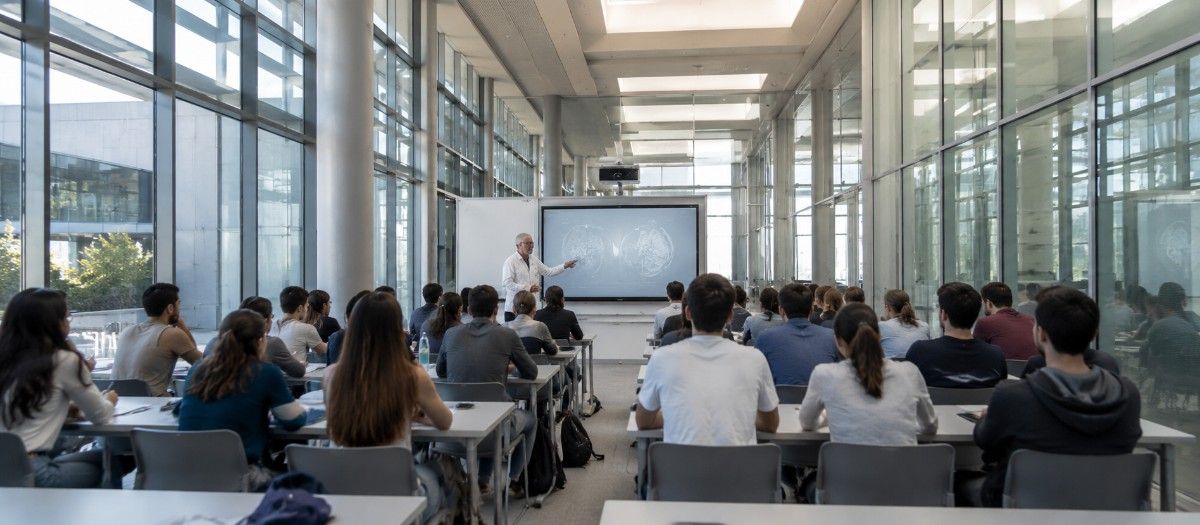

Furnished hostel rooms with Wi-Fi, laundry, 24/7 security, and Indian mess on or near campus.
Indian restaurants and mess facilities serving vegetarian and non-vegetarian home-style food daily.
Strong Indian community with cultural events, festival celebrations, and peer support groups.
Students get hands-on clinical training in government and private hospitals affiliated with the university.
Practical information for students planning to study at MBBS in University of Florence School of Human Health Sciences.
Prepare for all seasons. Thermal wear for winters, light clothing for summers. University provides heating in hostels.
Student visa processed with university invitation letter. Direct and connecting flights from major Indian cities.
Health insurance included in fees. Medical facility on campus plus city hospitals easily accessible.
Local SIM cards available. WhatsApp and video calls keep you connected with family back home.
Average monthly expenses of $150–$250 covering food, transport, and personal needs.
University library, online databases, and study groups. Seniors mentor juniors through academic challenges.
Our team guides you through every step — from application to arriving on campus.
Our Italy specialist explains the IMAT process, the income-based fee system, Bologna vs Rome vs other universities, and a total cost comparison with Hungary and Poland.
Our team registers you for IMAT (September test) and begins structured coaching. Biology, Chemistry, Physics, Maths, Critical Thinking. Begin preparation at least 6 months before the test.
Full Italian visa and IMAT application document set academic certificates, income documentation if applicable.
IMAT taken at designated test centres. We provide post-test analysis and guidance on university rankings.
Following IMAT ranking, the Italian university issues an admission confirmation. Our team can help with this process.
Full documentation submitted to the Italian Embassy or Consulate. Begin immediately after receiving the admission letter.
Our team advises qualifying families on the income-based fee reduction process.
Bologna /Rome orientation, accommodation, portico culture, Italian transport, Trenitalia app, banking, SIM card.
Our local team in Bologna (BLQ) or Rome (FCO) meets you and manages the first-week settlement.
We manage the Permesso application at the local Post Office within 8 days of arrival with our support, which is renewed annually.
Admission Helpline — Contact our counsellors for step-by-step assistance.
“The faculty here is incredibly supportive. The clinical training during hospital rotations has given me real confidence in patient care.”
“Affordable fees without compromising on quality. The campus facilities and hostel life made my transition abroad very smooth.”
“English medium instruction and WHO-recognized curriculum were the deciding factors for me. No regrets so far — excellent experience overall.”
“The university helped with everything from visa to accommodation. Hospital exposure from year three has been invaluable for my FMGE prep.”
“Just cleared my licensing exam on the first attempt. The structured coaching and mock exams during final year were a game-changer.”
“Safe campus, good food options, and a strong Indian student community. The teaching methodology is very practical and hands-on.”
No. The Medicine and Surgery programme runs in Italian.
B2, certified before enrolment.
Six years, worth 360 ECTS.
Yes, if you are an Indian national and plan to practise in India.
Yes. You sit the national Italian medicine admission test, and competition for Florence runs high.
It depends on assessed family income. Expect roughly USD 200 to 3,300 per year.
Mainly at Careggi University Hospital, with paediatrics at Meyer Children's Hospital.
Yes. Tourism pushes rents well above other Italian university cities. Search early and apply to DSU Toscana for subsidised halls.
Yes. The degree is recognised across the EU and EEA under the mutual recognition directive
No. The assessed sixth-year internship replaced it, so you register soon after graduation.

Our expert counsellors will guide you through the complete admission process — from documents to airport pickup.